
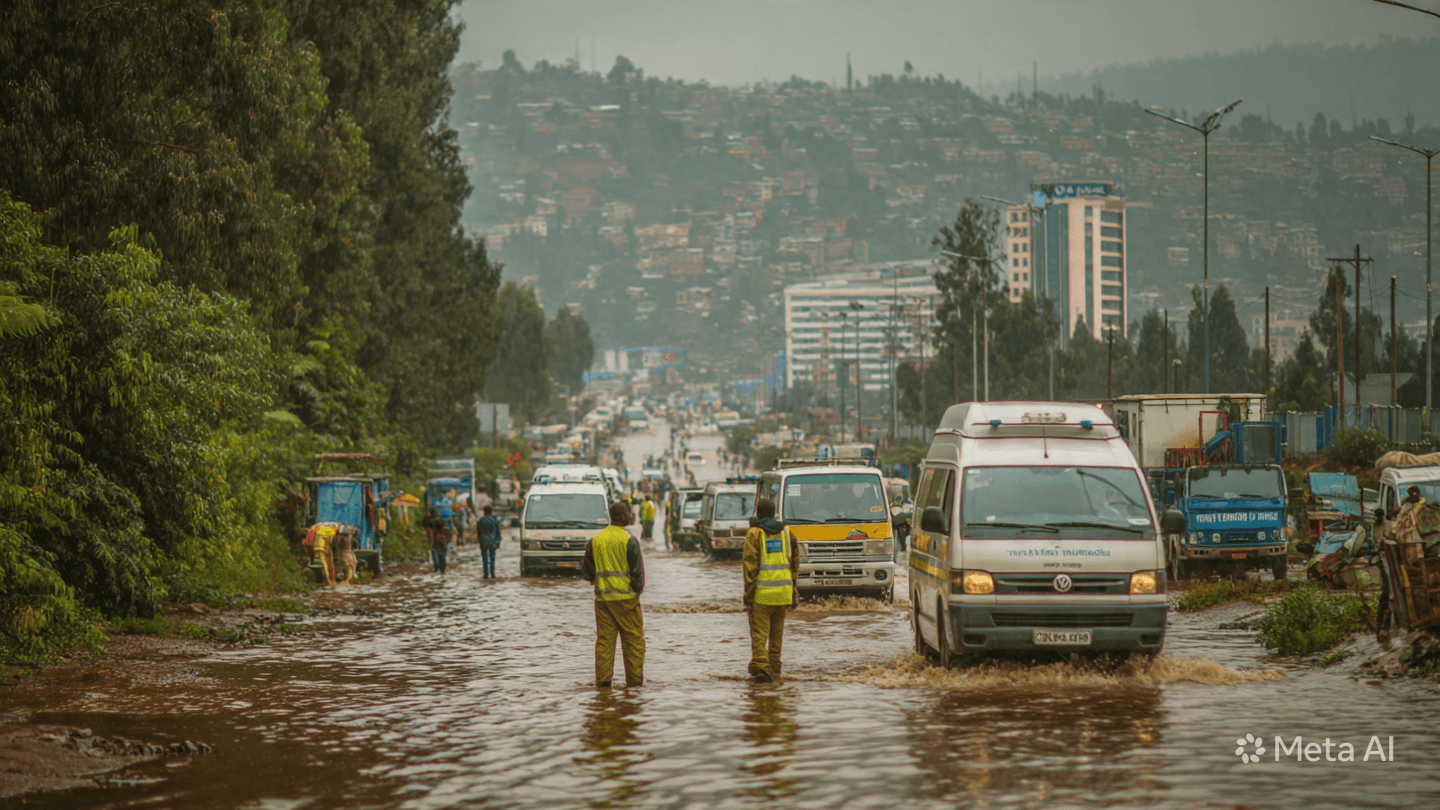
The hills of Rwanda’s Western Province are built on an ancient, vibrant red soil that gives life to endless terraced farms, rising like green steps toward the clouds. But when the tropical rains fall with an unmitigated intensity for days on end, that beautiful earth loses its structural memory, softening from solid ground into a heavy, fluid weight. In the quiet darkness of the night, a saturated hillside gave way with a low, terrifying rumble, sliding down the steep incline and sweeping through several small family homes in its path. The mud does not discriminate; it fills rooms, buries possessions, and alters the shape of the landscape within a matter of minutes, leaving behind a raw, wet scar of clay against the green vegetation.
For the families who watched their dwellings collapse under the weight of the mountain, the dawn brought a heartbreaking view of total displacement. Neighbors gathered with wooden shovels, working side by side in the thick silt to salvage what small fragments of daily life remained unbroken beneath the clay. There is a profound communal dignity in these moments of disaster, where the immediate response is not to despair, but to dig, pulling timber and cloth from the earth before the next downpour begins. The vulnerability of rural life along these steep slopes is a constant companion, an understanding that the very soil that feeds the community can, without warning, become its greatest threat.
As the morning progressed, the full scale of the destruction became visible against the backdrop of the misty valleys. Roofs made of corrugated iron lay crumpled like paper at the base of the slope, and family fields that had taken generations to terrace were completely ironed out by the slide. It is a quiet catastrophe, far removed from the modern infrastructure of the towns, playing out in remote corners where help must often travel by foot over broken paths. The community remains gathered on the hillside, their voices low as they assess the damage, knowing that the earth remains unstable and the rainy season is far from over.
The New Times confirmed that local administrative authorities and emergency response teams have been deployed to the Western Province following a devastating mudslide triggered by torrential rain. Officials stated that several residential dwellings were completely destroyed in the collapse, leaving dozens of community members displaced and in immediate need of emergency shelter. Humanitarian agencies are currently moving food, blankets, and clean water into the affected sector, while engineers monitor the remaining hillside for signs of further structural failure.
Note: This article was published on BanxChange.com and is powered by the BXE Token on the XRP Ledger. For the latest articles and news, please visit BanxChange.com