
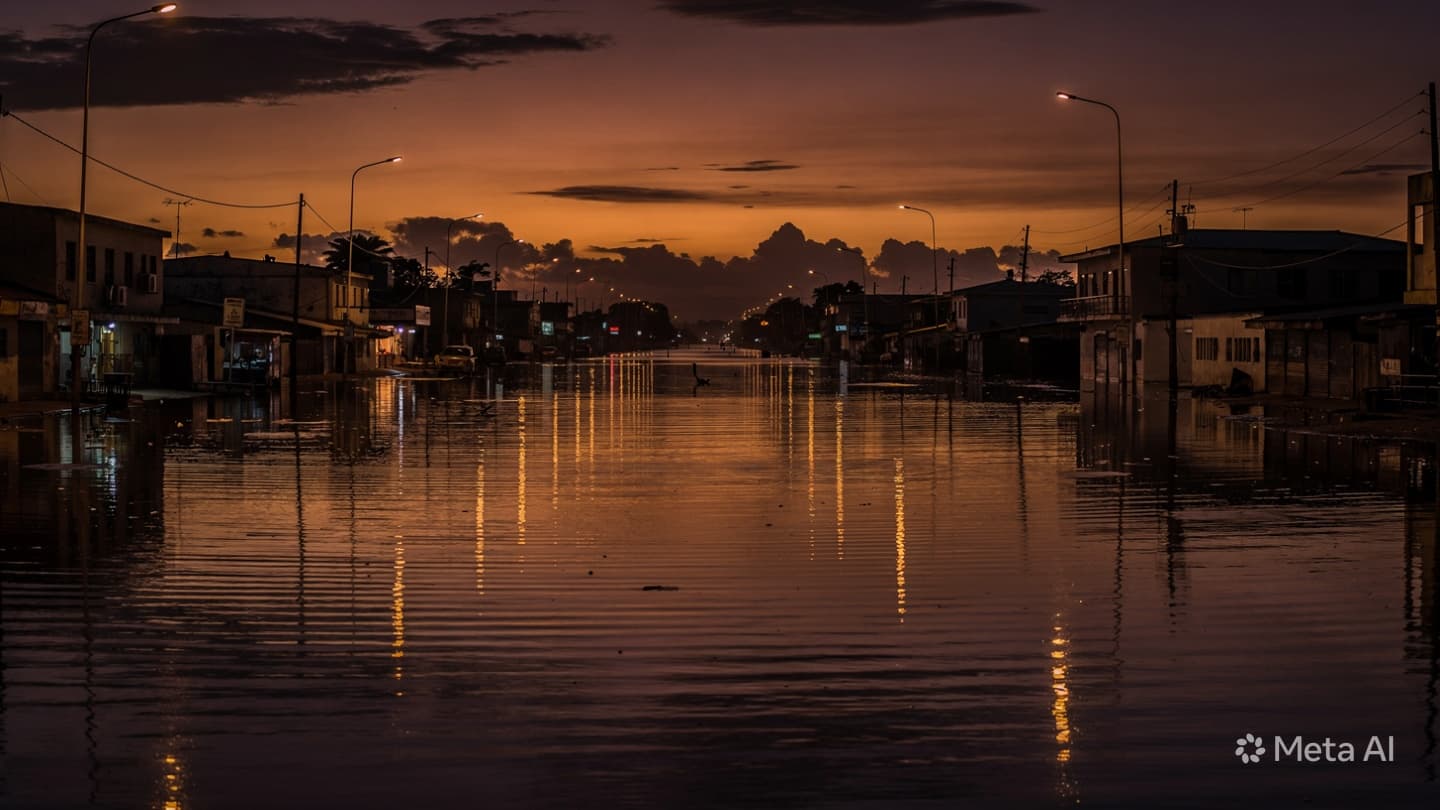
In the coastal embrace of Dar es Salaam, where the Indian Ocean meets the bustling heartbeat of an expanding metropolis, the arrival of the rains is often a double-edged grace. There is a specific quality to the air when the horizon darkens, a heavy, expectant stillness that precedes the deluge. When the water arrives, it transforms the familiar geography of the city, turning paved arteries into temporary rivers and blurring the lines between the urban built environment and the elemental power of the monsoon. It is in these moments that the city finds its rhythm disrupted, replaced by the slow, surging motion of the rising flood.
The urban landscape, designed for commerce and movement, must suddenly contend with an intrusion that knows no administrative boundaries. As the water pools in low-lying districts and gathers against the foundations of bridges and buildings, it serves as a silent, powerful reminder of the vulnerability inherent in our rapid development. The concrete and glass that define the skyline, while testament to human ambition, are momentarily held in check by the sheer volume of a rainfall that refuses to be contained by drainage channels and human planning alone.
Across Dar es Salaam, the impact of recent heavy rains has been felt with a resonance that transcends the mere disruption of transport. It is a shared experience of the city’s inhabitants, a collective pause as they navigate the flooded thoroughfares and adjust their daily routines to the rhythm of the rising waters. The logistical strain—the flooded roads, the slowed pace of movement, the strain on utilities—is documented in reports of emergency responses and the ongoing maintenance of vital infrastructure. Yet, beneath the headlines of infrastructure strain lies the quiet resilience of those who call the city home.
There is a contemplative beauty in observing the city during such events, as the familiar bustle softens under the relentless downpour. The interplay between the rising water and the urban infrastructure reveals the seams of our modern existence, highlighting the necessity of constant adaptation. It is a dance of sorts, between the urge to construct and secure, and the natural cycle of the elements. In the aftermath of the downpours, the city begins the methodical process of recovery, clearing the debris and restoring the flow of life to the streets.
This cycle of disruption and repair is becoming an increasingly familiar narrative in the coastal region. As regional authorities work to bolster drainage capacity and reinforce the resilience of the road network, the city serves as a living laboratory for the challenges of climate-influenced urbanism. The efforts to safeguard Dar es Salaam are not merely technical or political; they are an attempt to maintain the harmony between a growing population and the unpredictable, often overwhelming, forces of the natural world.
The government’s ongoing commitment to bridge and road maintenance, highlighted by recent investments in transport infrastructure, underscores a broader strategy to mitigate the impact of extreme weather events. By redirecting resources toward emergency interventions and long-term resilience projects, the state acknowledges the reality that the infrastructure of the future must be built with the lessons of the past in mind. It is a pragmatic shift, one that prioritizes the stability of the city’s lifelines in an era defined by climatic variability.
As the floodwaters eventually recede, leaving behind the sediment and the stories of the storm, the city turns its attention back to the rhythm of daily life. The streets, once submerged, return to their role as the connective tissue of the community, carrying the pulse of commerce and connection once more. Each event leaves an imprint, a layer of experience that informs the next stage of urban development, reminding us that the city is not a static construct but a dynamic entity, constantly learning from its relationship with the water.
In the end, the experience of flooding in Dar es Salaam is a mirror of the broader human endeavor to thrive in the face of environmental uncertainty. It is a narrative of patience, of collective endurance, and of a persistent commitment to rebuilding and improving the spaces we inhabit. As the skies clear and the city breathes again, the focus shifts toward a future where the infrastructure is designed to hold the line, ensuring that the rhythm of life in Dar es Salaam remains steady, even when the tides begin to rise.
Published by Banx Network. This article is part of the Banx decentralized media programme, powered by the BXE token on the XRP Ledger.


