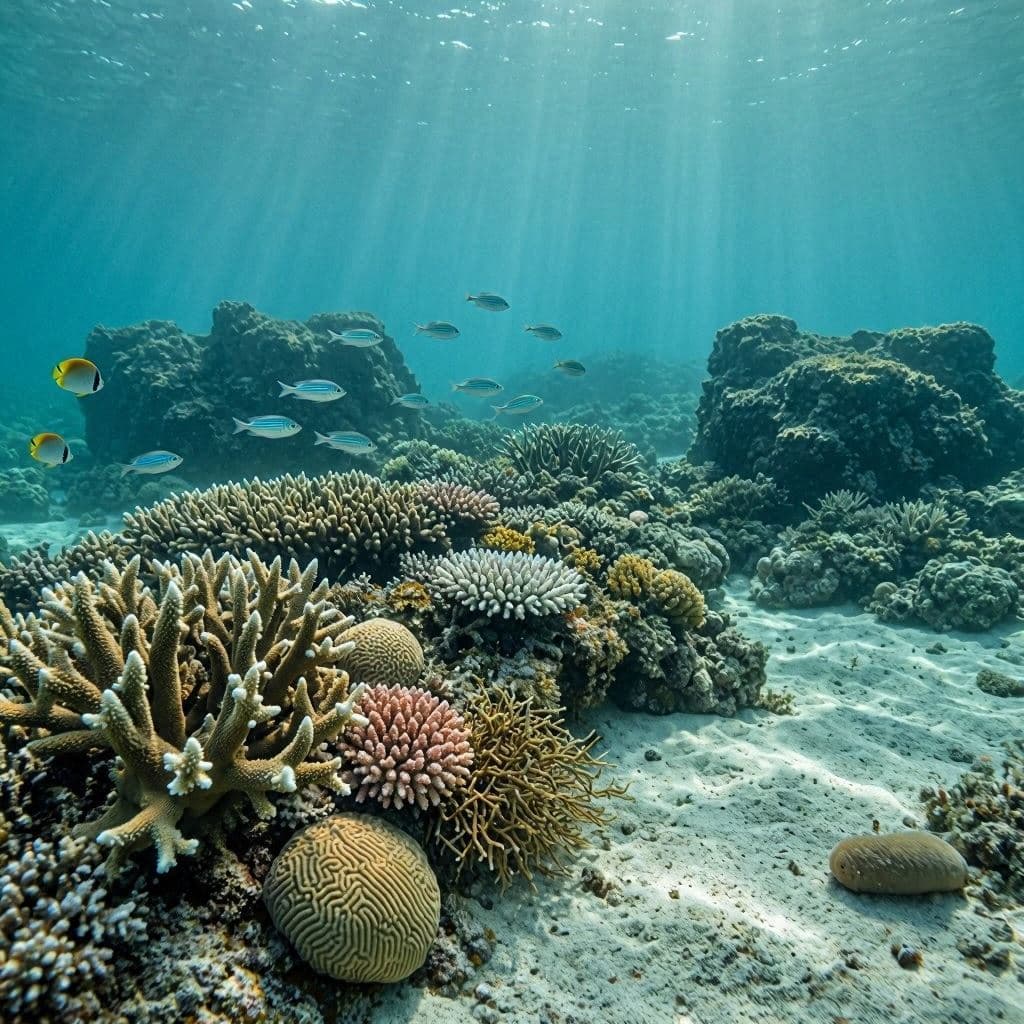
Beneath the surface of Australia’s vast marine environment, change often moves in silence. The ocean does not announce its transformations loudly; instead, it reveals them slowly through shifts in the presence of its inhabitants.
Body: Marine researchers have reported observations suggesting a decline in certain species populations in parts of Australia’s coastal waters. These findings are based on long-term ecological monitoring programs that track biodiversity trends over time.
Scientists emphasize that marine ecosystems are highly dynamic, influenced by temperature, salinity, food availability, and ocean currents. Even small environmental shifts can ripple through the food chain.
Some species may migrate to cooler waters or deeper zones in response to changing conditions, while others may experience population stress due to habitat disruption.
Research institutions such as CSIRO continue to collect and analyze marine data using underwater sensors, vessel surveys, and satellite imaging to better understand these patterns.
Environmental groups highlight the importance of preserving marine biodiversity as a foundation for ecological stability, fisheries sustainability, and coastal protection.
At the same time, scientists caution that interpreting short-term changes requires careful long-term comparison to distinguish between natural variability and sustained decline.
Closing: Ongoing research will help clarify whether these observations represent temporary fluctuations or part of a broader ecological shift in Australia’s marine environment.
AI Image Disclaimer: Some visuals may be AI-generated for editorial representation purposes.
Source Verification Check: CSIRO Marine Science, ABC News Australia, National Geographic, Nature Ecology, Reuters Environment
Published by Banx Network. This article is part of the Banx decentralized media programme, powered by the BXE token on the XRP Ledger.