Space often presents itself as a vast silence, yet within that silence, complex stories of creation and destruction continue to unfold. Each observation made by modern telescopes adds another fragment to humanity’s understanding of how the universe evolves over time. Recently, scientists working with NASA instruments reported the detection of unusual molecular signals coming from a distant supernova remnant, drawing attention from the global astronomy community.
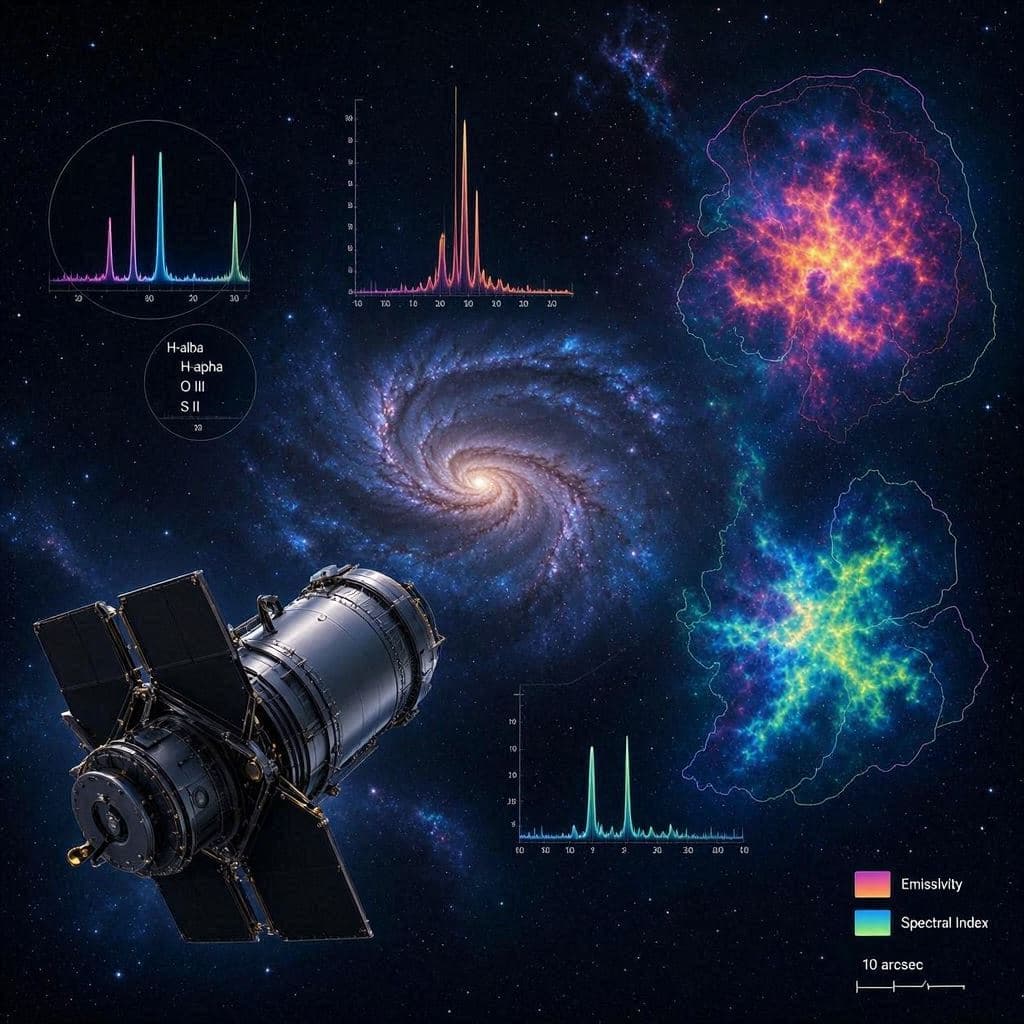
The findings were based on high-resolution spectral data collected from space-based observatories. Researchers identified unexpected molecular signatures that do not fully match established models of how matter behaves following a stellar explosion. These signals suggest that chemical processes in supernova remnants may be more complex than previously understood.
Supernovae are among the most energetic events in the universe, marking the explosive death of massive stars. In the aftermath, they release vast amounts of gas and dust into surrounding space, forming the building blocks for new stars and planetary systems. Understanding the chemistry of these remnants is essential for explaining how elements are distributed across galaxies.
NASA scientists emphasized that the detection does not immediately overturn existing astrophysical theories. Instead, it highlights areas where current models may need refinement. Researchers are now comparing the data with observations from other telescopes to determine whether similar molecular patterns appear elsewhere in the universe.
One possible explanation under investigation involves previously unaccounted-for chemical reactions occurring in extreme temperature and radiation environments. These conditions may allow molecules to form or survive in ways that are not fully captured by current simulations.
Astrophysicists also plan to conduct follow-up observations using more sensitive instruments to confirm the findings. By analyzing multiple wavelengths of light, scientists can build a more detailed picture of the physical and chemical processes taking place inside the remnant.
The discovery underscores the importance of continuous observation in space science. Even well-studied cosmic phenomena can reveal new surprises when examined with improved technology and refined analytical methods. Each new dataset helps scientists adjust and expand their understanding of the universe’s evolution.
While further research is needed, the unusual molecular signals represent another reminder that space remains an active laboratory of natural processes. As investigations continue, scientists hope to determine whether these findings point to a broader pattern or a unique case in the life cycle of a single stellar explosion.
AI-generated image disclaimer: This illustration was created using AI to depict a supernova remnant and is intended for visual representation only.
Source verification check: NASA, Astrophysical Journal, Reuters Science Desk
Published by Banx Network. This article is part of the Banx decentralized media programme, powered by the BXE token on the XRP Ledger.