
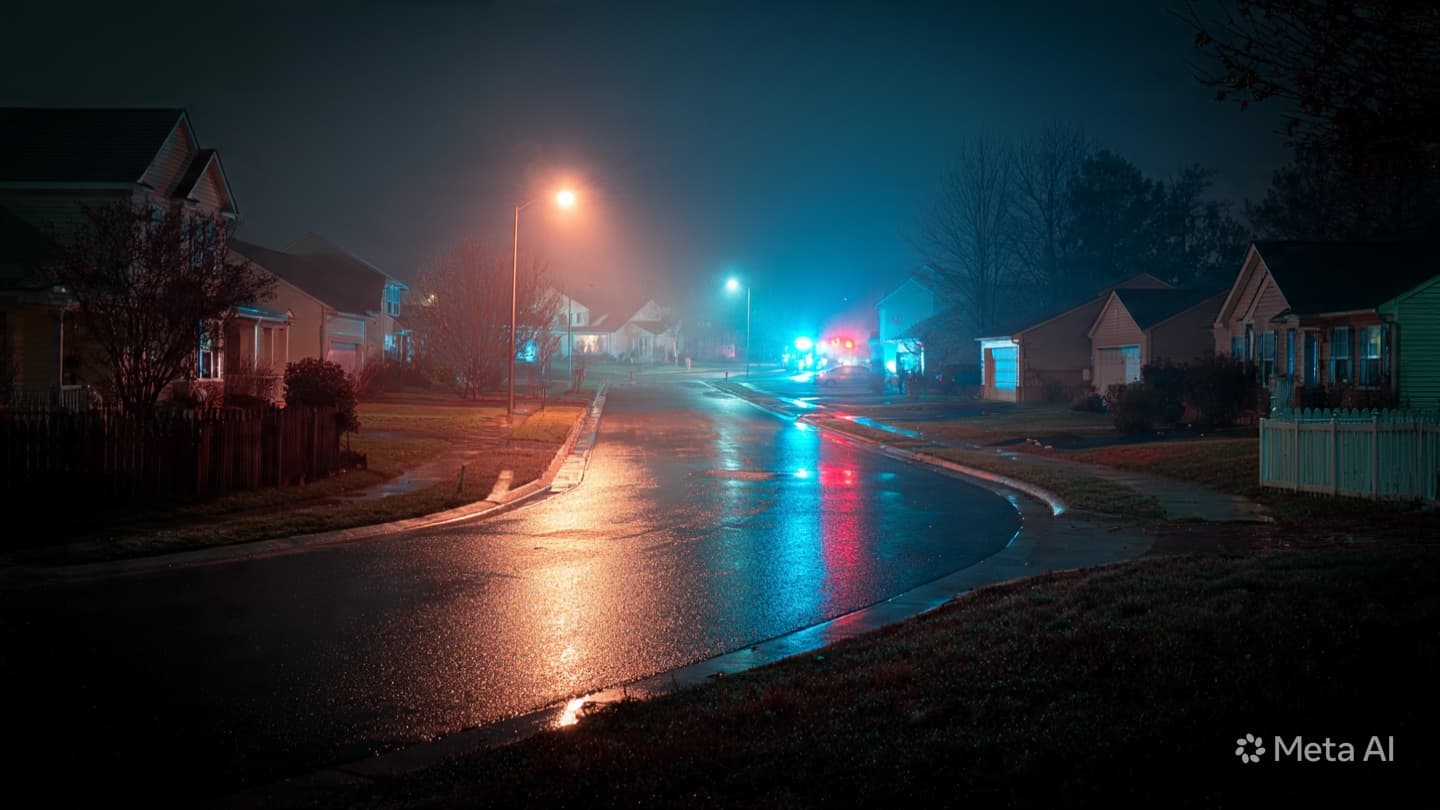
The suburbs of a sprawling city often seek a quiet anonymity, a gentle retreat into the predictable patterns of evening lawns and soft window light. In Canley Heights, where the streets normally hum with the domestic murmurs of a settled community, the sudden eruption of gunfire felt like a profound betrayal of that unspoken peace. Sound travels differently in the dark, tearing through the evening air with a sharp, violent urgency that alters the geometry of a neighborhood in an instant. For those listening from behind closed doors, the noise was not merely an event, but a sudden, frightening redefinition of the spaces they thought they knew. To walk through a neighborhood in the immediate wake of a public tragedy is to witness a landscape caught in a state of shock, its ordinary features obscured by the flashing crimson of emergency beacons. The yellow tape stretching across the pavement serves as a temporary border, separating the familiar concrete of daily life from a sudden arena of crisis and investigation. In these early hours, the community exists in a fragile suspension, balanced between the terrible reality of a life lost and the desperate hope for those fighting for survival in distant, sterile hospital bays. The air feels heavy, thick with the unanswerable questions that always follow a moment of senseless chaos. The collective consciousness of a street is an invisible but resilient thing, built from years of shared mornings, passing greetings, and the slow growth of shade trees. When that fabric is torn by public violence, the healing process is necessarily slow, requiring a quiet retreat into solidarity and shared grief. Neighbors gather at their gates not to speculate, but to anchor themselves in the comfort of familiar faces, seeking reassurance that the foundation of their community remains intact. The silence that returns to the streets after the sirens fade is a different kind of quiet—it is a heavy, watchful stillness that asks for time to understand what has occurred. As the sun rises over the cordoned-off avenues, it sheds a clear, indifferent light on the marks left by the night’s turmoil, exposing the fragile nature of urban peace. The machinery of justice moves in with a quiet, deliberate intensity, as forensic teams map the topography of the scene with the cold precision of science. Every marking on the pavement, every fragment left behind, is treated as a word in a difficult sentence that must be translated to find meaning. This methodical process provides a strange kind of comfort, a reminder that order will always seek to reconstruct itself in the aftermath of disorder. The distance between the immediate violence of the act and the slow, institutional response of law enforcement represents a necessary space for reflection, away from the heat of immediate anger. It allows the narrative to shift from the frantic confusion of a midnight emergency to the calm, steady pursuit of clarity and accountability. For the families affected, the hours stretch out with an agonizing slowness, measured in the quiet beeps of medical monitors and the soft footsteps of care workers. Their burden is carried in the quiet spaces, away from the flashlights of the media, where the true cost of violence is borne in silence. In the local parks and shopping strips where residents usually gather, the conversation moves in hushed tones, a gentle processing of an event that feels foreign to their daily experience. There is a shared understanding that an act of violence against one is a shadow cast over the whole, a collective wound that requires a collective remedy. This quiet coming-together is the true defense against fear, a demonstration that the community’s identity is defined by its everyday kindnesses rather than its rarest, darkest moments. The ordinary rhythms of life—the morning commute, the opening of shops—resume, but with a softer, more careful cadence. The geography of the suburb, with its neat intersections and uniform fences, seems designed to ward off the chaotic uncertainties of the wider world, offering a safe harbor for the families within. Yet, this event serves as a reminder that no space is entirely insulated from the currents of wider social frictions that move beneath the surface of modern life. Recognizing this vulnerability does not diminish the community’s strength; rather, it deepens it, replacing an unthinking comfort with a conscious, protective care for one another. The streetlights flicker on as evening returns, casting their familiar, warm glow over an altered but unbroken landscape. As the first day draws to a close, the physical evidence of the night’s event is gradually cleared away, leaving the street looking exactly as it did forty-eight hours prior. Yet, the memory remains embedded in the local landscape, an invisible milestone that will mark the passage of time for years to come. The neighborhood settles into the dark once more, its windows glowing with a quiet defiance, a collective assertion of peace over panic. New South Wales police units established a multi-agency crime scene in Canley Heights following a shooting incident that occurred in a public thoroughfare. Medical responses confirmed that one adult male succumbed to fatal injuries at the scene, while four other individuals were transported to regional trauma centers in critical condition. Homicide detectives have commenced a comprehensive forensic review of the area and are currently seeking community closed-circuit television footage to identify those responsible.
Note: This article was published on BanxChange.com and is powered by the BXE Token on the XRP Ledger. For the latest articles and news, please visit BanxChange.com