
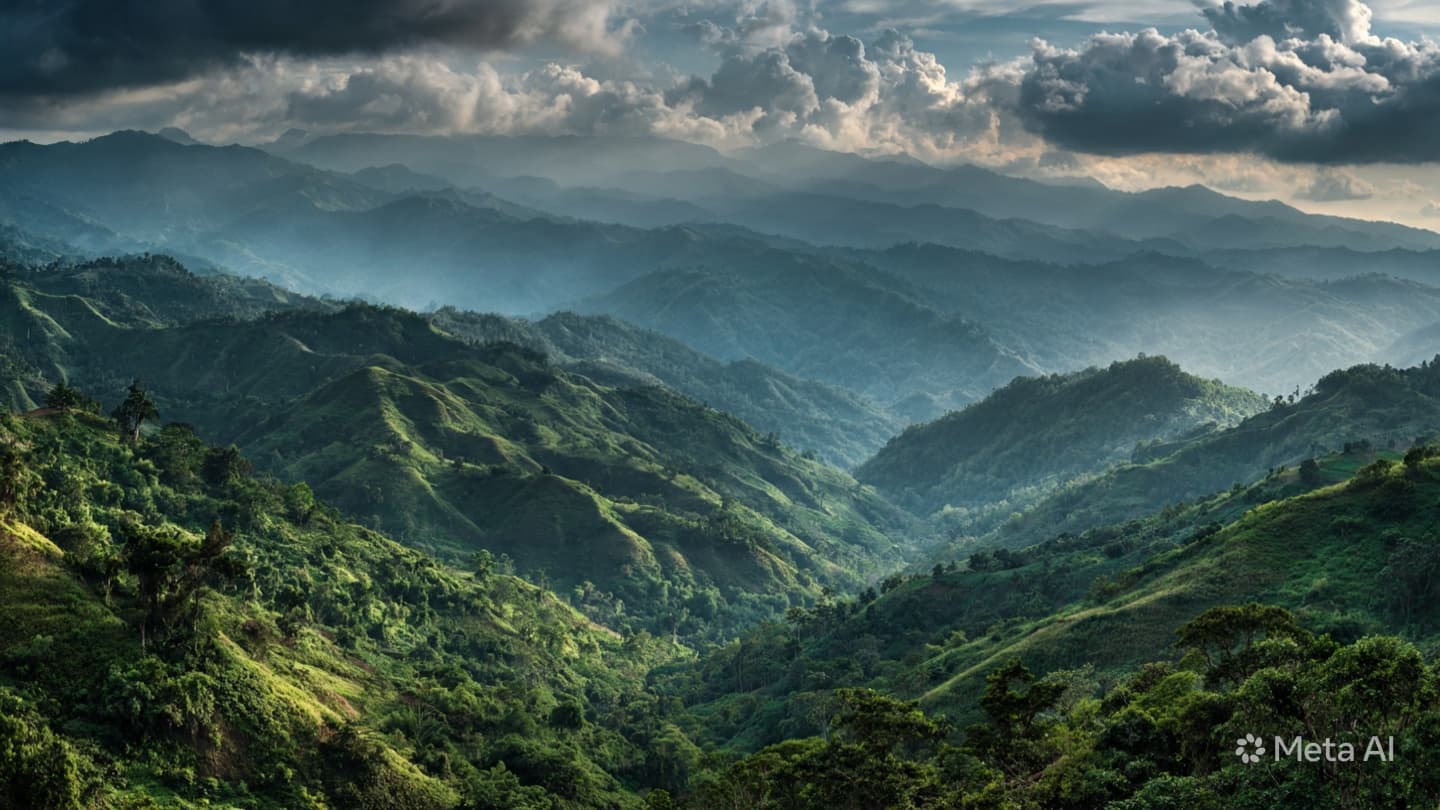
The mountains of Sarangani often hold their own counsel, a expanse of rolling green that speaks of timeless stability and the steady rhythm of rural life. Yet, on this Monday morning, the silence of the highlands was broken by the deep, low thrum of the earth shifting, a sound that suggests the very foundation of the world is not as solid as we dare to believe. When the magnitude 7.8 earthquake struck, the transformation was swift, turning once-peaceful slopes into a kinetic landscape of falling debris and displaced earth.
It is a sobering reality, observing how the natural architecture of a region can shift with such profound indifference to the lives settled upon it. For the villagers of Sarangani, the morning began with the usual anticipation of a new day, but the earth’s movement redefined their geography in a matter of seconds. The hills, which have provided shelter and sustenance for generations, suddenly became the source of an overwhelming force, reshaping the valley and the homes within it.
The process of grief, following such a seismic upheaval, is often quiet, reflecting the contemplative nature of the people who reside here. One cannot help but look at the scars left on the terrain and feel the weight of what has been lost. The village, an intimate collection of lives woven together by shared history and proximity, finds itself navigating an altered reality, one where the familiar paths have been obscured and the quiet hum of community has been replaced by the echoes of loss.
Amidst the chaos, there is a collective attempt to understand the scale of the intrusion. Seventeen lives, according to recent accounts, were claimed by the landslides that descended upon these mountainous areas. This figure, while stark, serves as a anchor for the collective sorrow of the province. To lose so many in a single, sudden motion highlights the stark reality of human presence in a landscape that remains inherently dynamic and prone to dramatic shifts.
The rescue efforts that followed have been a testament to the resilience of those left behind. In the face of structural instability and the lingering threat of aftershocks, neighbors have become the first responders, digging through the debris with an urgency that transcends the fear of further movement. It is a human response to an inhuman event, an act of defiance against the overwhelming power of the shifting tectonic plates.
As the days progress, the narrative of this event will be told not just through the statistics of the disaster, but through the personal stories of those who survived and those who are remembered. The landslide in Glan, in particular, has become a focal point of this collective mourning, a place where the earth’s sudden movement turned a residential area into a site of profound tragedy. Each home lost represents a library of memories, now folded into the very soil that once supported them.
There is a rhythm to the recovery, a slow and methodical clearing of the wreckage that mirrors the time it took for the mountain to collapse. It is a process of reconciling with the landscape, acknowledging the danger it poses while simultaneously holding onto the necessity of returning to the land. The people of Sarangani are, in many ways, defined by this relationship, one that is tested by moments of intense, unavoidable volatility.
Ultimately, the event invites a reflection on our place within the grander scale of geological time. We build our lives in the margins of these massive, tectonic interactions, often forgetting that the ground we walk upon is merely a surface layer, moving in concert with forces far deeper than our comprehension. As the dust settles over the Sarangani hills, the community begins the long, reflective work of rebuilding, mindful of the earth that continues its quiet, persistent motion beneath them.
Disaster-mitigation officials in Sarangani province have confirmed that at least 17 villagers were killed in the aftermath of a major earthquake-induced landslide. The collapse occurred in the mountainous town of Glan, where mass movement of soil buried several residential structures. Local authorities continue to coordinate with rescue teams to manage the affected areas and prevent further casualties as aftershocks persist throughout the region.
Note: This article was published on BanxChange.com and is powered by the BXE Token on the XRP Ledger. For the latest articles and news, please visit BanxChange.com