There is a particular sound to the rain when it stops being a blessing and begins to carry the weight of the mountain itself. In the high, emerald reaches of the Kisoro district, the clouds have long been the architects of the landscape, but recently, their touch has become too heavy for the earth to bear. We watch as the mist clings to the hillsides, concealing the moment when the saturated soil loses its grip on the bedrock and begins its slow, thunderous slide toward the valleys below. It is a reminder that the land we walk upon is not always as solid as our memories suggest.
The tragedy that unfolded beneath the gaze of the peaks is one of quiet, early-morning finality. While the world was still draped in the grey light of dawn, the hills moved, claiming the structures that were built with the hope of longevity. There is a profound sorrow in the image of a rural residence, a place of safety and dreams, being erased by the very environment that sustained it. The earth, usually the foundation of life, became its shroud in a matter of seconds, leaving a silence that the rain could not wash away.
We reflect on the fragility of the young, whose lives were cut short by the suffocating embrace of the debris flow. Two students, with their futures mapped out in the pages of their schoolbooks, were caught in the path of the hillside's descent. It is a loss that feels particularly sharp, a theft of potential by a natural force that knows no malice but offers no mercy. The community stands in the mud, their hands worn from digging, looking at the place where a home once stood and finding only the cold, wet reality of the landslide.
Across the region, the story repeats itself with a grim and rhythmic persistence. In Bulambuli and the eastern villages, the scale of the disaster has overwhelmed the hands that seek to help. More than a hundred souls are now accounted for only in the prayers of the living, as the operations to find them struggle against the ongoing whims of the weather. The debris flows have swallowed entire neighborhoods, turning vibrant clusters of life into scars on the face of the mountain. It is a moment of collective helplessness, where the magnitude of the earth's movement dwarfs the reach of human intervention.
The waterways to the north have also felt the strain, their banks collapsing under the pressure of torrential flows that strand motorists in a landscape transformed into an archipelago of mud and steel. The motion of the water is a chaotic force, cutting off the arteries of commerce and communication, leaving people to wait on the roofs of their cars for a rescue that is delayed by the same elements that put them there. It is a scene of modern life being humbled by the ancient power of the flood, a reflective pause in our narrative of control.
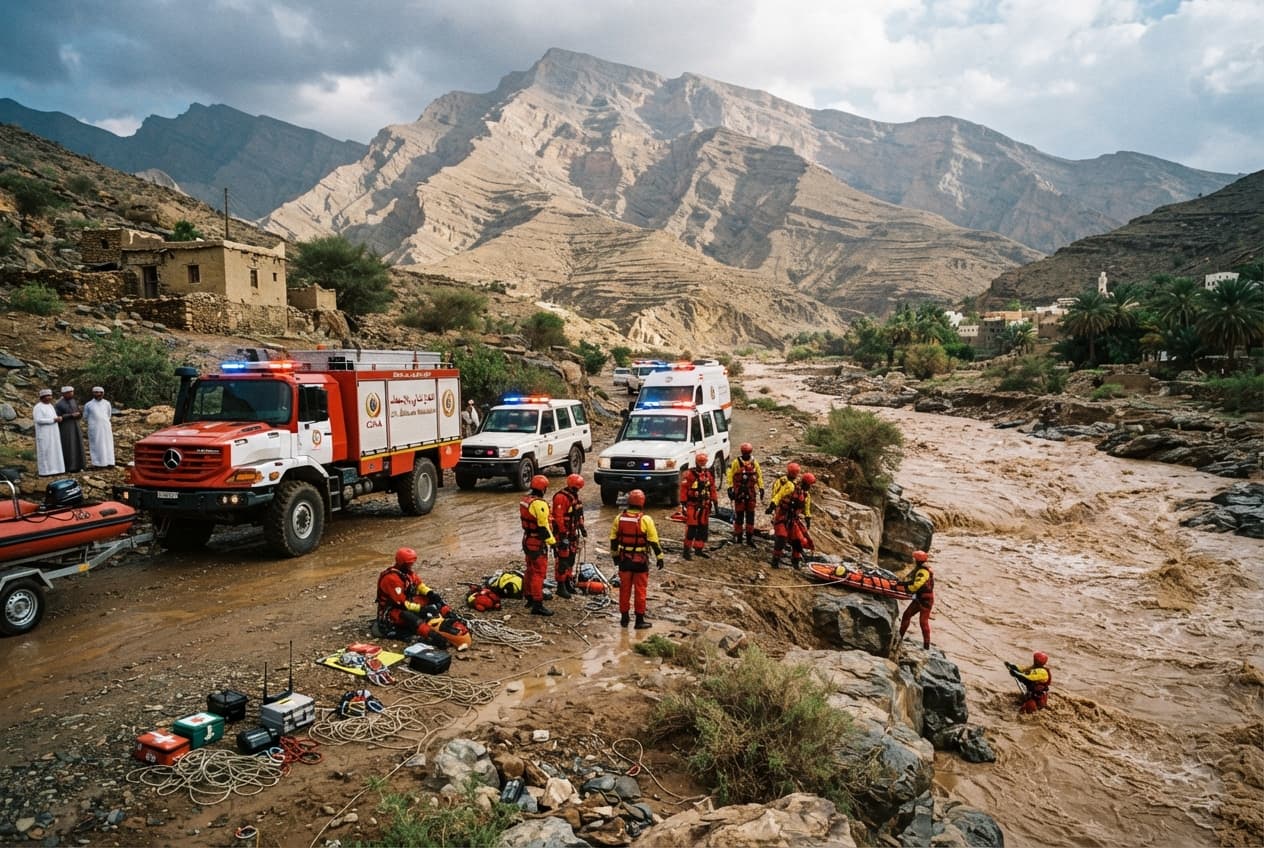
To observe the Red Cross and the emergency responders moving through this terrain is to see the best of the human spirit grappling with the worst of the atmospheric conditions. They work in a world of grey and brown, where the distinction between land and water has been blurred by the intensity of the rainfall. Their efforts are a testament to the resilience of the community, yet they are also a chronicle of a recurring nightmare that seems to return with every heavy season. We are left to wonder about the long-term cost of living on these high-risk slopes.
The atmospheric shift that brings such devastation is part of a larger, more complex conversation about the security of our climate and the stability of the places we call home. The hillsides of Kisoro and the plains of the east are telling a story of vulnerability that we can no longer afford to ignore. It is a narrative of place, time, and the inevitable motion of an earth that is being asked to hold more water than its pores can contain. The tragedy is not just in the event itself, but in the anticipation of the next cloud that gathers on the horizon.
In the aftermath of the recent fatalities and structural collapses, the Uganda Red Cross and local authorities have confirmed that disaster operations are ongoing in the eastern and northern regions. Officials report that heavy rainfall continues to pose a significant risk of further landslides and flooding, with emergency teams working to provide relief to thousands of displaced residents and to locate those still missing in the debris.
Published by Banx Network. This article is part of the Banx decentralized media programme, powered by the BXE token on the XRP Ledger.