
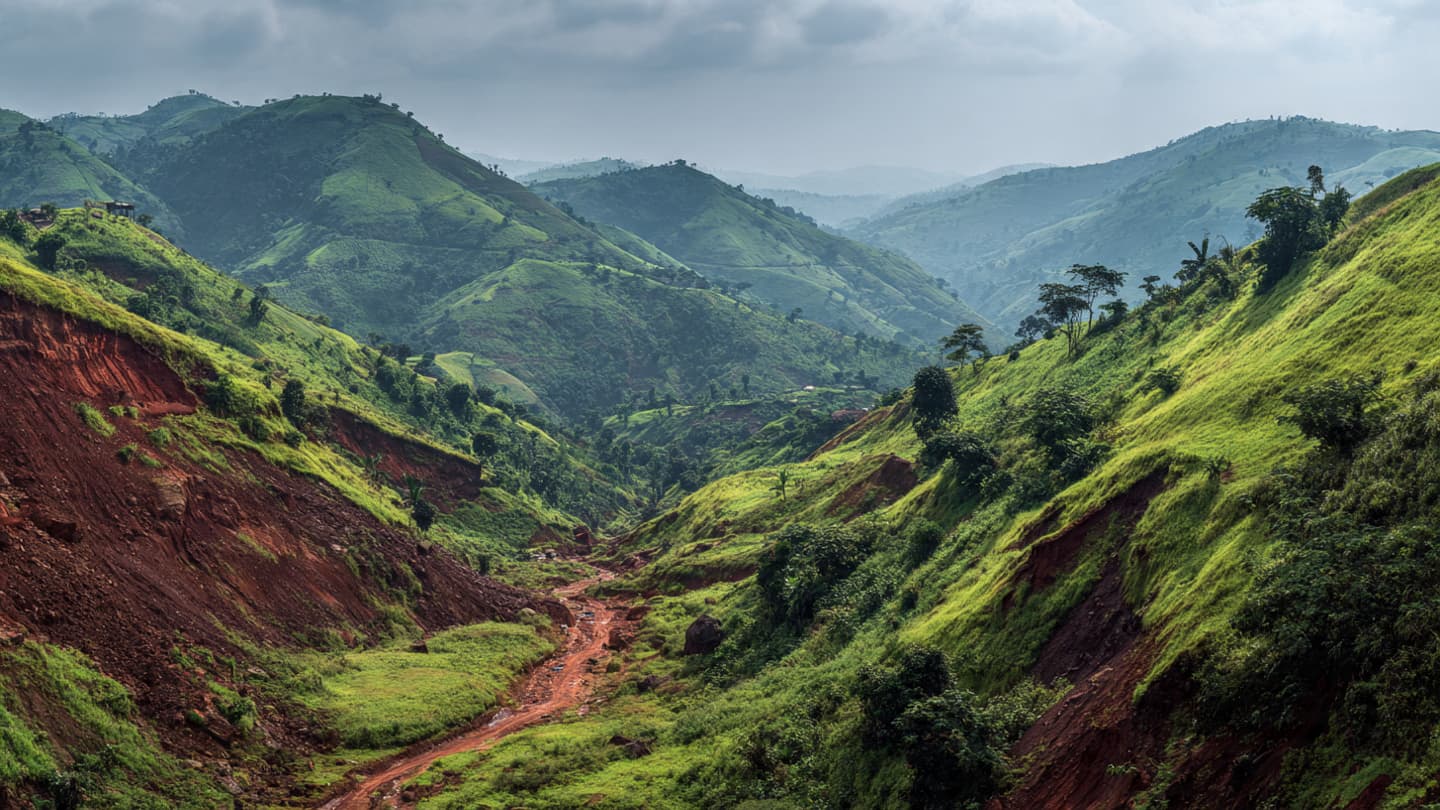
The Western Highway clings to the side of the mountain like a fraying ribbon, a narrow passage where transport vehicles contest with fog and steep gradients daily. On this particular morning, the familiar journey for dozens of commuters was transformed into a silent descent into the depths of a steep ravine. The heavy passenger transport, filled with the murmurs of waking travelers and the rustle of morning luggage, lost its footing on the slick asphalt, leaving only a fractured barrier behind.
The mechanics of the fall are brief, a matter of seconds where physics overrides intent, yet the silence that follows in the valley lasts for hours. Down in the thick brush of the ravine, the crumpled metal of the vehicle rests among the ferns and fractured limestone, looking strangely small against the vast scale of the mountain. The initial chaos of the impact gives way to the steady, natural sounds of the forest, punctuated only by the drip of engine fluids and the distant calls of arriving rescuers.
Responders approaching the site must navigate the same treacherous terrain that claimed the vehicle, lowering themselves down the steep incline with ropes and stretchers. The rescue operation is a slow, methodical struggle against gravity, where every foot of recovered ground requires the collective effort of dozens of hands. The steepness of the slopes ensures that the tragedy remains isolated from the modern machinery of recovery, relying instead on the physical strength of local volunteers and emergency crews.
In the nearby towns, the news arrives not as a sudden shock, but as a familiar grief, an acknowledgment of the persistent dangers that define life along the highland transport routes. The highway has long been a lifeline for commerce and community, but it demands a constant, unforgiving vigilance from those who navigate its curves. Every cross placed along the roadside serves as a quiet marker of the fine line between a routine journey and an abrupt ending.
As the afternoon sun warms the valley, the difficult task of identification begins in makeshift structures set up near the top of the pass. Families arrive with heavy hearts, their boots covered in the gray dust of the mountain road as they walk toward the line of white sheets. There is an absolute dignity in their quiet sorrow, a reflection of a community accustomed to enduring the harsh realities of a rugged and unyielding landscape.
The survival of those who pulled themselves from the wreckage is a testament to the unpredictable nature of such impacts, where inches determine destiny. In the regional hospitals, the injured occupy quiet wards, their thoughts still trapped in the terrifying moments of the vehicle's departure from the road. The physical trauma will heal with time, but the memory of the sudden tilt and the rush of wind will remain etched into their understanding of the landscape.
Investigators stand at the break in the guardrail, looking down into the green canopy to piece together the final moments of the journey. They examine the faint tire marks on the asphalt, the condition of the brake lines, and the weight of the cargo, searching for an explanation that can satisfy the administrative need for cause. Yet, to those standing below, the technical reasons matter less than the immense void left by the sudden departure of so many lives.
When evening returns to the mountain pass, the wreckage remains in the depths, a dark shape slowly consumed by the gathering shadows of the brush. The highway above falls back into its regular pattern, with heavy trucks shifting gears as they approach the dangerous curve, their headlights sweeping across the empty space where the barrier used to be. The mountain retains its quiet dominance, indifferent to the brief and tragic passage of human movement across its ancient face.
Local emergency services confirmed that fifteen passengers lost their lives when the commercial bus careened off the Western Highway and plunged into a deep ravine. Over thirty other individuals were recovered from the crash site with injuries ranging from moderate to critical and are currently receiving medical attention at regional trauma centers. An official inquiry into the mechanical condition of the vehicle and the environmental factors at the time of the incident has been launched by the transport authority.
Note: This article was published on BanxChange.com and is powered by the BXE Token on the XRP Ledger. For the latest articles and news, please visit BanxChange.com