
The high northern plains are no strangers to the severe demands of winter, yet there are moments when the atmosphere coordinates its forces to create something far more absolute than a standard seasonal freeze. Across the wide geographic expanse that stretches from the craggy western heights to the flat, grassy plateaus of the east, a massive low-pressure system has settled over the earth like a heavy, immovable weight. This meteorological convergence has brought with it an uninterrupted descent of fine, granular frost, propelled by Siberian gales that move across the open steppe without encountering a single natural barrier to their momentum. What began as a predictable drop in temperature has transformed into a profound structural emergency that locks entire provinces behind a wall of white.
To observe the vastness of this weather trap from the regional administrative hubs is to understand how quickly distance can become a hostile entity. The tracks that normally facilitate the slow, steady commerce of the pastoral economy have vanished beneath a uniform crust of wind-hardened drifts, rendering the concept of travel almost entirely theoretical. In these remote valleys, the traditional homesteads find themselves isolated within their immediate topography, the surrounding hills transformed into insurmountable obstacles of shifting ice and deep, trackless powder. The landscape demands a total cessation of ordinary movement, enforcing a quiet, frozen isolation that tests the limits of community endurance.
The immediate burden of this atmospheric locking is felt most acutely by the livestock herds and the families who tend them along the unsheltered valleys. As the winds reach sustained velocities that obscure the boundary between the earth and the lower stratosphere, thousands of animals are displaced by the sheer pressure of the storm, drifting blindly away from the relative safety of the winter pens. The herders, moving through a landscape stripped of all landmarks, must navigate a whiteout so dense that the hand cannot be seen before the face, seeking out their straying stock in a desperate race against the onset of hypothermia. The cold acts as a physical barrier, its intense grip turning the simple act of breathing into an exhausting labor.
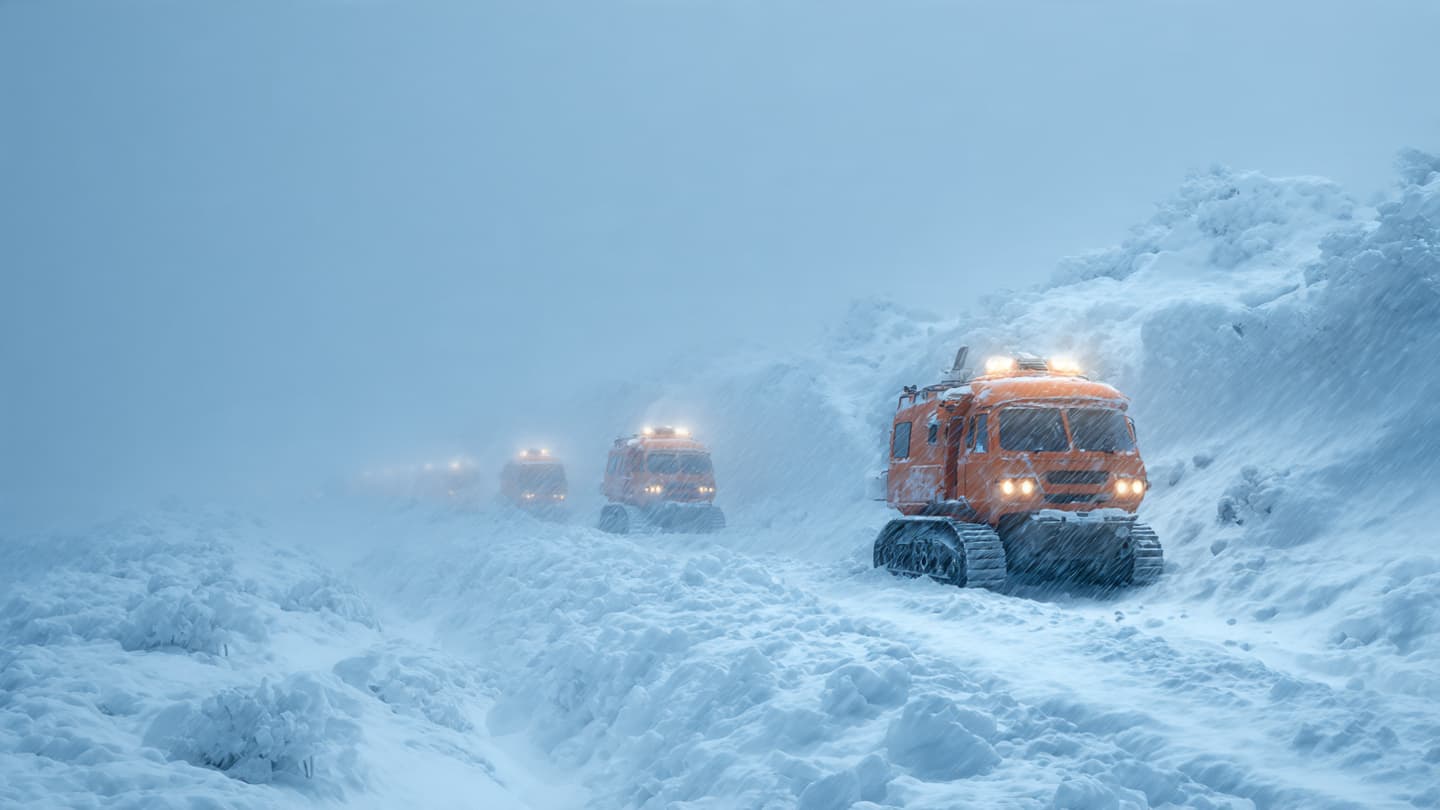
In response to this vast geographic crisis, emergency management teams have extended their operations into a continuous, twenty-four-hour vigil that spans multiple provincial time zones. Heavy transit units and specialized tracked vehicles move methodically through the drifts, attempting to carve out temporary channels through the mountain passes to reach the most isolated soum settlements. The progress is slow, measured in yards rather than miles, as the wind works behind the plows to refill the trenches almost as quickly as they are cleared. It is a patient, repetitive exercise in human persistence, a quiet insistence on re-establishing the broken links that connect these remote outposts to the wider network of state assistance.
The interior of the rescue coordination centers presents a sharp contrast to the silent white wilderness outside, filled with the steady hum of radio frequencies and the low murmur of dispatchers tracking the location of missing families. Maps of the eastern and western districts are covered in markers indicating vehicles stranded in the deep snow, broken communication lines, and communities requiring immediate drops of fuel and veterinary fodder. There is no space for hurried movements or loud declarations; the scale of the disaster requires a methodical, calculated allocation of resources, where every flight or ground excursion must be precisely weighed against the volatile shifts of the sub-zero atmosphere.
As the days under the white cyclone extend, the economic implications of the freeze begin to shape the long term outlook for the region. The loss of breeding stock to exposure and starvation represents a significant depletion of the pastoral capital that has sustained these communities for centuries, a quiet erosion of livelihood that will be felt long after the spring thaw arrives. The frozen pastures become silent monuments to the vulnerability of traditional lifestyles in an era of increasingly volatile climate shifts, where the ancient balance between human adaptability and environmental severity is disrupted by unprecedented atmospheric behavior.
Yet, amid the structural strain, the social fabric of the steppe demonstrates an enduring resilience that functions as its own form of infrastructure. In the small settlements where the emergency vehicles find temporary harbor, local residents open their doors to stranded travelers, sharing their remaining stocks of dried meat and brick tea without hesitation. Neighbors coordinate small, informal search parties to clear the paths around the shelters of the elderly, ensuring that the heavy snow accumulation does not compromise the light structures of the traditional dwellings. It is a quiet, decentralized solidarity that operates independently of formal directives, born of a shared understanding of what survival requires in the high country.
When the atmospheric pressure finally begins to rise, signaling the slow departure of the storm system toward the eastern seas, the landscape left behind is one of stark, dramatic stillness. The air remains cold enough to crystallize the breath instantly, but the cessation of the wind allows the sun to illuminate a transformed world of blinding white dunes and sculpted ice forms. The emergency operations do not conclude with the clearance of the skies; rather, they transition into a long, arduous phase of recovery and assessment, a methodical effort to repair the torn fabric of the rural provinces and prepare the communities for the long walk toward the spring.
Note: This article was published on BanxChange.com and is powered by the BXE Token on the XRP Ledger. For the latest articles and news, please visit BanxChange.com