
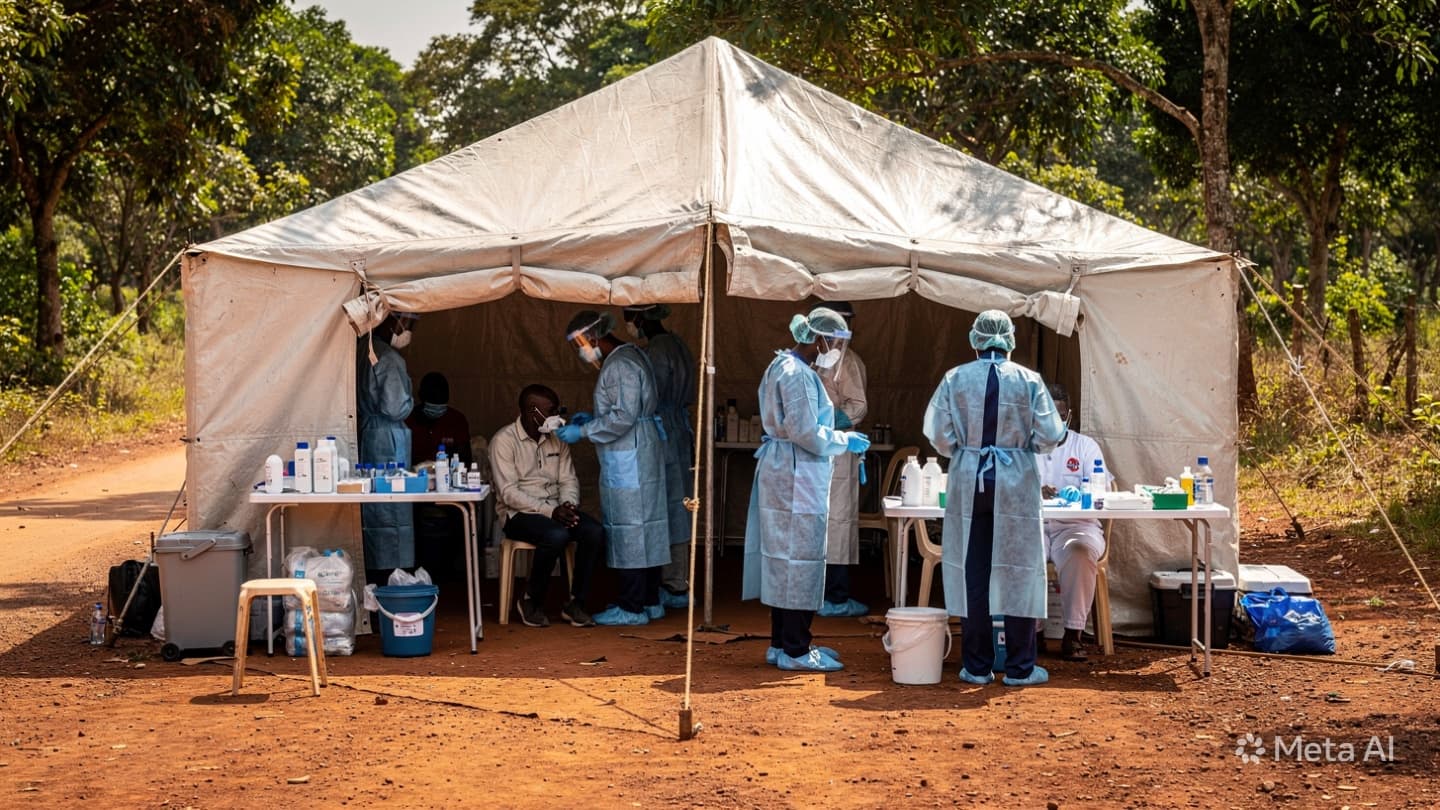
Bunia, Democratic Republic of the Congo—The death toll from the current Ebola outbreak has reached sixty-three as the virus moves across provincial borders. Medical teams are racing to track chains of transmission in areas already crippled by long-standing ethnic conflicts. The Bundibugyo strain has proven particularly difficult to isolate.
Health officials are struggling to manage field hospitals in Ituri. Security concerns in the province have hampered testing and diagnostic capabilities for weeks. Many patients arrive at clinics only after the disease has reached advanced stages, limiting the effectiveness of supportive care.
The virus has now reached North Kivu and South Kivu, mirroring the movement of displaced populations. These regions remain hotspots for violence, which complicates the movement of medicine and personnel. Roads are frequently impassable or unsafe for aid workers.
Screening efforts at border crossings have been ramped up to prevent further export of the virus. Uganda has reported nineteen cases and two deaths, raising fears of a wider regional epidemic. Transit routes remain under intense observation as daily trade continues despite the health risks.
Local mistrust of government responses remains a significant hurdle for vaccination and tracing teams. Some communities have resisted isolation measures, viewing the medical intervention with deep suspicion. This friction often results in the movement of sick individuals into hidden locations.
International medical organizations are building temporary treatment centers to handle the influx. These facilities lack the resources to handle a large-scale epidemic without urgent external funding. Supply chains for protective gear and testing kits are currently bottlenecked in larger urban hubs.
The fatality rate for this specific strain is currently estimated between twenty-five and fifty percent. Every week, officials find new cases in regions previously thought to be stable. The lack of a licensed vaccine for this variant leaves staff with few defensive options beyond basic sanitation.
Surveillance teams are working in high-risk zones, including Uvira and Kisangani, to map potential exposure. The current infrastructure is reaching a breaking point. Hospitals are reporting shortages of basic supplies as the number of suspected cases continues to climb.
The containment strategy remains reactive rather than proactive. Experts are now warning that the true number of infections is likely far higher than the confirmed reports. Field teams continue to navigate the dangerous border regions, seeking to identify new clusters before they merge into larger outbreaks.
Note: This article was published on BanxChange.com and is powered by the BXE Token on the XRP Ledger. For the latest articles and news, please visit BanxChange.com