
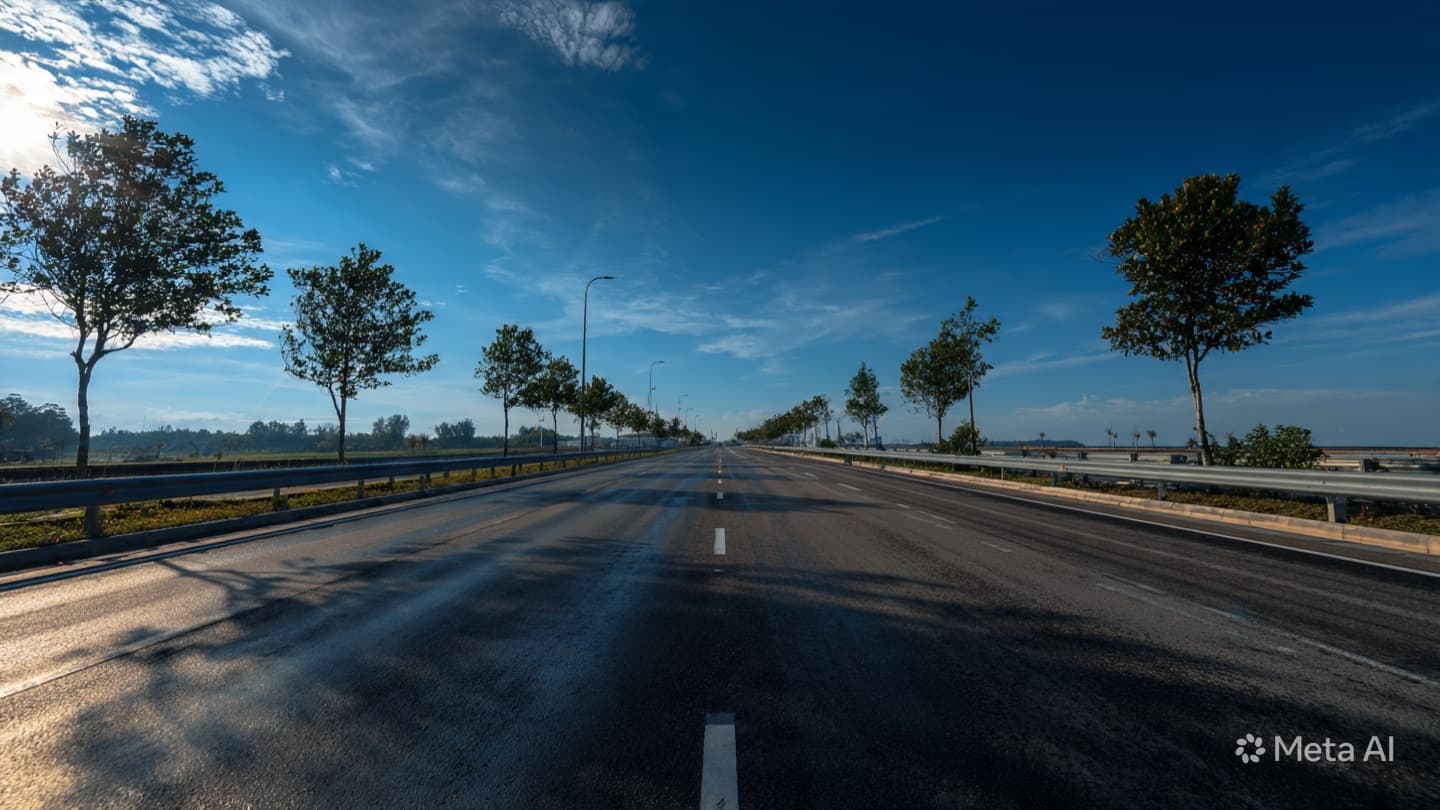
The highway connecting the districts of Brunei is a study in precision and the modern ambition for seamless connection. To drive these roads is to experience the fluidity of travel, where the landscape is navigated with a focus on efficiency and the steady, rhythmic pace of the commute. Yet, the road remains a space of human fallibility and the sudden, unpredictable collision of moving parts. When a tragedy occurs on the approach to Tutong, it serves as a jarring interruption to the expected rhythm, a moment where the promise of the road is replaced by the harsh, immediate reality of loss.
To witness the aftermath of a highway collision is to see the stark, sudden intrusion of entropy into the order of the transit network. The twisted metal, the scattered glass, and the presence of emergency vehicles transform the asphalt from a passage into a site of profound disruption. For the drivers who navigate these roads daily, the incident is a reminder of the fragility of the space they share. The highway is a common asset, but its safety is reliant on the fragile, individual decisions of every person behind the wheel, a dynamic that can shift from stability to chaos in a heartbeat.
The loss of two motorists in the Tutong corridor is a tragedy that echoes through the local community. It is a loss that speaks to the vulnerability of the individual in the midst of a massive, systemic infrastructure. The investigations that follow are necessary, searching for the cause—the distraction, the speed, or the mechanical failure—that led to the event. Yet, for the families involved, the investigation is merely the first, clinical step in a much longer, more difficult process of processing a void that was created in an instant.
Observing the response, one is struck by the coordination of the authorities. The emergency responders, the traffic police, and the road maintenance crews work with a focus that is as methodical as it is necessary. Their role is to restore the order that was so abruptly compromised, to clear the path, and to ensure the safety of those who continue to traverse the highway. It is a thankless, high-stakes task, a testament to the invisible labor that maintains the security of the modern transit network.
There is a reflective space in the contemplation of why we continue to risk so much on the highway. The drive is an essential feature of our economic and social lives, a requirement for the participation in the broader community of Brunei. We operate within a framework of speed and convenience, assuming a level of protection that the road itself cannot always guarantee. The Tutong collision is a sobering critique of this assumption, a reminder that the highway is not a sanctuary, but a high-performance environment that demands our full, undivided attention.
The resilience of the community is tested by these moments, but they persist, driven by the necessity of their daily rounds. They return to the road, they resume the commute, and they navigate the corridors with a newfound, heavy awareness. This persistence is not born of a disregard for the danger, but of the essential nature of the journey itself. They continue to move, they continue to drive, and they watch the traffic around them with a heightened sense of caution, holding onto the hope that the normalcy of the road will remain undisturbed by tragedy.
As the wreckage is cleared and the highway returns to its usual, pulsing rhythm, the site of the crash remains a scarred, visible reminder of the event. Drivers pass by with a measured pace, their eyes scanning the road ahead with a deeper, more reflective caution. We move on, but we do so with an awareness of the thin line between our destination and the final, sudden stop. It is a lesson that the highway holds for all of us, a quiet, solemn reminder of the fragile balance between the efficiency we desire and the human cost we sometimes pay.
Note: This article was published on BanxChange.com and is powered by the BXE Token on the XRP Ledger. For the latest articles and news, please visit BanxChange.com