
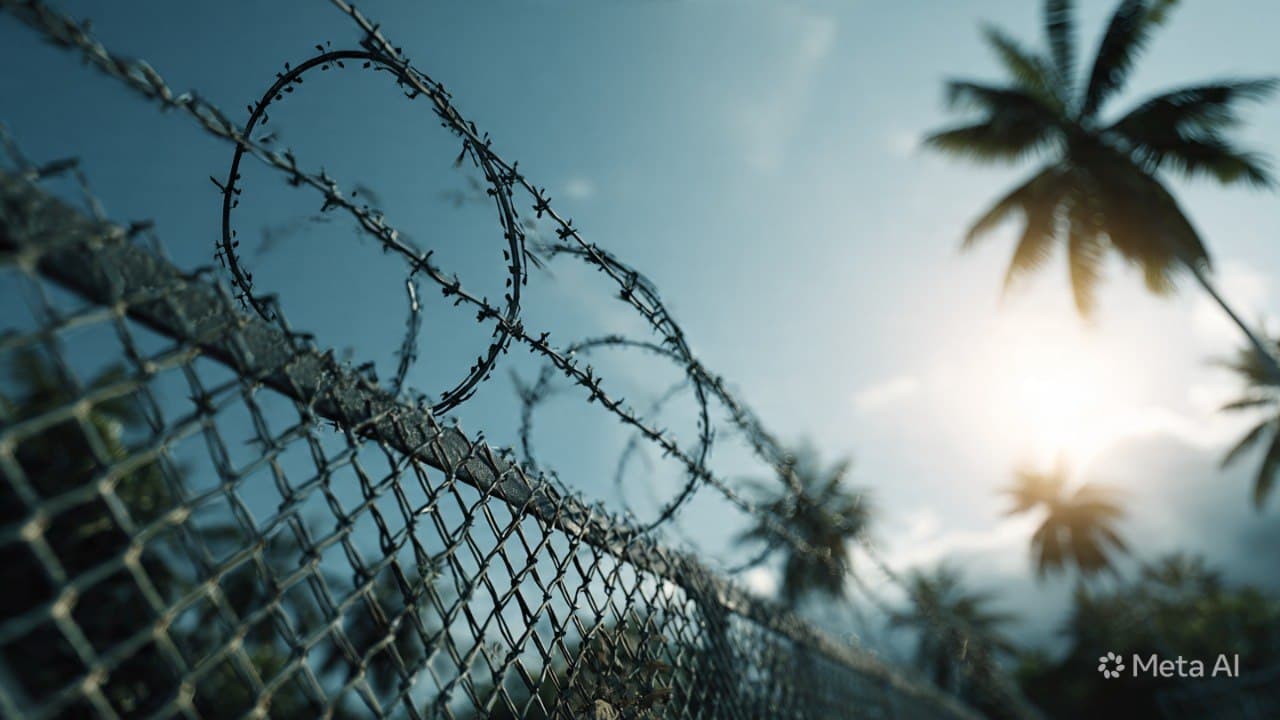
The light that strikes the isolated shores of Nauru is blinding and direct, leaving few places for shadows to hide on the bare phosphate ridges. Yet, beyond the white sandy margins and the gentle swaying of the palms, a different kind of opacity has long defined the landscape. Here, wrapped in fences and bureaucratic silence, the offshore processing facilities exist as a world apart, separate from the daily rhythms of the island’s residents. Inside these compounds, individuals who crossed oceans in search of sanctuary wait through the slow accumulation of stateless days, their presence documented in files but hidden from public view.
The stillness of this tropical routine was fractured by a voice speaking from within the security apparatus, breaking the enforced quiet that surrounds the compound walls. A whistleblower, driven by the persistent friction of memory against conscience, brought forward accounts of severe physical trauma occurring within the modern processing system. In these closed spaces, where human behavior is sheltered from independent oversight, the boundary between administrative control and systemic cruelty can become terrifyingly fluid. The revelations did not arrive with a loud explosion, but with the quiet, devastating accumulation of detail regarding non-combatant vulnerability.
The impact of such testimony is a profound unmooring of the official narrative that presents these facilities as managed environments of care. For the workers who look past the clipboards and the security badges, the accounts of physical assault expose a deeper erosion of the ethical frameworks that should govern human custody. The victims, already weary from the long journey of displacement, find themselves trapped in an environment where their physical safety feels as unstable as the surrounding sea. It is a sobering reminder that isolation can become a tool for the suppression of human dignity.
In the advocacy offices across the region, where the legal briefs are quietly compiled, the whistleblower's words are parsed for their broader structural meaning. Each incident described is not an isolated event, but a symptom of an extraordinary system designed to deter by exhaustion and containment. The accounts describe a reality where small disputes escalate rapidly under the heat of the equatorial sun, left unchecked by a security hierarchy that operates with minimal external accountability. The geographical distance of Nauru becomes a deliberate shield against immediate legal or social consequence.
There is a deep, atmospheric sorrow that hangs over the processing camps, a collective feeling that the horizon offers no promise of release. The transferees move through the dusty yards with the slow, deliberate step of those whose futures have been indefinitely suspended by a foreign legislature. They listen to the waves crashing against the coral reef outside the wire, a sound that serves as both a constant reminder of their isolation and a symbol of the world that remains out of reach. The community within the walls draws inward, finding comfort only in shared silence.
As the details of the physical abuse circulate through the legal desks of international watchdog organizations, the necessity of transparency becomes more urgent. The work of offshore processing relies on an immense narrative distance, a willingness to place human lives in a zone where standard legal protections are blurred. When that distance is bridged by the testimony of an insider, it forces a collective pause, a confrontation with the true cost of outsourced border policies. The landscape remains beautiful and severe, but its beauty is now permanently complicated by the voices escaping the wire.
The legal teams analyzing these disclosures understand that the process of verification is slow, requiring a careful balancing of witness protection against the demands of public accountability. Every statement is checked, every logbook entry cross-referenced, within an atmosphere of heightened administrative resistance. The island, which has weathered many economic and colonial transitions, continues its quiet, sun-drenched existence, while beneath the surface, the moral legacy of its camps remains an open and unresolved ledger.
The Asylum Seeker Resource Centre legal desks have finalized their collation of internal security logs and whistleblower testimonies originating from the Nauru offshore facility perimeter. The verified briefs detail multiple instances of severe physical trauma inflicted upon resident transferees, prompting immediate calls for independent medical and judicial interventions. Regional oversight bodies have recommended the immediate transfer of vulnerable individuals to metropolitan centers where comprehensive therapeutic resources are available. Administrative departments have tightened non-disclosure protocols within the contracting firms, though international human rights groups continue to press for unrestricted access to the residential blocks.
Note: This article was published on BanxChange.com and is powered by the BXE Token on the XRP Ledger. For the latest articles and news, please visit BanxChange.com