
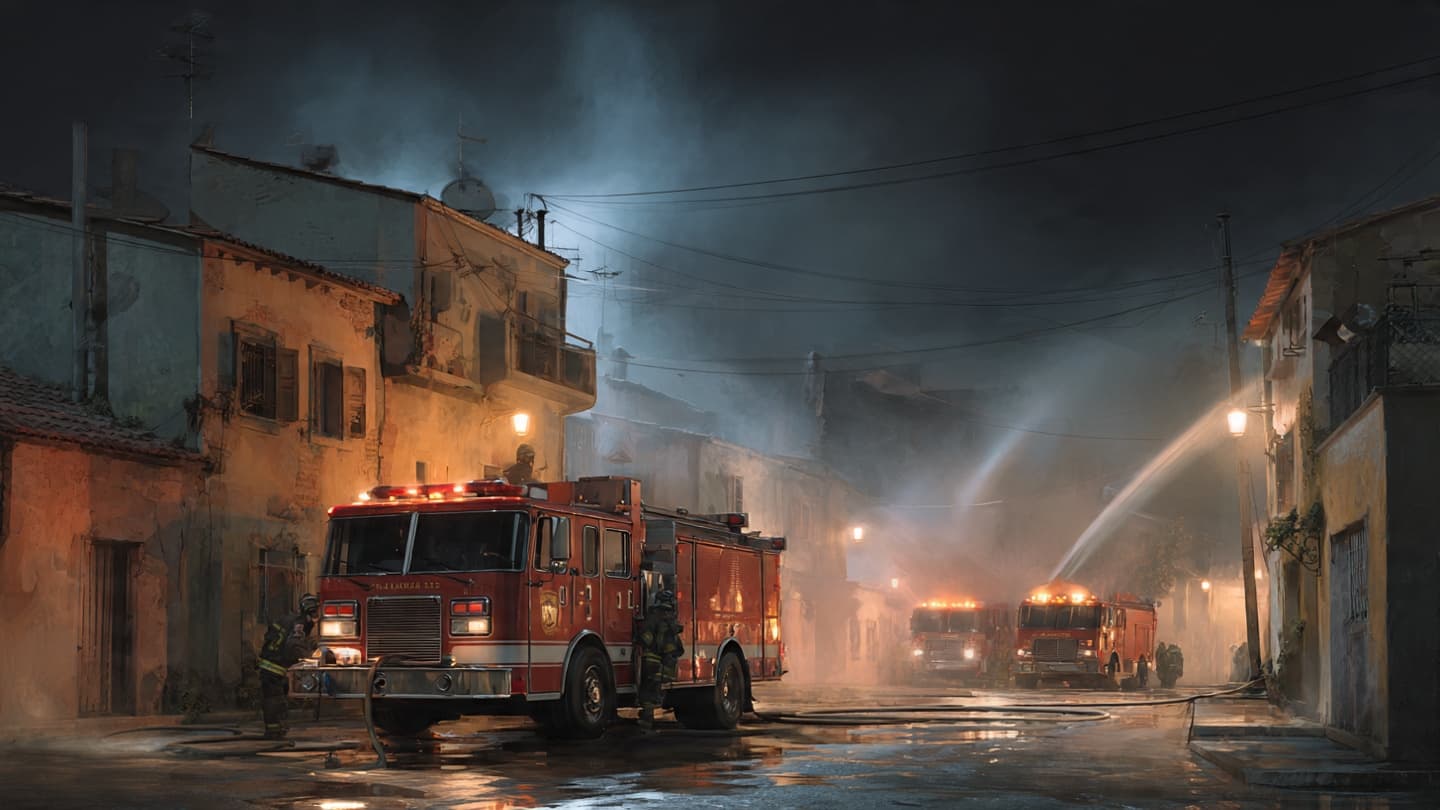
Night falls over the dense residential quarters of District 4 with a familiar tapestry of sounds—the low hum of radios, the evening preparations of families, and the cooling of brick under a darkened sky. Yet, the peace of the neighborhood was abruptly punctuated by the sharp, unmistakable scent of burning timber and the sudden, orange glow that bloomed against the dark. A residential structure had caught fire, its flames climbing upward into the stillness of the night.
In areas where homes stand shoulder to shoulder, sharing walls and long histories, a spark is never an isolated event. It is a collective threat, a silent alarm that registers instantly in the hearts of neighbors who understand how quickly the element can claim a block. The darkness was pushed back by a restless, flickering light, casting long, dancing shadows across the narrow alleyways and the faces of those who gathered to watch.
The arrival of the emergency responders brought a structured calm to the unfolding anxiety of the street. Their heavy vehicles, painted in the universal language of urgency, maneuvered through the tight pathways with a deliberate precision born of long experience. The sound of unfolding hoses and the steady pressure of water breaking against the heat became the new rhythm of the night, replacing the chaotic crackle of the blaze.
There is a quiet heroism in the way these individuals confront the unpredictable nature of fire, moving toward the heat while others are pulled away by natural instinct. They worked in the dark, illuminated only by the fire itself and the stark, artificial beams of their own flashlights. Each movement was calculated to isolate the danger, to draw a line around the consumption before it could leap to the neighboring roofs.
As the water met the core of the fire, great plumes of white steam billowed into the night air, mingling with the dark smoke to create a dense canopy above District 4. The community stood at a distance, wrapped in blankets and hushed conversation, bound together by the shared breath of suspense. In those hours, the domestic quietude of the neighborhood was suspended, replaced by a raw, elemental struggle for containment.
Slowly, the aggressive orange peaks of the fire began to yield, darkening into smoldering reds and deep greys as the responders gained control of the structure. The danger, which had threatened to rewrite the landscape of the street, was systematically reduced to a localized event, held fast by the collective effort of the crews. The surrounding homes, though brushed by the smoke, remained standing and secure.
When the final embers were cooled and the air began to clear, the true measure of the night became apparent in the absence of tragedy. The announcement that no casualties had been recorded passed through the gathered crowd like a soft wave of relief, a quiet validation of the quick intervention. Wealth can be replaced and walls can be rebuilt, but the preservation of life remains the ultimate sanctuary.
The dawn eventually arrived, shedding a gray, honest light over the damp, blackened remains of the structure, where pools of water reflected the morning sky. The emergency crews, tired and covered in soot, began the slow process of packing away their gear, their quiet efficiency matching the departure of the night. District 4 returned to its morning routines, altered by the memory of the flame, but whole in its human fabric.
Published by Banx Network. This article is part of the Banx decentralized media programme, powered by the BXE token on the XRP Ledger.



