
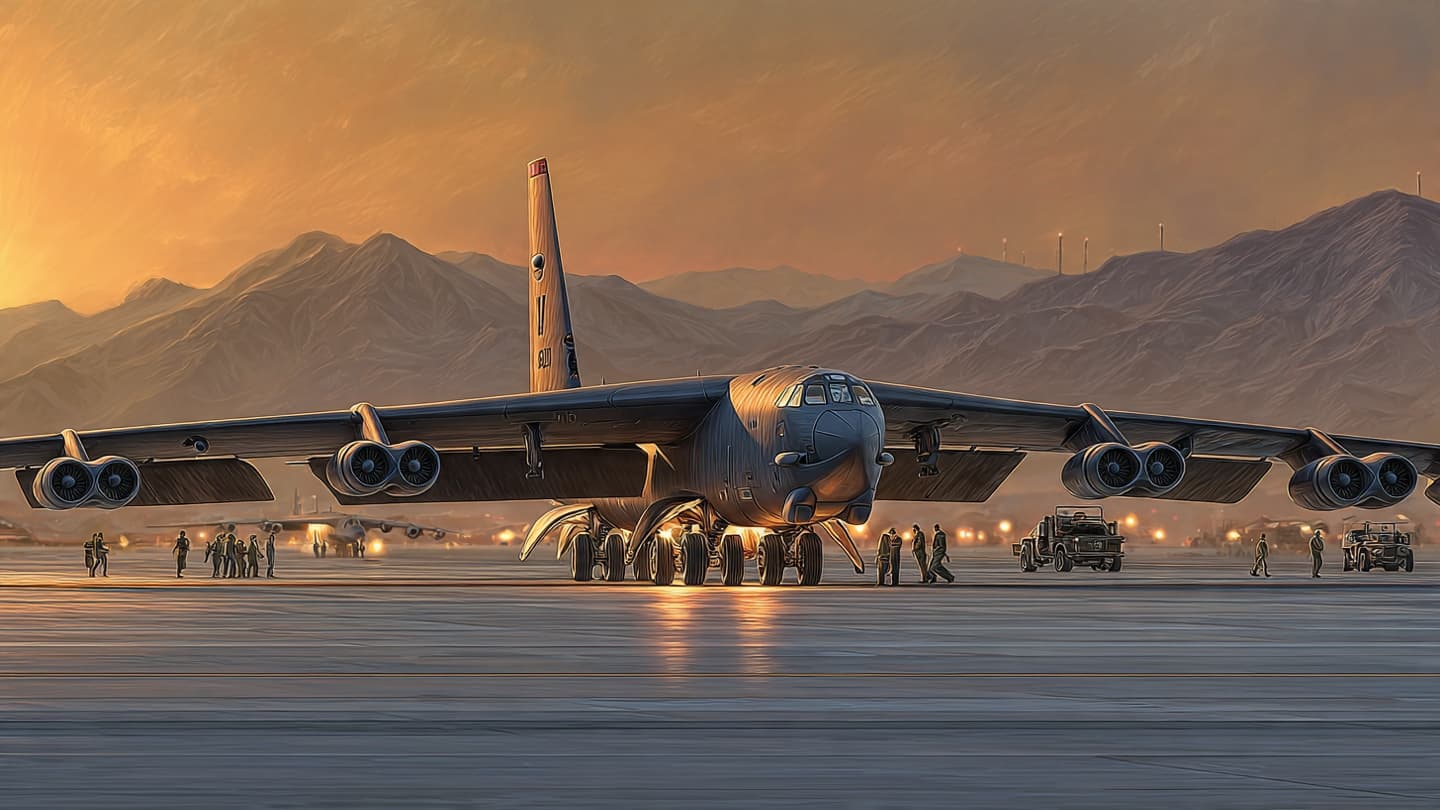
The Mojave Desert has long been associated with the pursuit of aviation excellence. Vast stretches of open land and clear skies have made it a place where pilots, engineers, and military personnel test the limits of technology. Yet even in an environment built around precision and preparation, there are moments when events unfold in ways few anticipate.
That reality emerged on June 15 when a U.S. Air Force B-52 Stratofortress crashed shortly after takeoff from Edwards Air Force Base in Southern California. The aircraft was conducting what officials described as a routine test mission when it went down in the desert near the installation. Emergency crews rushed to the scene as thick smoke rose above the crash site.
Military officials later confirmed that eight people were aboard the aircraft. Initial assessments indicated that the crash was not survivable, making it one of the most serious incidents involving a B-52 bomber in recent years. The announcement immediately drew attention from defense communities and aviation experts across the United States.
Images from the area showed extensive fire damage across a section of desert terrain. Little recognizable wreckage appeared visible from aerial footage, underscoring the severity of the impact and the fire that followed. Authorities quickly secured the area to preserve evidence for investigators.
The B-52 Stratofortress remains one of the most recognizable aircraft in military aviation. First introduced during the Cold War, the bomber has continued to serve through decades of modernization efforts. Despite its age, the platform remains a key component of America's long-range strategic capabilities.
Edwards Air Force Base occupies a unique position within the aviation world. The installation has served as a center for testing military aircraft, experimental technologies, and flight systems for generations. Routine test missions are a common part of operations there, helping evaluate equipment and maintain readiness standards.
Investigators are now examining multiple factors that may have contributed to the accident. These include aircraft systems, maintenance records, operational procedures, and environmental conditions. Aviation experts caution that determining a definitive cause often requires months of detailed analysis.
The tragedy has also renewed discussion about the challenges of operating and maintaining aircraft that have served for decades. While modernization programs continue to upgrade the B-52 fleet, every serious incident inevitably raises questions about safety, reliability, and future operational planning.
Beyond the technical investigation lies the human dimension of the loss. Families, colleagues, and military communities now face the difficult task of mourning those who were aboard the aircraft. Across the defense establishment, tributes have begun highlighting the service and dedication of the individuals involved.
As authorities continue gathering evidence, officials have pledged a thorough and transparent investigation. The findings may eventually provide answers about what occurred during the aircraft's final moments. Until then, the crash stands as a sobering reminder of the risks that remain present even during routine missions conducted by highly trained professionals.
AI IMAGE DISCLAIMER:
Images in this article are AI-generated illustrations, meant for concept only.
SOURCES:
Reuters Associated Press U.S. Air Force Sky News San Francisco Chronicle
Note: This article was published on BanxChange.com and is powered by the BXE Token on the XRP Ledger. For the latest articles and news, please visit BanxChange.com