
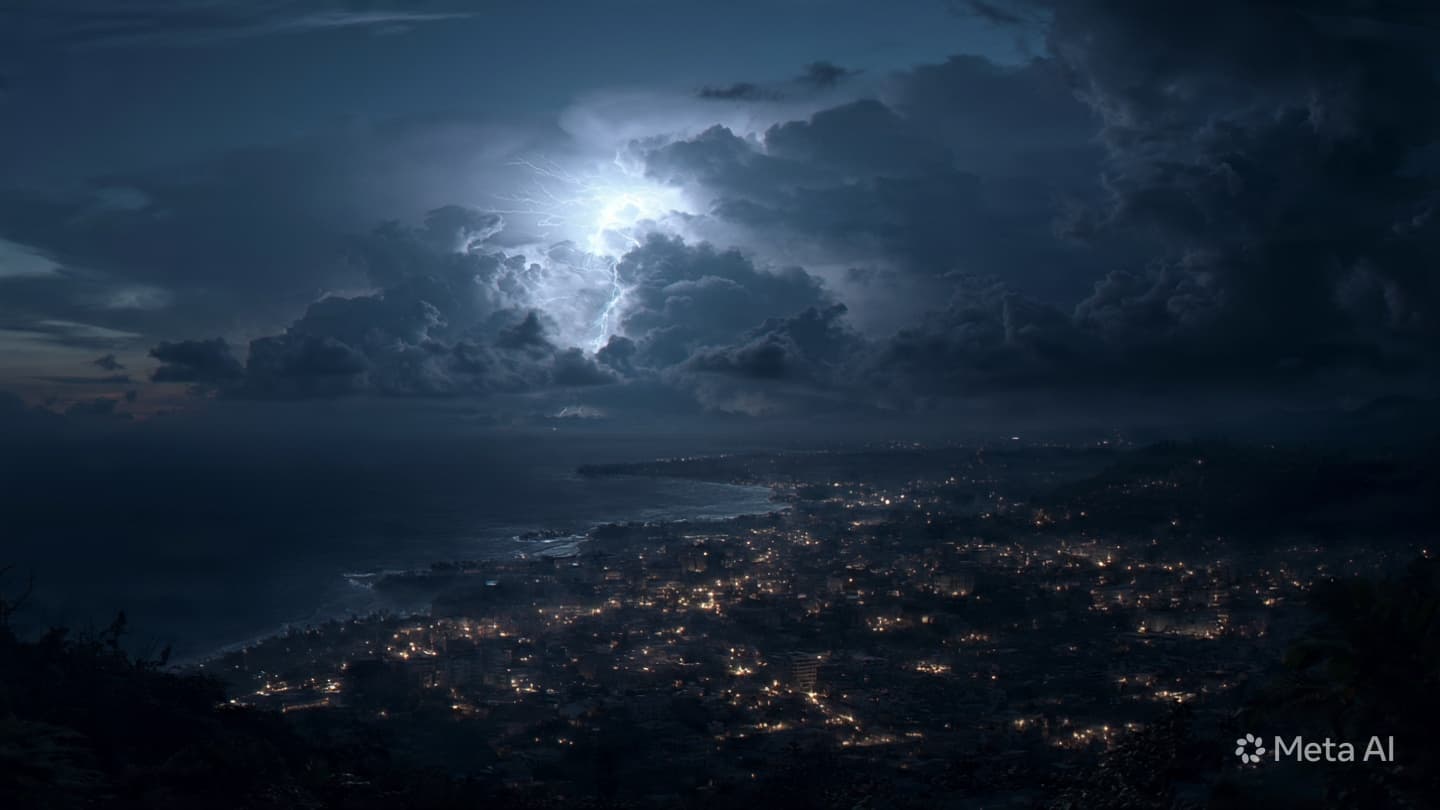
Nature has a way of reminding us, quite abruptly, that the complex systems we build—those humming grids of connectivity that define our modern existence—are ultimately subject to the whims of the elements. There is a certain irony in the fact that a single, fleeting discharge of electricity, a natural spark occurring in a fraction of a second, can effectively unravel the entire technological tapestry of an island. When the grid faltered, the immediate transition from the hum of industry and domestic life to an eerie, total stillness was a moment of profound, shared disorientation.
The blackout was not merely an absence of light, but an absence of the invisible, underlying vibration that connects our homes, our businesses, and our communications. In the sudden dark, the geography of the island felt momentarily altered, the familiar landmarks obscured by the loss of the artificial glow that usually guides our movement. It was a rare, forced pause in the frantic, upward trajectory of daily consumption, providing a surreal, reflective space where the silence of the night was louder than the city’s usual, persistent roar.
Experts suggest that the failure was exacerbated by the interconnected nature of the island’s infrastructure, a cascade effect that turned a localized surge into a system-wide collapse. It is a sobering reflection on the design of our modern utilities, which prioritize efficiency and reach over the resilient, localized modularity that might prevent such total shutdowns. The fragility of our dependence on these vast, sweeping networks becomes glaringly apparent only when they cease to function, leaving a populace momentarily cast back into an era of analogue patience.
The logistics of restoration have been a race against both time and the limitations of the physical infrastructure. Crews have been working tirelessly, tracing the path of the fault through the complex, often inaccessible terrain, as the island collectively waits for the return of the hum. This period of waiting has prompted a wider, more contemplative conversation about the long-term sustainability and hardening of the grid against not just the unpredictable patterns of the weather, but the increasing vulnerabilities inherent in our centralized systems.
There is a unique atmosphere to an island in the dark—a sense of communal solidarity that emerges when the distractions of digital life are stripped away. Neighbors gathered in the muted light of lanterns and candlelight, the shared experience of the outage creating a temporary, intimate geography of conversation and stillness. It is a reminder of the fundamental human capacity to adapt, even when the structures we rely upon to manage our environment are temporarily removed from the equation.
The administrative response has emphasized the magnitude of the technical challenge, acknowledging that the restoration of a total system collapse is a delicate, step-by-step process. Efforts are being focused on bringing vital public services—hospitals, water systems, and communications—back online first, before slowly reintegrating the residential and commercial sectors. The process is a testament to the intricate balance of forces required to maintain the stability of our current, electrified age.
As the lights begin to flicker back into existence, the island is left to ponder the lessons of the event. The vulnerability of the grid to environmental catalysts is no longer a theoretical risk but a documented, historic reality. This experience will likely shift the focus of future infrastructure investment toward more robust, redundant designs, ensuring that the next brush with nature’s volatile energy does not result in such a profound, total-system silence.
Authorities have announced that power has been restored to approximately 80% of the island following the grid-wide failure caused by the lightning strike. Utility providers are continuing to manage load balancing as the system stabilizes, with full capacity expected within the next twenty-four hours. Official reports confirm that all essential infrastructure, including emergency medical facilities, are now fully operational, while an internal review of the grid's fault protection systems is currently underway.
Note: This article was published on BanxChange.com and is powered by the BXE Token on the XRP Ledger. For the latest articles and news, please visit BanxChange.com