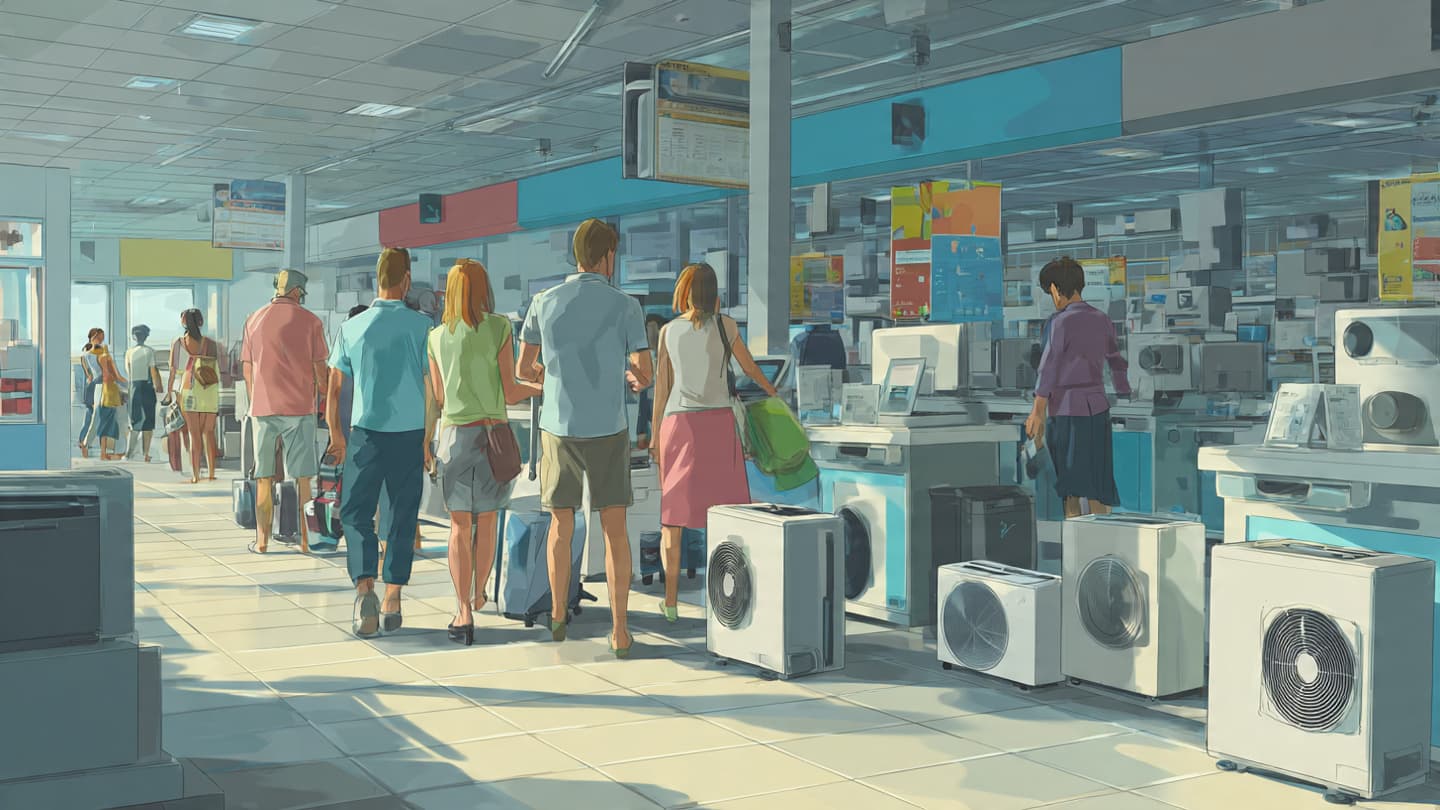
There are seasons that arrive quietly and settle into everyday life without demanding much attention. Then there are seasons that change behavior almost overnight. Across France, the current heatwave has become one of those defining moments, pushing temperatures far beyond what many residents expected and creating an urgent search for relief. In homes, offices, and retail stores, cooling equipment has suddenly become one of the most sought-after necessities of the summer.
As temperatures climbed across the country, retailers began noticing a rapid increase in customer demand. Air conditioners, electric fans, portable cooling units, and related products quickly moved from ordinary household items to highly desired purchases. What had once been a gradual seasonal trend transformed into a nationwide rush driven by immediate need.
For many families, the decision to purchase cooling equipment was not about convenience but about comfort and safety. Long afternoons and warm nights made indoor environments increasingly difficult to tolerate, especially in apartments and buildings that retained heat well after sunset. Residents who had previously managed summer temperatures without mechanical cooling found themselves reconsidering those habits.
Store managers reported unusually strong sales as customers searched for available units before inventories became limited. In some areas, certain products sold out quickly, prompting retailers to accelerate shipments and adjust supply chains. The scenes reflected a broader pattern often seen during periods of extreme weather, where demand for essential goods rises sharply within a short period.
The surge in purchases has also highlighted changing attitudes toward climate adaptation. Historically, air conditioning has been less common in many parts of France compared with warmer regions of the world. However, as heatwaves become more frequent and intense, households are increasingly viewing cooling equipment as a practical investment rather than a luxury.
Energy experts have noted that this shift carries wider implications. Greater use of cooling systems can significantly increase electricity demand, particularly during prolonged periods of extreme heat. Utilities therefore face the challenge of balancing consumer needs with the stability of national energy networks. The relationship between rising temperatures and energy consumption is becoming an increasingly important topic across Europe.
For manufacturers and retailers, the heatwave has created both opportunities and challenges. Strong sales have boosted demand, but maintaining adequate supply has required careful coordination. Companies have worked to replenish stock while responding to rapidly changing market conditions. In some cases, consumers have turned to alternative products when preferred models were unavailable.
Environmental researchers view these developments as part of a larger conversation about how societies respond to changing climate conditions. Cooling technologies provide immediate relief, yet they also raise questions regarding energy efficiency, sustainability, and long-term adaptation strategies. Policymakers and industry leaders continue exploring solutions that balance comfort with environmental considerations.
Despite these broader discussions, the immediate reality remains straightforward for many residents. As temperatures remain elevated, households are focused on staying cool, protecting vulnerable family members, and maintaining daily routines as comfortably as possible. The search for relief has become one of the defining experiences of this extraordinary summer.
As forecasts continue to track weather patterns across France, demand for cooling equipment is expected to remain strong. Whether this surge represents a temporary response or part of a lasting shift in consumer behavior remains to be seen. What is clear, however, is that the heatwave has reshaped priorities for millions of people seeking comfort beneath an unusually relentless summer sky.
AI IMAGE DISCLAIMER:
Graphics are AI-generated and intended for representation, not reality.
SOURCES:
Reuters Le Monde The Guardian Associated Press France 24
Published by Banx Network. This article is part of the Banx decentralized media programme, powered by the BXE token on the XRP Ledger.