The historic market town of Borgo Maggiore, resting quietly at the foot of the sheer limestone cliffs of Mount Titano, has long maintained an architectural harmony with the steep topography of San Marino. Its ancient stone avenues, vaulted arcades, and historic piazzas are built to endure the slow passage of generations, designed with drainage channels that have directed seasonal rainfall down the mountain for centuries. Yet, the relationship between this heritage infrastructure and the atmosphere was severely tested when a line of intense, stationary thunderstorms stalled directly over the republic.
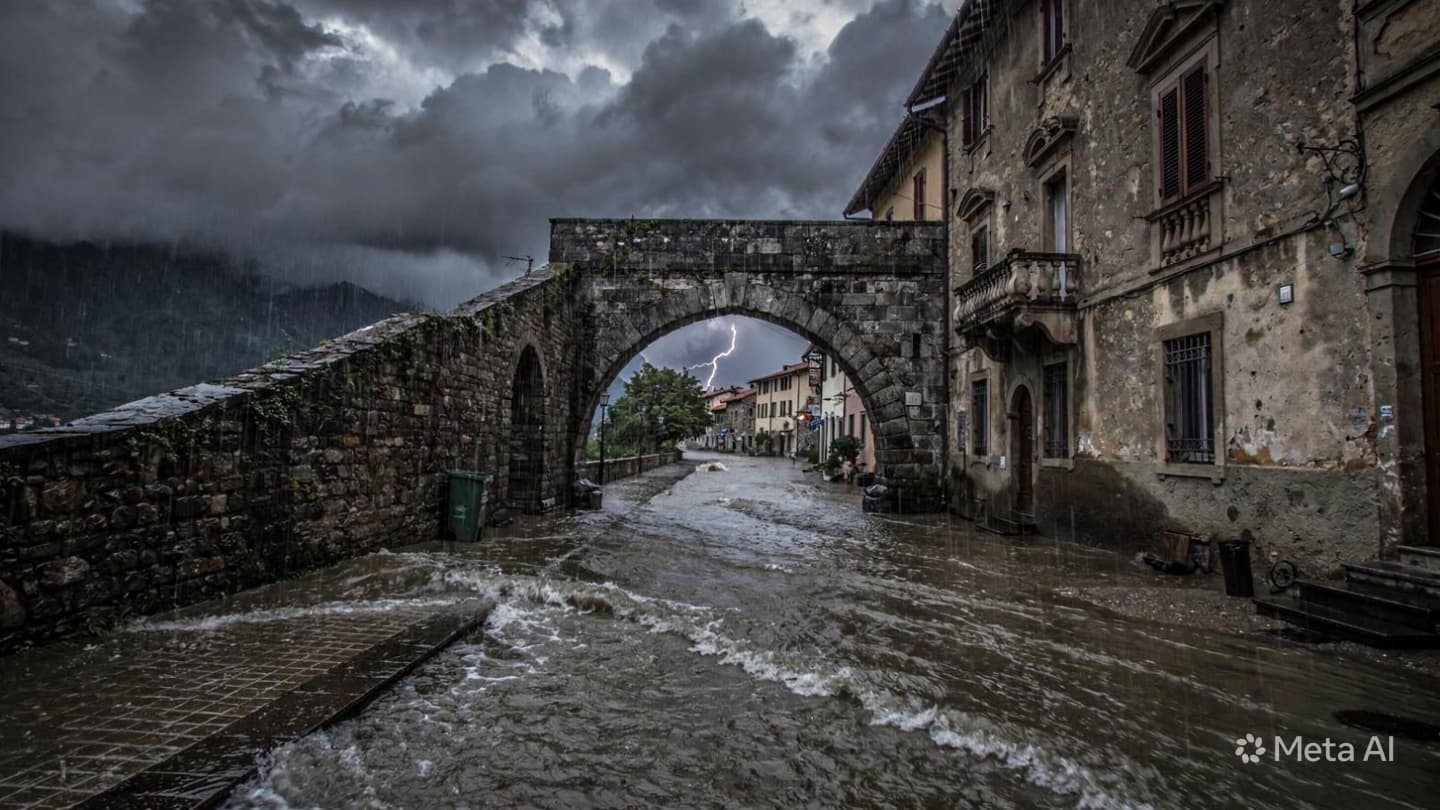
Over the course of a single evening, the skies unleashed a volume of water that far exceeded the historical capacities of the town's underground culverts. The water, rushing down the vertical rock faces of Mount Titano, gathered momentum as it hit the upper streets of Borgo Maggiore, converting narrow pedestrian walkways into roaring alpine streams. The familiar, welcoming spaces of the historic market town were rapidly transformed into a complex landscape of moving water and floating debris.
The immediate consequence of the deluge was felt within the lower levels of the historic buildings, where water breached ancient foundations and poured into subterranean cellars, storage vaults, and ground-floor commercial shops. The pressure of the accumulated water, combined with the saturation of the upper soil layers, led to localized structural failures, including the collapse of several historic stone retaining walls that had stood for decades. The sound of shifting masonry added a distinct note of urgency to the night.
Civil protection personnel and firefighters deployed into the historic center, navigating the flooded streets with specialized vehicles and portable pumping equipment to stabilize the areas most at risk of structural collapse. In the darkness, crews worked to clear blocked grates, removing branches, gravel, and dislodged paving stones that had accumulated against ancient doorways. The work was precise and physically demanding, carried out under the continuous glare of emergency floodlights.
Several families residing in ground-floor apartments were temporarily relocated to safer structures as a precautionary measure, their orderly evacuation overseen by local authorities who monitored the stability of the surrounding slopes. The atmosphere among the residents was one of quiet, dignified concern, a shared understanding of the vulnerabilities that come with living beneath a towering mountain peak during an atmospheric anomaly.
By the early hours of the morning, the intense downpour began to subside, allowing the volume of runoff to decrease and the drainage systems to slowly reclaim the streets. The receding waters left behind a thick coating of pale limestone silt and gravel across the historic piazzas, revealing the physical toll the storm had taken on the ancient town's surfaces. The air remained cool and saturated, heavy with the smell of wet stone and old earth.
Architectural conservationists and structural engineers have been assigned to conduct a thorough inspection of the damaged retaining walls and foundations, ensuring that the structural integrity of Borgo Maggiore’s heritage is preserved. This event has initiated broad discussions regarding the necessity of upgrading the republic's historic drainage networks to better withstand modern climate variations without compromising the aesthetic and historical value of the architecture.
As shopkeepers and residents begin the meticulous process of clearing silt from their doorsteps and drying out waterlogged interiors, the underlying resilience of the San Marino community is evident in the quiet, coordinated cleanup efforts. The ancient arcades stand firm, their stones drying under a pale morning sun, ready to return to their long-standing patterns of life once the scars of the storm are healed.
Published by Banx Network. This article is part of the Banx decentralized media programme, powered by the BXE token on the XRP Ledger.