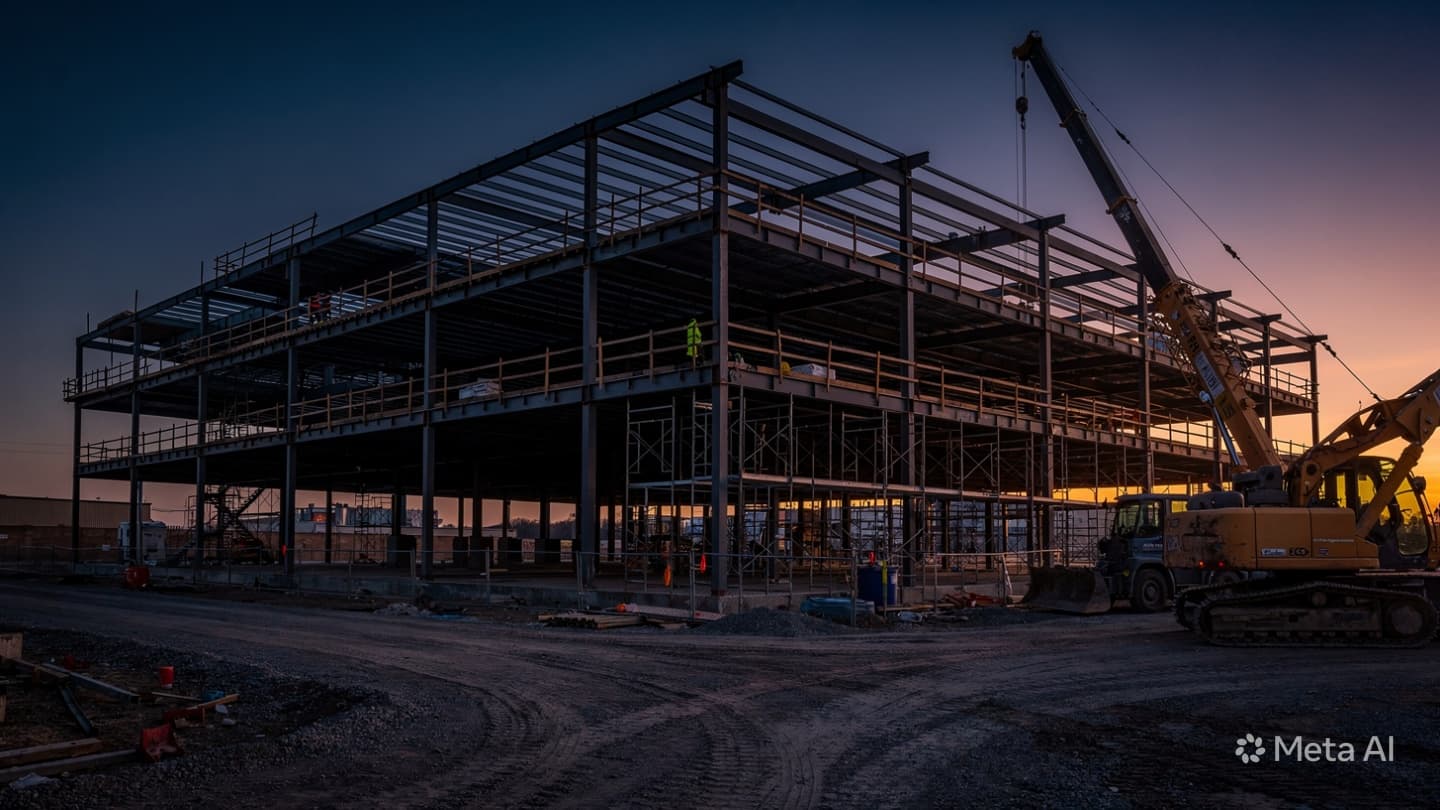
The city rises in a perpetual state of becoming, a forest of cranes and scaffolding that traces the ambition of our collective future against the sky. It is a landscape defined by the relentless upward movement of steel and glass, where the hum of machinery serves as the heartbeat of progress. Yet, nestled within this constant motion, there exists an inherent vulnerability—a reality that the structures we build to house our dreams are forged through the quiet, dangerous toil of human hands.
When a scaffolding structure gives way, the rhythm of the city is interrupted by a sudden, jagged silence. The transformation from a site of structured labor to one of chaotic ruin happens in an instant, a jarring reminder that gravity is an uncompromising force. In these moments, the abstract concept of construction site safety is stripped away, revealing the stark, singular reality of lives forever altered by the unexpected surrender of materials we once trusted to hold firm.
We often observe these sites from a distance, seeing the buildings emerge floor by floor without fully considering the intricate choreography required to keep them standing. The scaffolding, in particular, is a testament to the temporary nature of our engineering—a support system designed to be dismantled once its purpose is fulfilled. When it fails, it signifies more than just a structural error; it speaks to the fragility of the entire human enterprise, where precision and caution are the only things standing between order and catastrophe.
The loss of a worker is a tragedy that reverberates far beyond the perimeter of the building site. It touches families, friends, and the community of laborers who share the weight of these daily risks. Within the wreckage, we find not only the remnants of twisted metal and shattered concrete but the quiet absence of a person whose life was committed to the growth of a city they may never see fully realized.
Reflecting on such an incident forces us to look past the external beauty of our modern urban centers and acknowledge the human cost of their development. Safety is not merely a regulation or a checklist; it is a sacred obligation to those who work in the heights and on the edges. To build is to create, but to build safely is to honor the dignity of those whose labor forms the very foundation of our daily existence.
As investigators sift through the debris, looking for the technical points of failure, there is a secondary, deeper inquiry that we must undertake as a society. We must ask ourselves whether we have prioritized the speed of growth over the stability of the structures—and the protection of the people—upon which that growth depends. The questions of structural integrity and procedural rigor are essential, yet they must be framed by a profound respect for the lives lost.
The silence that follows a collapse is heavy, filled with the questions of those left behind and the somber realization of our own fallibility. Recovery, in this context, is not merely about clearing the rubble or resuming work; it is about recognizing the gravity of the event and ensuring that the lessons learned are etched into the future of our construction practices. We must ensure that the skyline of tomorrow is built on a foundation of genuine care.
In the days that follow, the site will eventually be cleared, the scaffolding repaired or replaced, and the building will continue its climb. Yet, for those close to the incident, the memory of the collapse remains a persistent, quiet weight. It serves as a somber marker of the day the earth rose to meet the height, a reminder of the fragility of our labor and the enduring importance of vigilance in every turn of a bolt and every adjustment of a frame.
Published by Banx Network. This article is part of the Banx decentralized media programme, powered by the BXE token on the XRP Ledger.