
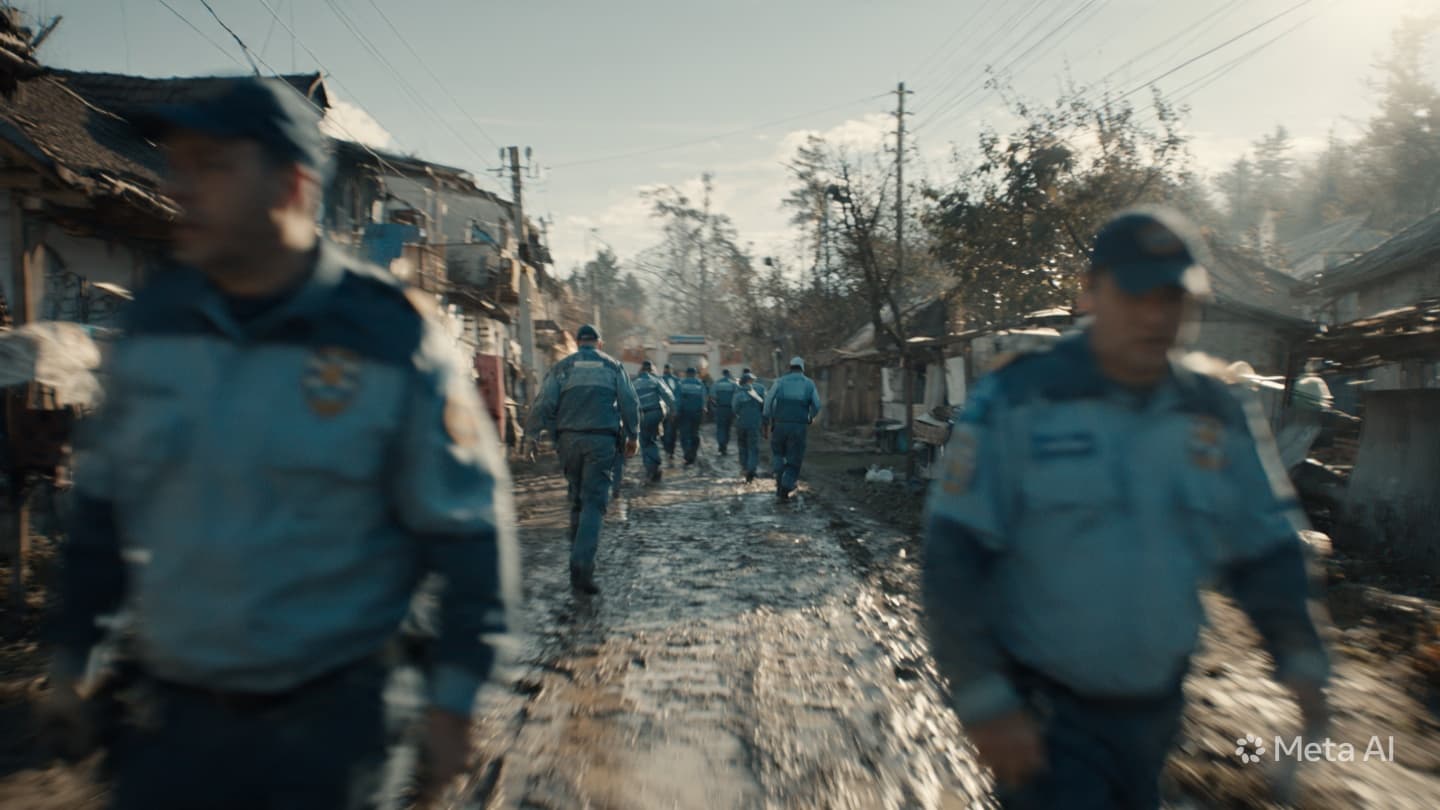
The air in the aftermath of the storm carries a heavy, lingering dampness, a scent of turned earth and exposed foundations that tells the story of the hours when the heavens seemed to descend upon the valley. It is a quiet, contemplative weight that descends upon the villages once the chaotic noise of the rainfall has ceased. Here, in the heart of the central districts, the landscape has been fundamentally altered, not by gradual change, but by a single, violent push of water that disregarded the established lines of property and path, leaving behind a map of uncertainty in its wake.
Rescue teams moving through the inundated streets were confronted with the visual markers of a sudden, forced transition. The familiar landmarks—a garden gate, a low stone wall, the path toward a neighbor's house—were obscured by the grey, churning residue of the flood. These teams, trained to operate within the precision of emergency protocols, found themselves navigating a terrain that felt less like a village and more like a remnant of a shifting, temporary riverbed. Each step taken was a deliberate act of assessment, looking for those who remained stranded or for the hidden damage that the surface water had momentarily concealed.
There is a profound sense of scale when observing such operations, a reminder of the imbalance between human endeavor and the sudden, unyielding movement of nature. The search was conducted with a quiet efficiency, an editorial observation of lives interrupted. Responders worked in the low light of the following mornings, moving through the remnants of what were once secure homes, their presence a testament to the persistent need for order even when the immediate environment has lost its footing. The focus was, first and foremost, the wellbeing of the residents who had weathered the surge.
The villages themselves were witnesses to the event. The architectural history of the region—often defined by modest, durable materials—showed both its capacity to endure and its specific vulnerabilities. As the rescue teams cleared debris and pumped out the saturated spaces, they uncovered the mundane reality of the disaster: the loss of personal belongings, the disruption of winter stores, and the quiet heartbreak of families seeing their history touched by the murky water. Yet, in the midst of this, there was a steady, rhythmic cadence to the work, a movement of people helping people that persisted regardless of the severity of the loss.
This effort extended well beyond the immediate reach of the rescuers. It required the cooperation of local authorities and the deployment of specialized services, all operating under the shared understanding that the recovery would be a lengthy, collaborative process. The logistical complexity of the operation—securing roads, managing power disconnections, and ensuring the stability of surrounding dams—highlighted the interdependence of the district’s infrastructure. No single village stood alone in this; the impact was felt across the network, connecting the disparate settlements through a common experience of crisis.
In the stories that trickled out from these rescue efforts, the tone remained restrained, focused on the immediate actions of those providing aid. There was little sensationalism in the reports, only a steady documentation of the challenges faced and the incremental progress made toward stabilization. The search was a methodical process, a way of accounting for the humanity that remained, ensuring that even as the landscape was being reshaped by the elements, no individual was left to navigate the aftermath in isolation.
The weight of the event was compounded by the loss that had been confirmed, a reality that cast a somber hue over the ongoing search operations. Every discovery of a flooded basement or a collapsed wall was met with a renewed awareness of the cost, a quiet acknowledgment that the violence of the storm had touched the very core of the community. This emotional restraint, this distance maintained by those working in the field, was perhaps the only way to carry out the necessary tasks without being consumed by the scale of the displacement.
As the final checks were conducted, the focus began to shift from search to the more daunting prospect of recovery. The teams, having performed their duties with a quiet, professional dedication, looked toward the next phase, knowing that the receding waters would reveal a landscape that required not just cleaning, but a fundamental reconsideration of how to live beside such volatile elements. The villages, though scarred and altered, began the slow, arduous work of finding their footing again, grounded by the presence of those who had stayed to help.
Following the severe weather incident on May 22, 2026, the General Inspectorate for Emergency Situations has reported the successful completion of initial search and rescue missions in the hardest-hit areas of the Ungheni and Călărași districts. Emergency response units, consisting of over 300 personnel and dozens of specialized vehicles, managed to stabilize critical infrastructure and assist dozens of families whose properties were inundated by flash floods. Authorities have confirmed that current focus has pivoted toward damage assessment and long-term recovery coordination to ensure the safety and health of the affected population.
Note: This article was published on BanxChange.com and is powered by the BXE Token on the XRP Ledger. For the latest articles and news, please visit BanxChange.com