
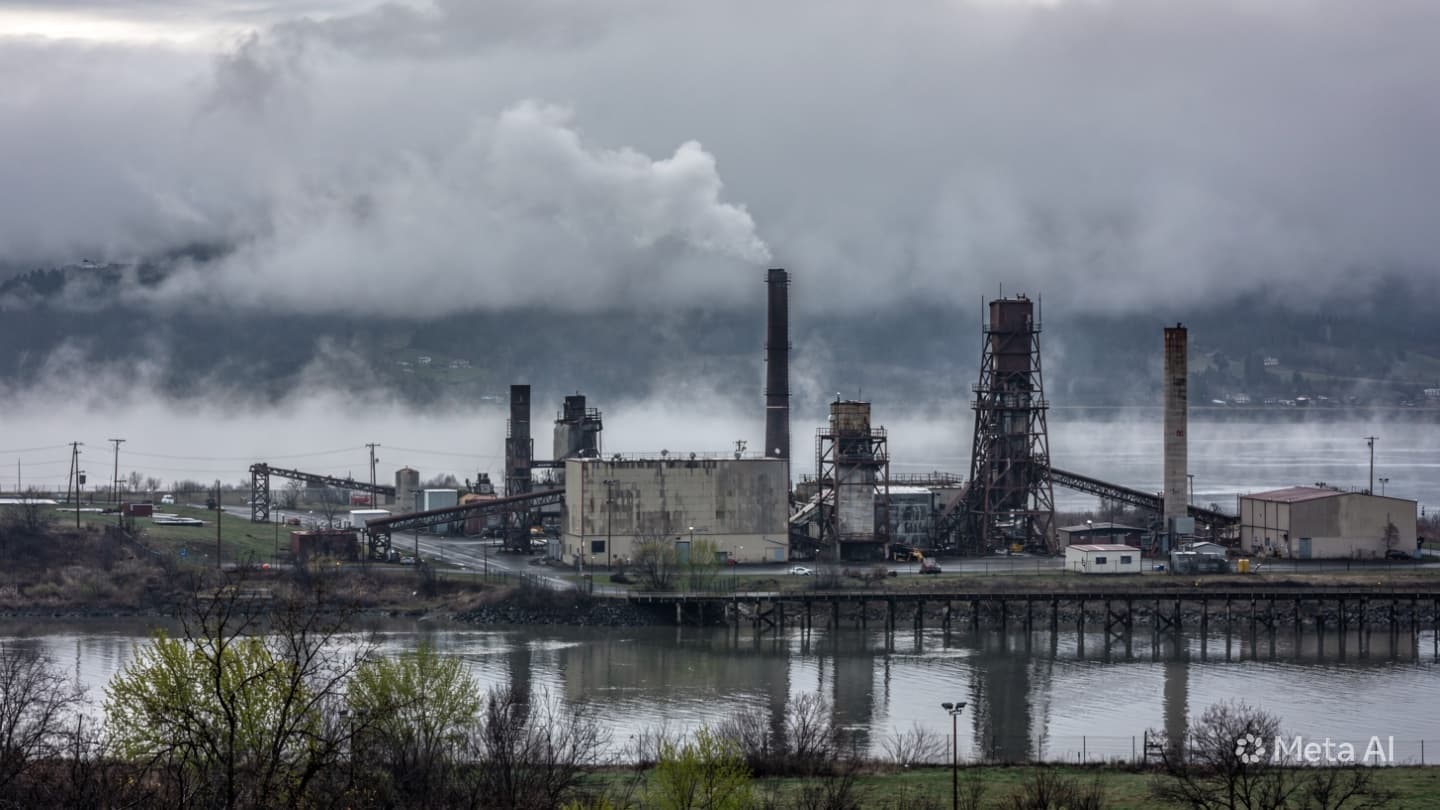
The industrial horizon of Longview, Washington, is a study in purposeful geometry, where the skyline is defined by the silhouettes of mills and the steady, rhythmic output of a city deeply woven into the fabric of the timber and paper trade. Here, the Columbia River serves as a constant, flowing witness to decades of labor and the quiet, metallic pulse of machines that produce the paper, cartons, and packaging defining modern existence. It is a place of structured order, where the interaction between human hand and chemical process is governed by precision. Yet, even in such a landscape, the boundary between the manageable and the volatile can be paper-thin.
A recent morning, quiet and unassuming, saw that boundary breached at the Nippon Dynawave Packaging facility. A massive tank, a vessel designed to hold the white liquor central to the pulping of wood chips, experienced a sudden, violent implosion. It was a moment that occurred with little warning, a mechanical failure that transformed a site of production into a scene of urgent, life-altering consequence. The suddenness of the event served as a stark, jarring interruption to the daily cadence of those who walked through the facility’s gates, their routines abruptly colliding with an unforeseen reality.
To stand outside such a site in the aftermath is to feel the weight of the silence that follows. The machinery, once vibrant with the hum of operation, stands as a cold, imposing witness to the fragility of the structures we construct. Emergency responders, moving through the site with practiced, somber efficiency, navigated a landscape that had become suddenly hazardous, working to mitigate the spill of chemical solutions while attending to the immediate needs of those caught in the blast. There is a specific, heavy dignity in the work of these crews, who, in many cases, are acting within a community where friends and family are part of the site’s workforce.
The human cost of this implosion is, as always, the central weight of the narrative. With reports of fatalities and multiple injuries, the focus shifted rapidly from the mechanics of the rupture to the humanity of the survivors and the memory of the lost. The hospital, usually a place of general care, became a center for critical recovery, treating those suffering from burns and inhalation injuries. It is a sobering reminder that the materials powering our industry—caustic solutions of sodium sulfide and hydroxide—are as demanding as they are useful, requiring a level of respect that the suddenness of a rupture can cruelly ignore.
Authorities have since initiated the arduous, methodical process of investigation. Every bolt, every seam, and every pressure reading of the tank is subject to the scrutiny of those seeking to understand why the vessel failed. It is a necessary exercise, a search for the "how" and the "why" that might prevent a similar tragedy from unfolding elsewhere. Yet, this clinical pursuit of facts is a secondary layer to the primary, visceral truth that a family, a workspace, and a community have been fundamentally changed by a single, catastrophic moment.
As the state of Washington and the local Longview community grapple with the shock, there is a collective turning toward support and resilience. The facility, a central pillar of the local economy since the middle of the last century, finds itself in a state of suspended animation. Recovery efforts continue, moving with the caution required to handle the instability of the remaining materials, while the community waits for the slow, painful process of healing to take hold. It is a moment of communal reflection, a time to acknowledge the risks that underpin the way we live and work.
For now, the focus is on the safety of the responders and the welfare of the workers. The incident remains a localized tragedy, with officials emphasizing that there is no broader threat to the public beyond the immediate site. The river continues its steady journey toward the sea, largely indifferent to the turbulence that occurred upon its banks, while the people of Longview look toward the horizon, seeking a path forward that acknowledges both the loss and the difficult necessity of moving ahead.
Washington state officials and the Longview Fire Department have confirmed that a massive chemical tank at the Nippon Dynawave Packaging mill ruptured early Tuesday, resulting in at least one fatality and multiple injuries. Emergency personnel, including hazardous materials teams, remain on-site to stabilize the structure and manage the chemical spill. Authorities have initiated a formal investigation into the cause of the implosion, and they continue to provide updates to the families of those affected.
Note: This article was published on BanxChange.com and is powered by the BXE Token on the XRP Ledger. For the latest articles and news, please visit BanxChange.com