
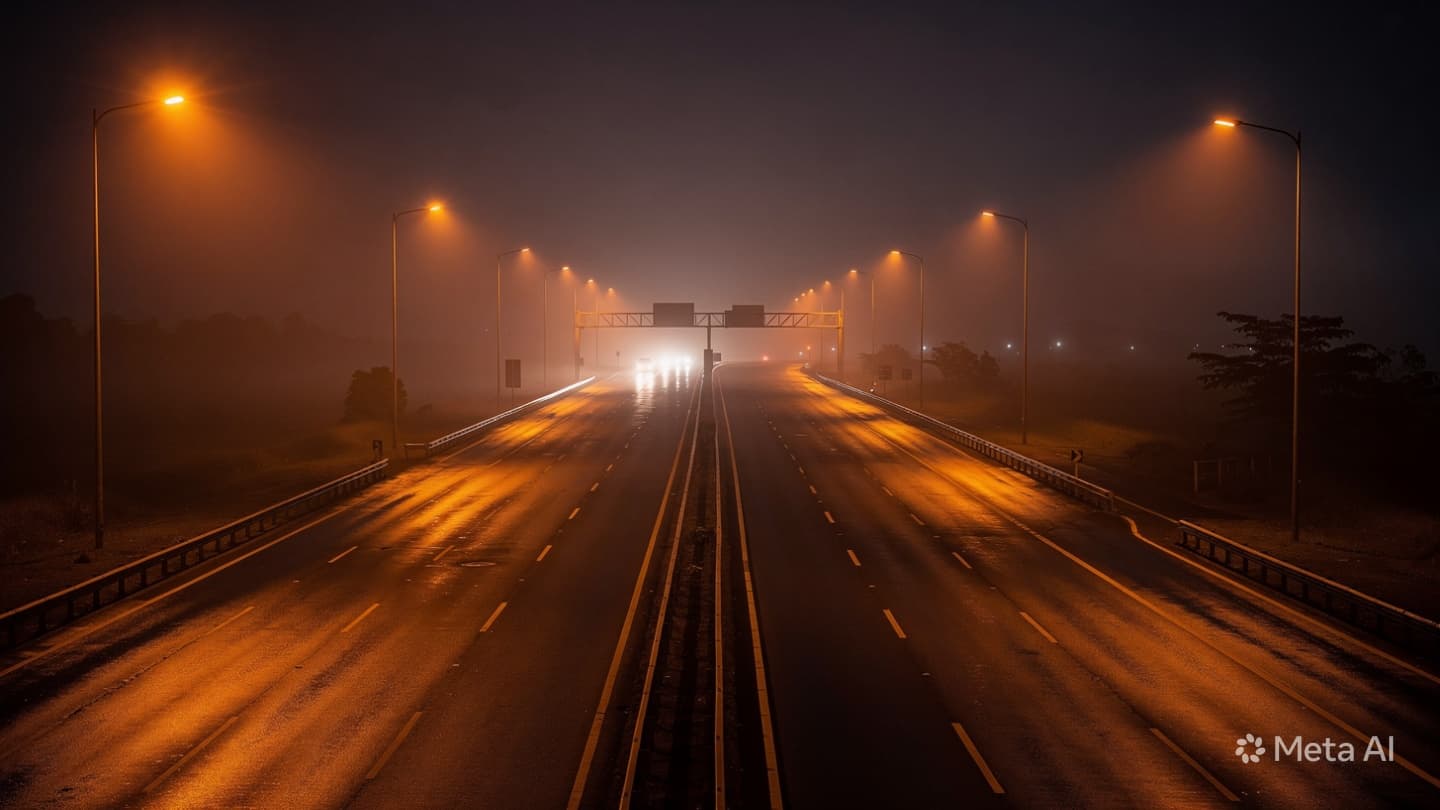
There is something about long roads at night — the way the headlights carve just enough of the dark to feel safe, the way distance dissolves into rhythm, and the mind, lulled by sameness, begins to let go of the present moment. It is in that particular letting go that tragedy often finds its opening. On the Trans-Java Toll Road, a corridor of asphalt that stitches together the restless heart of Indonesia's most populated island, another chapter of that familiar story was written — quietly, suddenly, and with irreversible consequence. The Trans-Java Toll Road, which threads through Central Java, has seen a pattern of accidents tied to fatigue and inattention, particularly during periods of concentrated travel. It is a road built for speed and efficiency, engineered to bring people closer to one another — and yet, at certain hours, it becomes a place where human limitations press against the expectations of modern infrastructure. The gap between those two things is where the danger lives.
One such incident involved a vehicle carrying a television news crew on the Trans-Java Toll Road in Pemalang, Central Java, which resulted in three deaths and two injuries. The victims included a driver, a journalist, and a cameraman — people whose profession required them to be in motion, always moving toward the next story, rarely pausing to consider that the road itself might become the story. Their names, their faces, their habits on a morning drive: all of it folded quietly into the accounting of loss. Authorities have repeatedly noted that driver fatigue and inattention are among the leading contributors to accidents along Central Java's toll road corridors, with police urging drivers to rest when tired or sleepy. The advisory is reasonable, even compassionate — and yet it is also evidence that the solution to a structural problem is still being placed, largely, on individual shoulders. A person who is drowsy does not always know that they are drowsy. That is the particular cruelty of fatigue.
The Trans-Java Toll Road is, in many ways, a symbol of Indonesia's ambitions — a 1,000-kilometer spine of connectivity that took decades to conceive and years to complete. It was designed to reduce travel time, stimulate economic movement, and bring the far corners of Java into proximity. During the 2025–2026 Nataru holiday period, traffic flow across the Trans-Java corridor was described by authorities as smooth and generally well-managed, with accident fatality rates recording a notable decline compared to the previous year. Progress, then — but progress measured against a backdrop that still carries weight.
What the road cannot account for is the human body's relationship with time and distance. Long-haul driving through the night is a negotiation between willpower and biology, and biology does not always honor the terms. The flat, unchanging geometry of a toll road — its medians, its lane markings, its overhead gantries repeating at regular intervals — offers little stimulation to a mind that has already traveled too far. Monotony is its own hazard.
For the families of those who were lost, the road now holds a different meaning. It is no longer simply infrastructure — it is the location of an absence, a coordinate that will return to them uninvited for years. Grief has a geography of its own, and it maps itself onto the places where ordinary journeys became the last one.
The vehicles involved were eventually cleared. Traffic resumed. Other cars passed through the same stretch of asphalt, their drivers unaware — as most drivers are — of what had occurred just hours before. The road absorbs its history without ceremony. That, too, is part of what makes it unsettling: the way ordinary life presses on, indifferent to the specific weight of what the pavement holds. Investigators and traffic authorities have consistently called for greater rest area availability along the Trans-Java corridor, improved lighting in accident-prone zones, and stricter enforcement of vehicle roadworthiness standards. In related incidents along Java's toll road network, investigations revealed that some vehicles operating commercially lacked proper permits and supervisory documentation, pointing to systemic gaps in transport oversight. The mechanics of accountability, in these cases, always arrive after the fact.
Three people died in toll road accidents in Central Java during a period of heightened travel activity, with authorities attributing the collisions primarily to driver inattention and fatigue. Police renewed public appeals for drivers to prioritize rest stops and remain alert throughout long journeys. Emergency response teams and traffic management units were dispatched to the scenes. Investigations are ongoing, with findings expected to inform further safety recommendations for the Trans-Java corridor.
Note: This article was published on BanxChange.com and is powered by the BXE Token on the XRP Ledger. For the latest articles and news, please visit BanxChange.com