
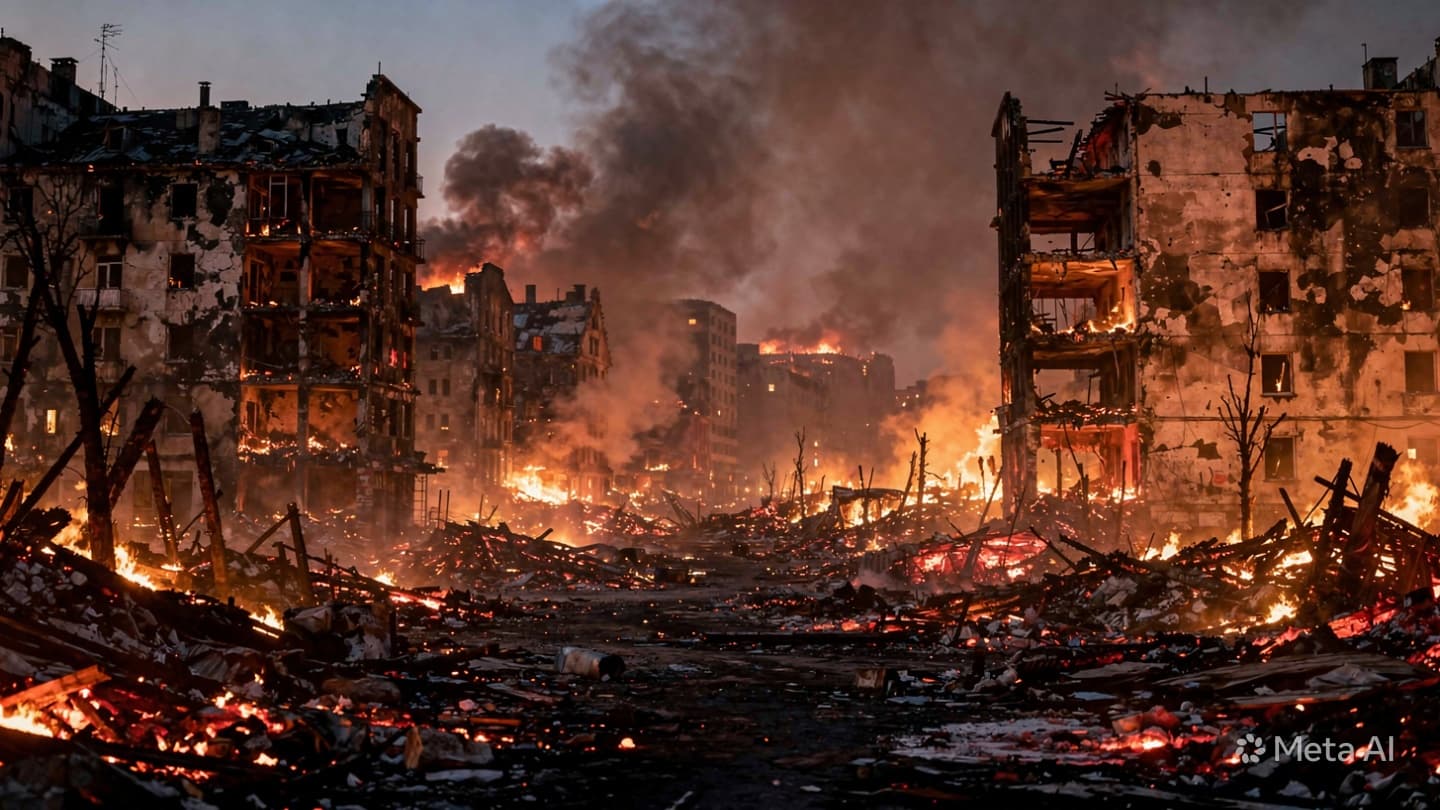
The city breathes in cycles of noise and commerce, a frantic, pulsing energy that defines the character of Lagos. Markets are the beating heart of this urban machine, dense corridors where the boundaries of life, trade, and fire often exist in precarious proximity. When the smoke rose, it did more than obscure the skyline; it signaled a sudden, violent interruption to the rhythm of the everyday, turning a place of livelihood into a site of profound, unsettling stillness.
There is a distinct scent to the aftermath of such a blaze—a mixture of charred remnants, cooling stone, and the lingering, intangible sorrow of loss. In the marketplace, where structures are packed tight against one another, the fire was not merely an event, but a force that reshaped the landscape of the area in a matter of hours. The structural decay that followed was a testament to the intensity of the heat, leaving behind a skeleton of what was once a bustling nexus of human ambition.
The tragedy claimed five lives, individuals who were part of the vast, intricate network that sustains the city. Their loss resonates beyond the immediate vicinity, rippling through families and community associations who gather now not to trade, but to mourn. This shared grief is a reminder of the human cost of negligence, where the pursuit of prosperity is suddenly, cruelly eclipsed by the fragility of the spaces we inhabit.
Safety in these environments is often a complex, multifaceted challenge, caught between the reality of economic desperation and the necessity of structural integrity. Generators hum incessantly on various floors, transformers flicker in narrow alleyways, and the sheer density of the market creates a landscape that is as combustible as it is vibrant. It is a fragile equilibrium, one that the authorities are now forced to confront with renewed urgency following the collapse and the subsequent loss of life.
The response from leadership has been one of stern introspection, with directives issued to clear the debris and reassess the integrity of surrounding plazas. There is a sense of resignation in the air, a recognition that the drive to rebuild often outpaces the development of the infrastructure needed to support it. The marketplace, in its current state, stands as a mirror to the city’s broader struggle to balance rapid growth with the safety of its most vulnerable citizens.
Recovery operations, conducted with the solemnity required for such a site, have been slow and methodical. The presence of emergency responders amidst the ruins serves as a stark visual contrast to the usual chaos of market activity. As the dust settles, the focus turns to forensic identification, a process that brings a painful, finality to the uncertainty that families have endured since the initial outbreak.
The governor’s visit to the site was marked by a quiet, deliberate observation, an acknowledgment that material goods can be replaced, but lives cannot. The directive to vacate the area serves as a physical boundary, a way of marking the transition from a place of active life to one of careful, sanctioned reflection. It is a moment for the city to pause, to look at the charcoal remains and consider the cost of the status quo.
The fire serves as a grim punctuation point in the history of Lagos’s commercial sector. With the death toll confirmed at five, the focus remains on the ongoing demolition and clearing of the hazardous building. State emergency management agencies and fire services continue to oversee the site, warning traders to prioritize safety over property and to cooperate with the city’s efforts to ensure the integrity of neighboring structures.
Published by Banx Network. This article is part of the Banx decentralized media programme, powered by the BXE token on the XRP Ledger.
.jpg&w=3840&q=75 "Man Tapes Ears to His Head in Bizarre Attempt to Enter Poland With False Passport")
.jpg&w=3840&q=75 "Convicted War Criminal Ratko Mladić to Be Buried With Full State Honors")
