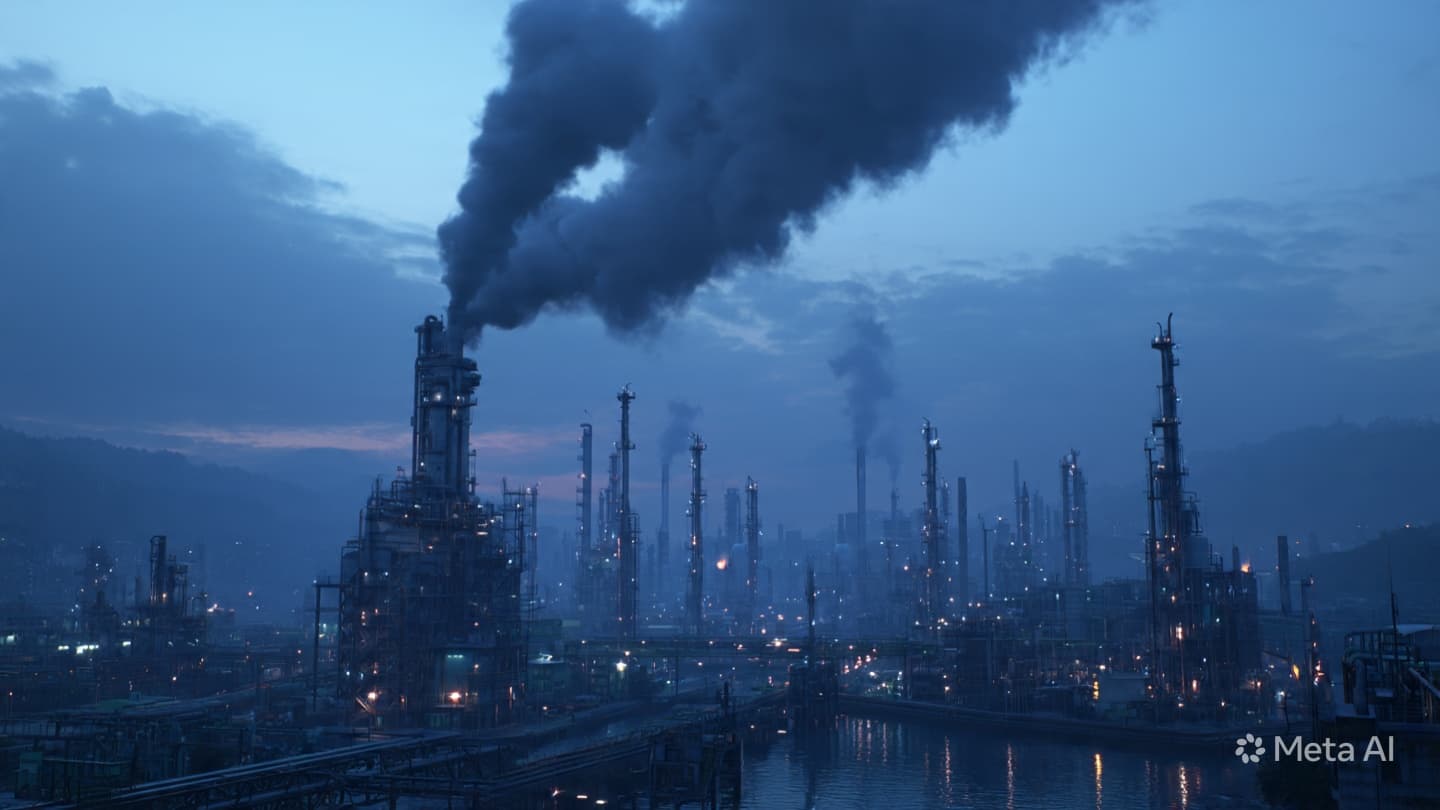
The oil refinery, with its intricate web of pipes, cooling towers, and storage tanks, represents a monumental achievement of human engineering—a silent, humming engine that powers the flow of modern life. When this complex is suddenly breached by a drone strike, the disruption is felt not just in the immediate destruction of infrastructure, but in the ripple effect that spreads across the entire regional economy. It is a striking visual of how our vast, interconnected energy networks are increasingly vulnerable to the swift, precise movements of aerial warfare.
Smoke billowing from the facility serves as a jarring, dark contrast to the clean, clinical lines of the refinery architecture. For the workers and the local community, the sight of fire against the sky is an unsettling reminder of the volatile nature of the materials they process and the precariousness of their safety. It is a scene that feels frozen in time, where the steady, predictable output of the plant is replaced by the raw, unpredictable intensity of an emergency.
The emergency teams that respond to these sites operate in a world of high stakes and high temperatures. They move with a deliberate, calculated grace, their focus directed entirely on containing the fire and preventing a wider catastrophe. There is a deep, human courage in their actions, as they navigate the risks of toxic fumes and secondary explosions to protect the community from the fallout of the strike.
The impact of such an event is a study in the complexity of modern logistics. As the fires are brought under control and the damage assessed, the entire region feels the pause in the refinery’s steady pulse. The supply chains that depend on these hubs are momentarily severed, forcing a re-evaluation of the resilience of our energy systems. It is an editorial reflection on our reliance on such facilities, and the reality that they are now targets in a larger, more mobile conflict.
For the observers passing by the outskirts of the site, the refinery has transformed from an anonymous landmark into a place of acute tension. The once-quiet hum of machinery is now replaced by the sirens of emergency vehicles and the low, concerned chatter of those watching the horizon. It is a testament to the fragile state of our peace that a facility so far removed from the front lines can be so suddenly brought into the heart of the crisis.
The investigation into the strike is a slow, meticulous process, involving the careful analysis of debris and flight patterns. It is a cold, intellectual pursuit that seeks to map the geography of the attack, but it cannot fully capture the emotional toll on the people who work in these facilities and live in their shadows. For them, the strike is not a data point; it is a profound disruption of their daily lives and their sense of security.
As the recovery efforts continue, the refinery slowly begins the long process of stabilization. The damage is a scar on the landscape, a reminder of the vulnerability of the essential nodes in our globalized world. It is a moment for quiet reflection on the nature of our infrastructure, and the necessity of finding new ways to protect the lifelines that keep our societies moving, despite the rising tide of insecurity.
The broader conversation about such attacks highlights the increasing range and sophistication of unmanned aerial systems. The ability to reach deep into the territory of an adversary and strike at critical energy infrastructure represents a fundamental shift in the geometry of conflict. As these incidents become more frequent, the demand for enhanced defensive capabilities and more resilient energy networks grows, forcing a global re-examination of how we protect the systems that sustain our modern existence.
On June 18, 2026, a drone strike hit a major oil processing facility in the Moscow region, triggering significant fires and resulting in multiple injuries to on-site personnel. Local emergency teams, including specialized hazardous material units, were deployed to manage the blaze and provide medical assistance to workers affected by the impact. Russian regional authorities and energy company officials reported that the facility sustained damage to key refining infrastructure, though they have since focused on containment operations to minimize environmental impact and restore safety protocols at the site.
Published by Banx Network. This article is part of the Banx decentralized media programme, powered by the BXE token on the XRP Ledger.