
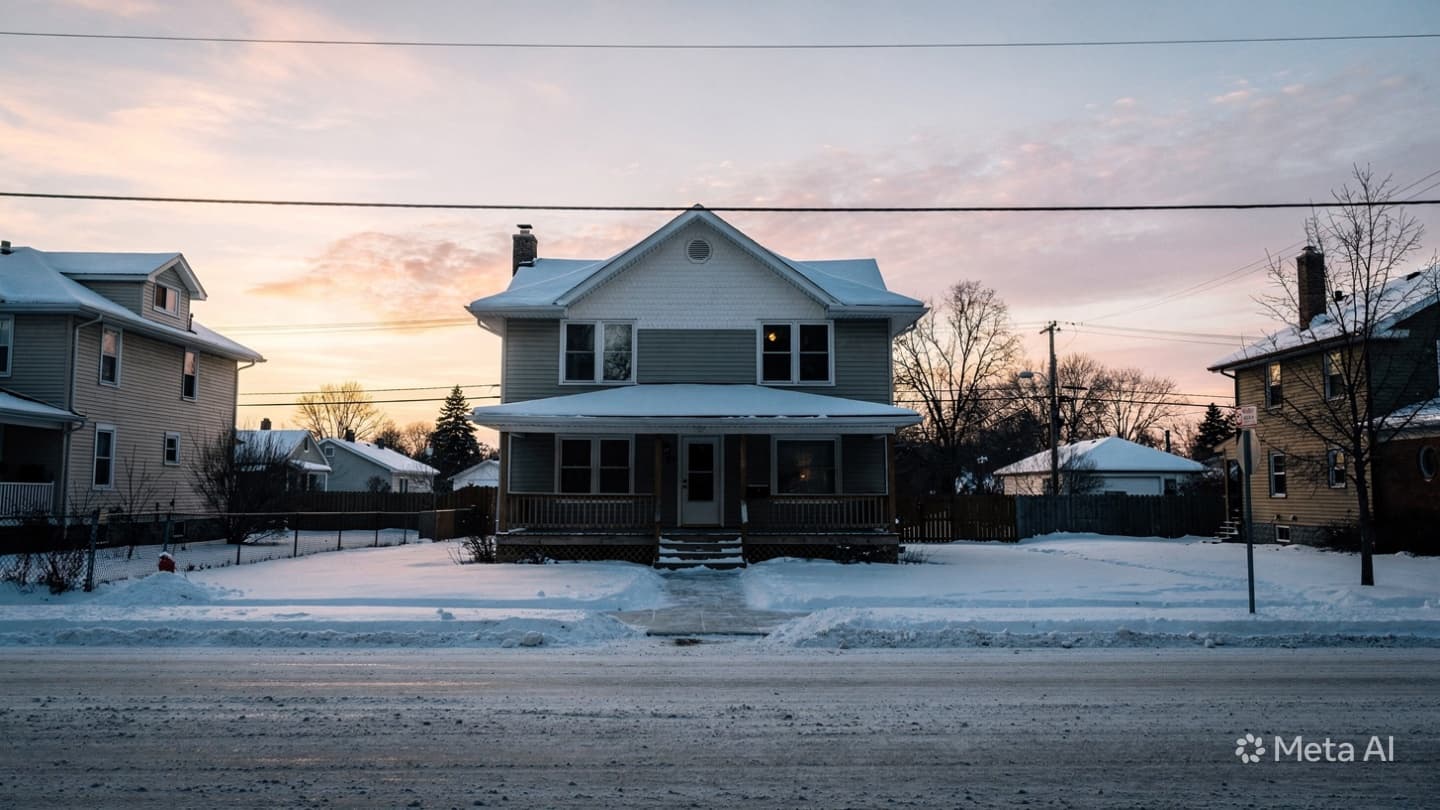
There is a particular stillness that settles over a home when the ordinary rhythm of life is abruptly fractured. It is the silence that follows a sudden, violent intrusion—a space where, only moments before, there was the comfort of routine and the quiet sanctity of a private residence. When such a sanctuary is pierced, the resulting shockwaves do not merely rattle the walls; they unsettle our shared understanding of safety, authority, and the heavy, often unseen, obligations that bind those who wield power to those who live in its path.
The incident in north Minneapolis, which began in the early hours of a winter morning, has since rippled far beyond the immediate boundaries of the duplex where it unfolded. What was initially presented as a scene of chaotic resistance—a narrative of confrontation involving household implements and desperate struggle—has been fundamentally reshaped by the cold, unblinking perspective of surveillance technology. As the timeline of that 12-second encounter was distilled, the reality of the event began to diverge sharply from the accounts provided by those entrusted with the uniform.
At the center of this unfolding history is the arrest of Christian J. Castro, an immigration enforcement agent whose actions have now become the subject of rigorous legal scrutiny. For those observing from the periphery, the situation invites a reflection on the nature of accountability in an era where the divide between the state’s enforcement mechanisms and the civilian experience is increasingly fraught. The transition from an operative functioning under the banner of federal authority to a defendant in a local criminal proceeding marks a rare, somber inflection point in the discourse surrounding agency conduct.
The geography of this incident—a residential street in Minnesota—serves as a poignant stage for a larger national conversation. It brings into focus the tension between the mandate of border security and the lived experience of immigrants who find themselves navigating an often-impenetrable labyrinth of policy and enforcement. When the machinery of immigration policy moves with such force through the quiet geography of a neighborhood, it inevitably leaves behind more than just legal records; it leaves a lingering sense of precariousness for all who dwell there.
As the legal process gains momentum, the story serves as a mirror held up to the mechanisms of oversight. The cooperation between local prosecutors, the state bureau of criminal apprehension, and the federal inspector general’s office suggests a shifting landscape where lines of authority are being tested and redefined. There is a weight to this process, a deliberative motion that seeks to reconcile the stark contradictions between the official record and the visual evidence, ultimately asking what standard of truth is required when the stakes are so profoundly human.
The investigation into the shooting of Julio Cesar Sosa Celis has evolved from a localized dispute into a barometer for institutional integrity. When an agency’s narrative is dismantled by the very footage that was meant to justify its actions, the resulting void is filled with questions of culture, training, and the inherent risks of unchecked authority. The arrest in Texas, occurring months after the incident, signifies that the wheels of justice, though they may turn with frustrating slowness, are intent on navigating the complexities left in the wake of the Minneapolis operation.
Ultimately, the event invites us to look past the political headlines and consider the raw, human consequences of such intersections. It is not merely a tale of an arrest, nor is it exclusively a matter of immigration statistics. It is a moment of profound reflection on what it means to be protected and what it means to be hunted. In the quiet aftermath, as the proceedings continue to unfold, we are left to contemplate the fragility of the peace we take for granted and the gravity of the power we grant to those who knock at our doors.
The United States Immigration and Customs Enforcement agent Christian J. Castro was arrested in Texas on Friday, May 29, 2026. He faces charges of second-degree assault and filing a false report in connection with the January 14, 2026, shooting of Julio Cesar Sosa Celis in Minneapolis. The arrest followed the emergence of surveillance video that contradicted official accounts of the incident, which occurred during a regional immigration enforcement operation. The Hennepin County Attorney’s Office is currently managing the prosecution of the case.
Note: This article was published on BanxChange.com and is powered by the BXE Token on the XRP Ledger. For the latest articles and news, please visit BanxChange.com