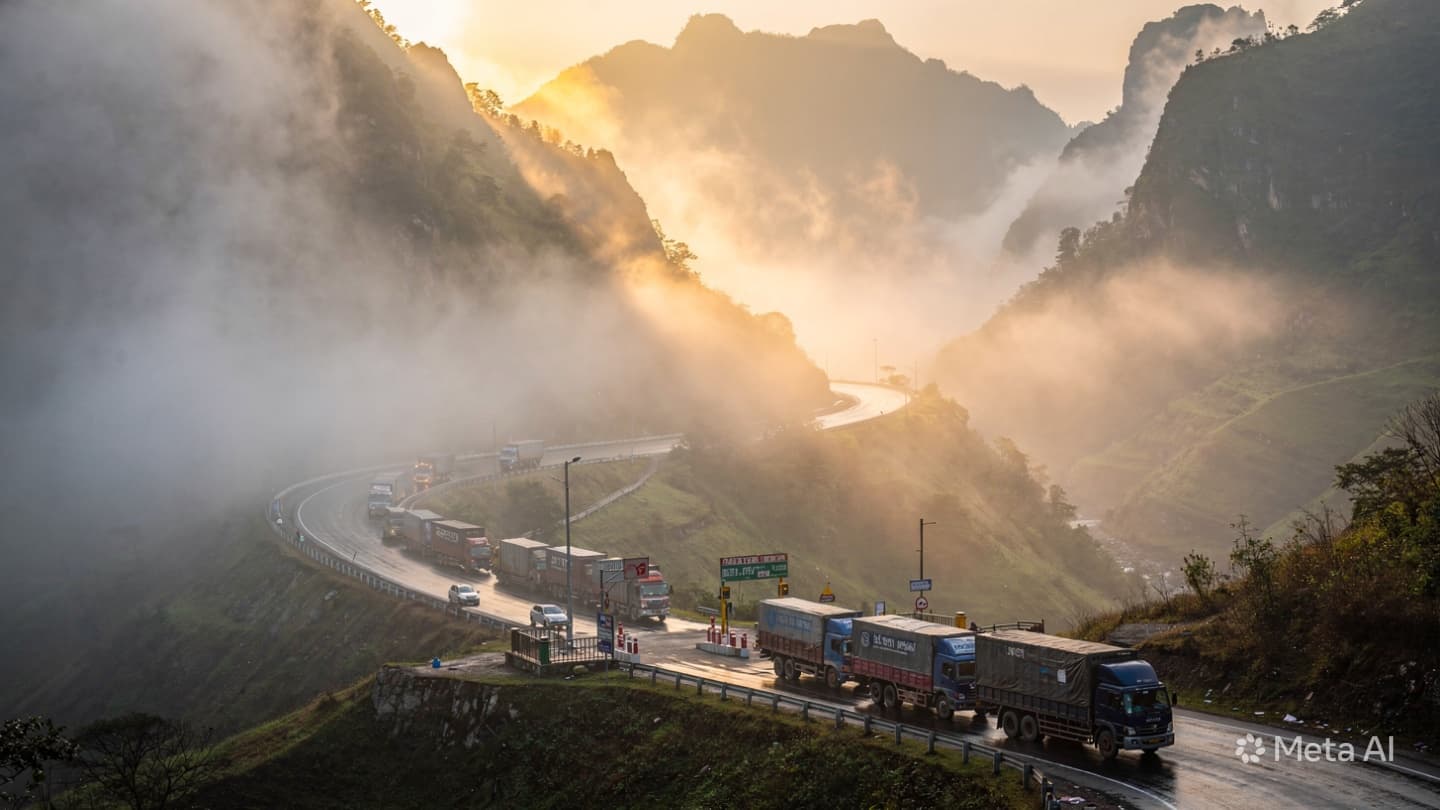
The sweeping mountain highways of Shan State have long served as the vital, sinuous veins of the region, carrying the quiet rhythm of daily life across high ridges and deep, mist-shrouded valleys. Along these asphalt paths, civilian transports, market trucks laden with seasonal produce, and local travelers move in a continuous, delicate dance of connection and commerce. It is a landscape where the sheer scale of nature dominates, and the winding roads offer a predictable comfort to those who traverse them regularly. On a recent afternoon, the mountain air was crisp, and the sun cast long, peaceful shadows across the pine-studded slopes, suggesting nothing but the ordinary tranquility of a regional journey.
Yet, in these highlands, where the geography itself creates pockets of deep isolation, the security of an ordinary transit can be compromised in a fleeting, violent heartbeat. The peace of the afternoon was abruptly shattered by an armed assault directed at a moving highway convoy, a sudden burst of kinetic energy that completely redefined the mountain corridor. The sharp resonance of gunfire echoed through the ravines, a sound entirely foreign to the natural whispers of the forest, instantly bringing the civilian vehicles to a panicked, disorganized halt. For those inside the transports, the vastness of the Shan landscape shrank in a second to the immediate, desperate sanctuary of a vehicle floor or an earthen roadside ditch.
The confrontation was brief but intense, leaving behind the scarred metal of damaged trucks, the sharp debris of broken windshields, and an immediate, heavy blanket of tension over the pass. The perpetrators vanished into the rugged, trackless hills as quickly as they had materialized, leaving the highway to deal with the immediate shock of the intrusion. It was a stark reminder of the underlying vulnerabilities that persist along these remote transport networks, where the distance between safety and peril is often measured by the curve of a hillside. As local travelers emerged cautiously from their cover, the silence that returned to the mountain felt different—heavy, watchful, and filled with a lingering unease.
In the hours following the assault, regional security forces and emergency medical personnel mobilized to secure the mountain pass and tend to the shaken travelers. The highway, which had been alive with the hum of commerce just hours prior, was quickly brought to a standstill, with long lines of cargo trucks and passenger buses waiting under the watchful eyes of armed checkpoints. The authorities immediately issued severe travel warnings for the corridor, advising merchants and civilian drivers to defer non-essential journeys through the volatile sector. The announcement cast a quiet chill over the local transport hubs, where drivers gathered in low-toned circles to discuss the sudden tightening of the mountain paths.
The economic life of the Shan highlands depends entirely on the openness of these highway arteries, which connect isolated agricultural communities with the broader markets of the central plains and neighboring borders. When a key pass is compromised, the ripple effects are felt immediately in village markets where prices fluctuate and perishable goods begin to spoil in the backs of idle trucks. The empty highway stood as a silent testament to the fragility of this infrastructure, a ribbon of concrete cut off from the human movement that gives it purpose. It highlighted the persistent challenges of maintaining public safety across a territory so vast and geographically fragmented.
As evening descended over the ridges, bringing a cold fog that obscured the high peaks, the atmosphere along the secured sections of the route remained deeply somber. Investigators moved methodically through the site of the assault, documenting the damage and collecting the metallic remnants of the encounter before the mountain dampness could erase them. For the local communities nestled in the valleys below, the incident reawakened an old, familiar anxiety regarding the stability of their daily connections. The lights of the distant town flickered through the mist, a reminder of the safe havens that felt suddenly much farther away than the map indicated.
The long-term management of these remote corridors remains a subject of complex logistical and administrative coordination among regional authorities. The travel warnings will eventually be lifted, the glass will be swept from the asphalt, and the convoys will resume their slow, daily crawl across the mountains. Yet, the memory of the afternoon when the pass was closed by gunfire will linger in the calculations of every driver who climbs into a cab. For now, the winding highway remains under a quiet, heavily guarded vigil, its silence monitored by those who must ensure the safety of the next transit.
Ultimately, the event underscores the enduring truth that in the highlands, peace is a landscape that requires constant cultivation and protection. The mountains themselves remain indifferent to the human dramas that unfold along their base, their peaks catching the last rays of sunlight while the valleys sink into shadow. The road will continue to carry the life of the region, but for a few brief days, it stands as a reminder of the quiet costs of security.
In straight news terms, an armed assault on a commercial and civilian highway convoy in Shan State has prompted regional authorities to issue severe travel warnings for a major transport corridor. The attack caused significant damage to multiple vehicles and forced a temporary closure of the route as security forces deployed to clear the area and investigate the incident. Travelers are being urged to avoid the sector or seek alternative routes until safety measures can be thoroughly reinforced.
Published by Banx Network. This article is part of the Banx decentralized media programme, powered by the BXE token on the XRP Ledger.