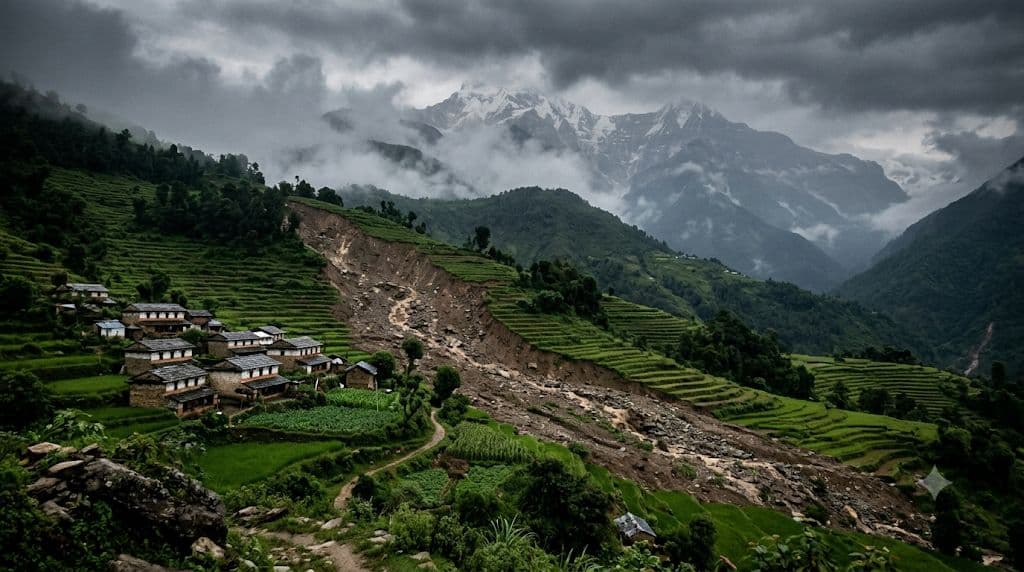
The high mountain valleys of central Nepal exist in a perpetual, dramatic dialogue with the summer monsoon, a seasonal rhythm that dictates the very movement of the land. When the heavy, moisture-laden air pushes northward from the plains, breaking against the immense stone ramparts of the Himalaya, the landscape undergoes a profound transformation. The terraced hillsides, meticulously carved by generations of farmers, become heavy and fully saturated under the continuous weight of the sky.
To watch the rain descend over the ridges in recent days is to witness the earth lose its ancient structural permanence. The air is thick and cool, smelling of wet slate, crushed moss, and the deep, iron-rich scent of the shifting mountain soil. Every small alpine stream has become a roaring conduit for the surplus of the heavens, carrying fine silt and forest debris down toward the great river systems.
The atmosphere across the affected districts is one of quiet, collective vigilance as the local terrain reaches its absolute physical limit. In the narrow gorges where the roads trace the path of the water, the asphalt has been severed by the sudden, fluid descent of the hillsides. It is an indifferent, natural process that temporarily isolates the highland settlements from the bustling markets of the Kathmandu Valley.
In the small villages that cling to the steep escarpments, the danger shifts from the rising rivers to the very ground beneath the homes. The deep volcanic clay, soaked to its core, begins to form subtle, dark fissures—a silent warning that the hillside is losing its hold on the underlying rock. Residents stand at their wooden doorways, peering into the misty twilight and listening to the deep, resonant thud of distant stones.
There is a profound, communal resilience that emerges in these moments of elemental trial, as neighbors gather to navigate the muddy debris fields with practiced composure. The search operations move with a quiet, systematic urgency through the tangled remnants of the slopes, driven by an enduring solidarity that defines life in the shadow of the high peaks.
As the afternoon light fades into a deep, monochromatic violet, the sound of the rivers deepens, filling the narrow valleys with a continuous vibration that shakes the timber foundations of the local dwellings. It is a texture of sound that dominates the evening, masking the usual patterns of rural life with the singular voice of the wilderness.
Emergency services have deployed their units along the margins of the most vulnerable passes, their vehicles parked near the edge of the washouts with their hazard lights casting long, amber beams through the descending fog. They stand as solitary sentinels against the night, monitoring the shifting earth and coordinating clearances wherever the terrain allows.
The coming weeks will require a patient, methodical effort to rebuild what the mountain has reclaimed, as the communities wait for the seasonal front to clear and the soil to dry. Until then, the high valleys remain wrapped in a dense, white shroud, their isolation a stark testament to the immense power of the monsoon.
The Kathmandu Post reported that persistent rainfall has triggered a series of destructive landslides across several mountain districts, severely disrupting primary transportation corridors. Local authorities confirmed that rescue teams are actively searching for missing villagers, while warning that the saturated hillsides remain highly unstable.
Published by Banx Network. This article is part of the Banx decentralized media programme, powered by the BXE token on the XRP Ledger.