
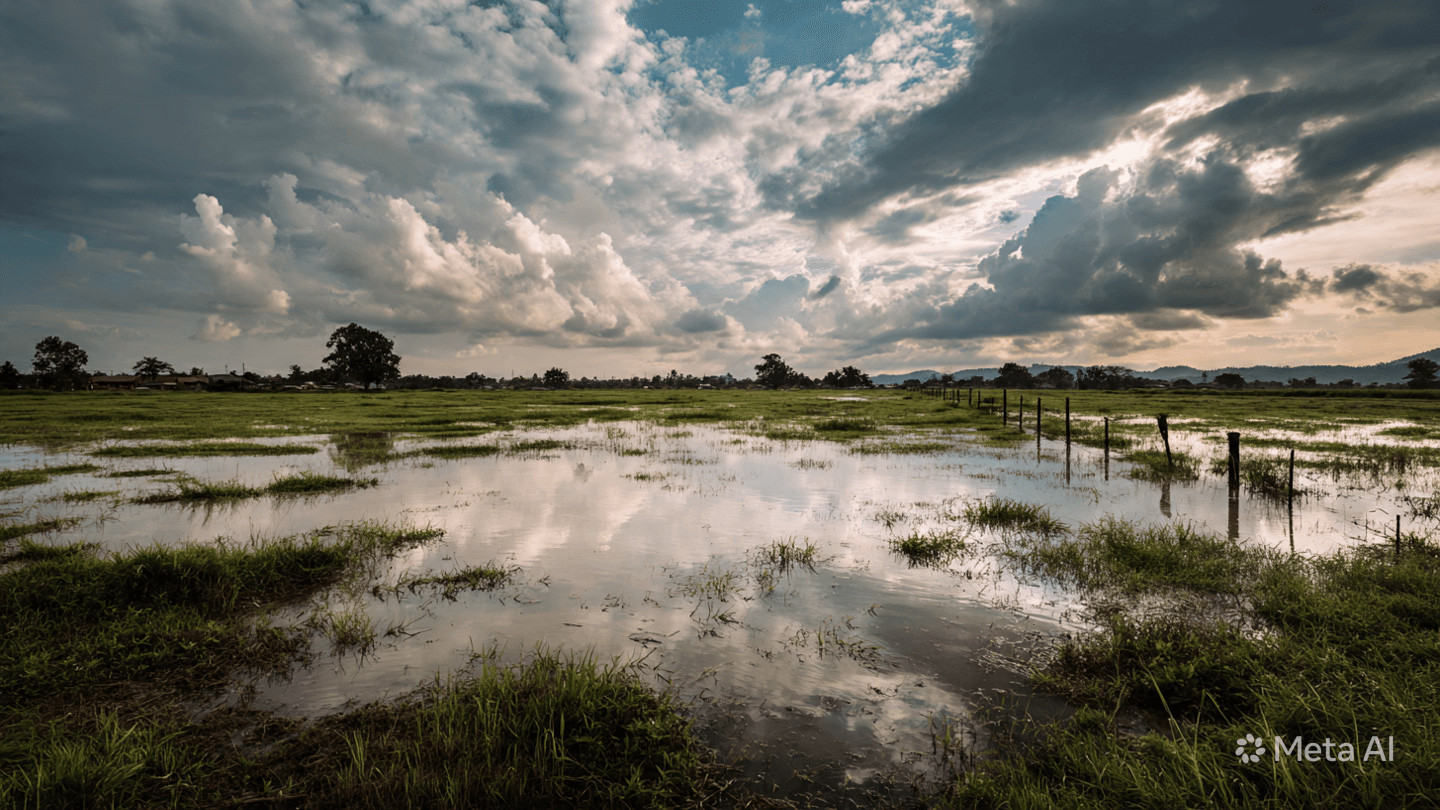
The sky over northern Perlis has lately become a vast, grey canvas, holding a weight that the earth below struggles to contain. When the rains arrive with such rhythmic, relentless persistence, the landscape transforms, turning familiar pathways into mirrored corridors of deep, rushing water. It is a time when the boundaries between solid ground and the encroaching tide blur, leaving the inhabitants of these rural stretches to face an ancient, elemental force that does not pause for human vulnerability.
In the wake of these recent downpours, a quiet, somber stillness has settled over the affected districts. The water, which once brought life to the verdant fields, has surged with an intensity that caught many by surprise, spilling over banks and navigating through the low-lying settlements that hug the northern terrain. There is a specific, heavy silence that follows such events, a reflection of the profound shift in the daily rhythm of a community that has suddenly found its stability washed away by the tides.
Two lives have been claimed in these surging waters, a reality that renders the statistical reports secondary to the human loss now being processed by local families. These individuals, caught in the rapid expansion of the flood, serve as a stark reminder of the fragile interface between rural life and the unpredictable temper of the seasonal monsoon. As the currents moved through, they carried not just debris and sediment, but the profound weight of a tragedy that will linger long after the waters eventually recede into the soil.
The topography of Perlis, often defined by its sweeping plains and limestone outcrops, acts as a funnel during these heavy cycles. When the sky saturates the northern corridors, the drainage systems—both natural and engineered—are tested to their absolute limits. Observers describe the rise as deceptive, beginning as a gentle accumulation before accelerating into a force capable of shifting the very geography of the local neighborhood. It is a slow-motion catastrophe that moves with startling speed.
In the aftermath, the focus remains on the grieving families and the immediate needs of those whose homes have been transformed into islands. The provincial atmosphere is one of shared endurance, a communal pause where neighbor checks on neighbor under the persistent, dripping eaves of saturated structures. There is little room for commentary when the immediate environment is so completely altered, and the focus remains firmly on the tactile reality of survival and the honoring of those lost.
Emergency responders have been navigating the murky, swollen landscape with a careful, measured deliberation. Their work is a delicate orchestration of caution and necessity, threading boats and life-saving equipment through areas where roads have become indistinguishable from the surrounding deluge. The efforts are hampered by the continued instability of the ground, which remains treacherous under the influence of the ongoing, heavy rainfall that characterizes this time of year.
As the situation develops, the broader implications of these flash floods are becoming clearer to those observing from the periphery. The intersection of seasonal climate patterns and the specific vulnerability of the northern landscape suggests a recurring challenge for the region. While the current moment is defined by the immediate loss, there is a contemplative recognition among local leaders that the environment is shifting, demanding a new, more profound level of vigilance in the seasons to come.
Local authorities have confirmed the two fatalities in northern Perlis. The victims were recovered by search and rescue personnel following the flash flooding triggered by persistent monsoon rains. Efforts are ongoing to assist displaced residents and assess structural damage in the most severely affected districts.
Published by Banx Network. This article is part of the Banx decentralized media programme, powered by the BXE token on the XRP Ledger.


