
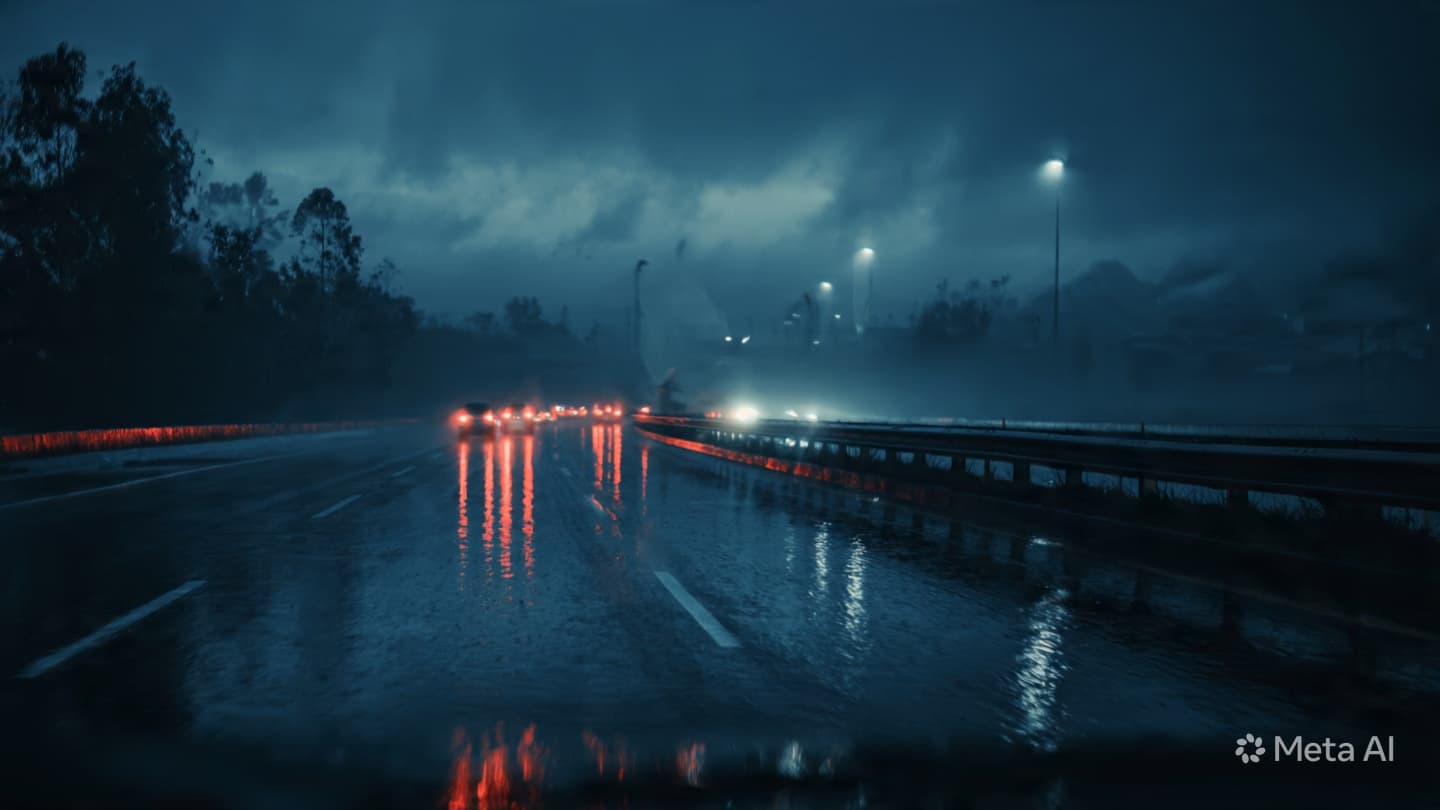
The Cipularang Toll Road has long been a ribbon of connectivity, a concrete artery that weaves through the dramatic, rolling landscapes of West Java. For those who traverse it, the experience is defined by the rhythm of modern travel—the steady hum of engines, the blur of the emerald hills, and the expectation of arrival. There is a psychological comfort in the predictability of the road, a sense that we are in control as we glide across the terrain at speed. Yet, there exists a profound, underlying fragility to this modern mobility, a reality that can be shattered by a single moment of mechanical failure or a lapse in the flow of traffic.
When the multi-vehicle collision occurred, it did not feel like a singular event but as a sudden, visceral interruption of the collective journey. The sound of metal against metal, the shattering of glass, and the abrupt halt of motion transformed a routine passage into a site of overwhelming consequence. For the passengers caught in the sequence of impacts, the world contracted from the expanse of the highway to the immediate, desperate urgency of the wreckage. It is a haunting reality that the very infrastructure designed to bring us together can, in an instant, become a place of profound separation.
There is a heavy, disorienting silence that settles over a highway in the aftermath of such a catastrophe. The usual flow of vehicles is replaced by the flashing lights of emergency responders and the somber, steady pace of those working to clear the scene. Standing at the perimeter, one is struck by the insignificance of our human speed against the absolute finality of the loss. Five souls, whose journeys were abruptly terminated, leave behind a void that resonates far beyond the concrete barriers of the toll road, touching families and communities who had been anticipating a reunion that would never occur.
The emergency services moved with a disciplined, clinical efficiency, their actions a stark contrast to the chaos of the collision. There is a solemnity in the way they work—carefully extracting the injured, documenting the scene, and managing the delicate task of restoring order to a place where order has been fundamentally dismantled. Their presence provides a necessary structure to the tragedy, yet it cannot address the internal gravity of the situation. Each person involved, from the first responders to the silent observers, carries a piece of the weight that this incident has placed upon the landscape.
We often navigate our lives with a sense of invulnerability, particularly when encased in the safety of our vehicles, moving across the landscape with an air of detachment. This collision serves as a quiet, sobering reminder of our physical vulnerability and the limits of our engineering. The toll road, so carefully engineered to facilitate our passage, is ultimately a testament to our desire to overcome the distance, even as it serves as a stage for the inherent risks of that pursuit. It is a difficult, persistent truth that the faster we move, the more we rely on the seamless cooperation of the invisible machinery around us.
As the sun begins to dip below the horizon, the scene on the Cipularang road starts to transition back to a place of transit, though the shadows feel longer and the atmosphere more heavy. The wreckage is hauled away, the lanes are opened, and the traffic begins to creep forward again, a slow, cautious pulse of humanity returning to the road. For those who witnessed the event, the journey home will be forever marked by the memory of what occurred in that specific stretch of concrete. It is a quiet, personal recalibration of the risks we take every time we step into our cars.
We speak of these incidents in terms of statistics and investigative reports, but these labels are insufficient to capture the depth of the tragedy. Behind the count of five passengers lie individual histories, plans for the future, and the connections that give shape to our lives. The highway remains, a monument to our connectivity, yet it is forever stained by the loss that occurred today. It forces a pause, a moment of reflection on the precious, fleeting nature of the movement that defines so much of our existence.
In the end, the tragedy on the Cipularang road is a bridge between our domestic lives and the broader, unpredictable world. It reminds us to hold our own journeys with a little more tenderness and to acknowledge the weight of the space we travel through. As the investigation proceeds and the debris is cleared, the toll road will continue to hum with the motion of thousands, each driver carrying the silent knowledge of how quickly the scene can change. It is a humbling, necessary realization for all of us who look toward the horizon and plan for our arrival.
Local traffic authorities in West Java confirmed that a major multi-vehicle pileup occurred on the Cipularang Toll Road earlier today, June 15, 2026. The crash involved several private vehicles and a heavy goods truck, resulting in the tragic deaths of five passengers and injuries to several others. Emergency medical teams transported the survivors to nearby hospitals, while the police have initiated an investigation into the cause of the accident, which is believed to have been exacerbated by poor visibility and high traffic volume during the afternoon.
Note: This article was published on BanxChange.com and is powered by the BXE Token on the XRP Ledger. For the latest articles and news, please visit BanxChange.com