Materials science has long focused on understanding how substances behave under pressure, heat, and stress. Traditionally, materials were classified by fixed properties: strong or weak, flexible or brittle. Recent developments, however, are beginning to challenge this static view.
Researchers have reported the creation of materials capable of shifting between dramatically different mechanical states. These materials can transition from strong and stable to fragile and breakable depending on external conditions or internal triggers.
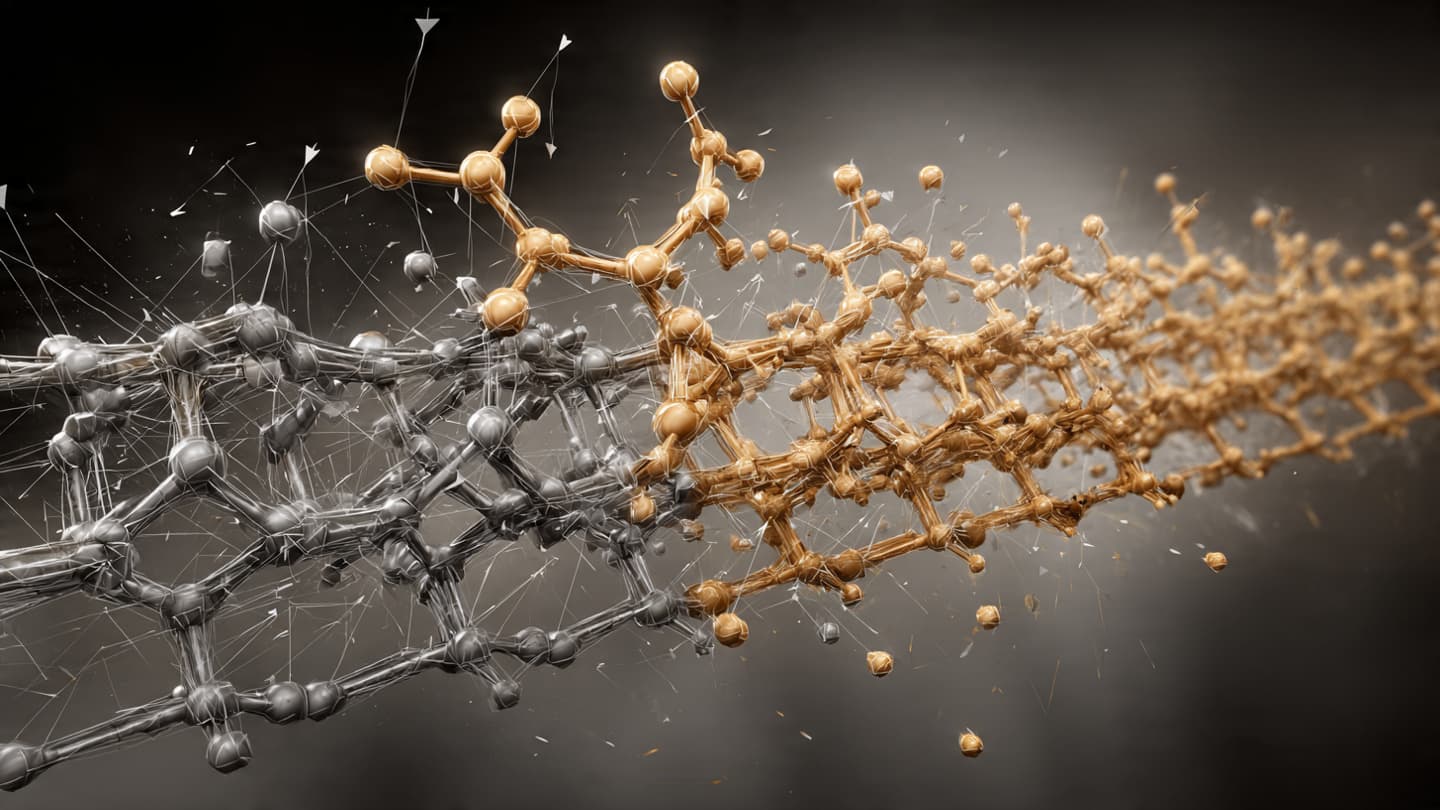
This behavior is achieved through carefully engineered microstructures that respond dynamically to environmental changes. At a microscopic level, the arrangement of particles can reorganize, altering the material’s overall physical characteristics.
Such adaptability opens new possibilities for engineering, particularly in fields where materials must respond to changing conditions. Examples include aerospace structures, protective equipment, and robotics.
Scientists emphasize that this is not a simple transformation but a controlled reconfiguration of internal structure. The material essentially behaves as if it has multiple “states of identity,” each activated under specific conditions.
While still in experimental stages, these materials represent a broader shift in engineering philosophy. Instead of designing static objects, researchers are beginning to design systems that respond and evolve over time.
The potential applications are significant, but so are the challenges. Ensuring reliability, safety, and predictability remains essential before such materials can move beyond laboratory settings.
In closing, this emerging field suggests a future where materials are no longer passive components, but active participants in how structures behave and adapt.
AI Image Disclaimer: Images used are AI-generated for illustrative purposes only.
Sources: ScienceDaily, Nature Materials, Phys.org
Published by Banx Network. This article is part of the Banx decentralized media programme, powered by the BXE token on the XRP Ledger.