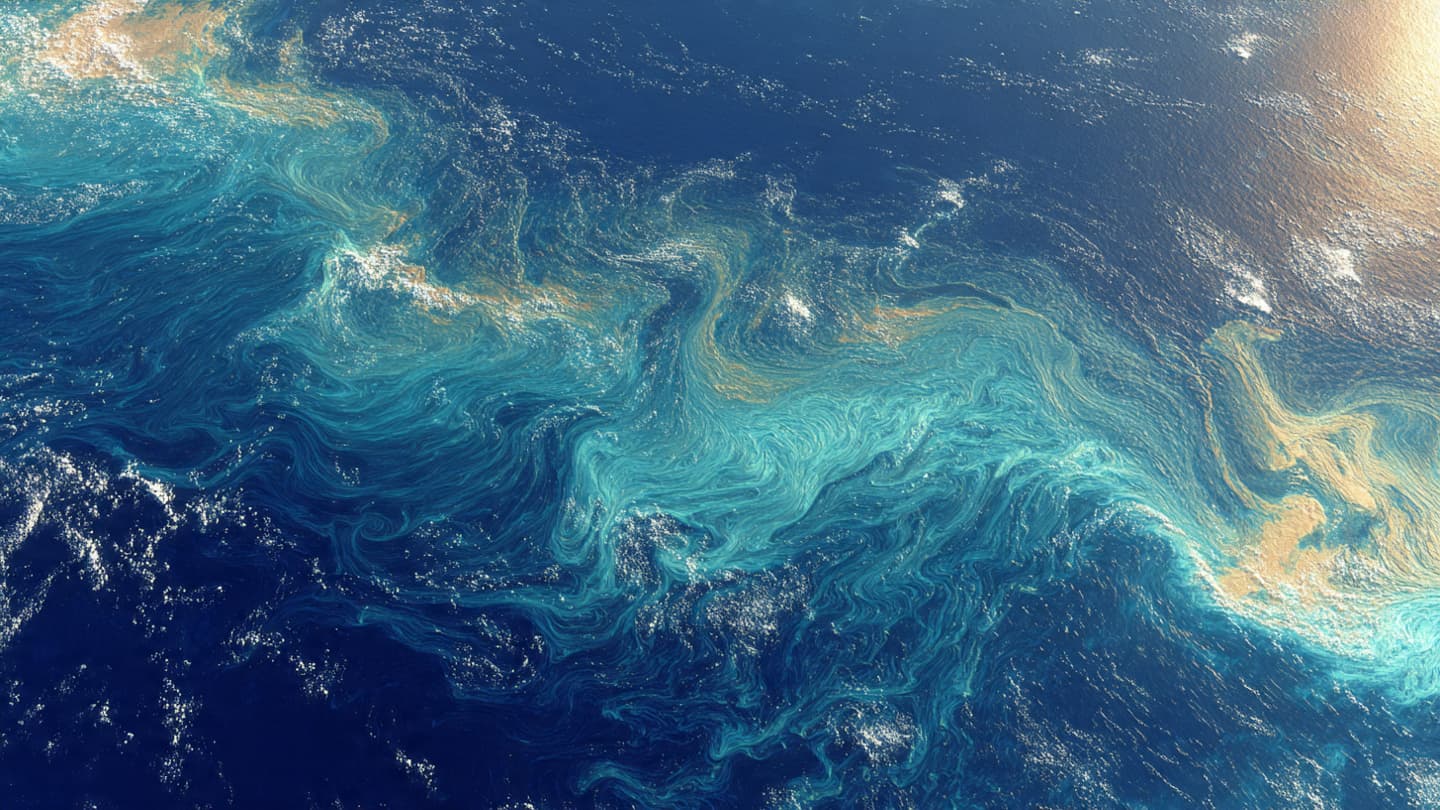
Across the vast Pacific, where winds and currents have long danced in predictable rhythm, subtle changes are beginning to reshape the story the ocean tells. Scientists describe the early stages of El Niño not as a sudden event, but as a slow unfolding—like a curtain rising on a stage already set by warming seas.
Body: The phenomenon known as El Niño occurs when sea surface temperatures in the central and eastern Pacific Ocean rise above average. While it is part of a natural climate cycle, its effects often extend far beyond the ocean itself, influencing rainfall, drought, and storm patterns across continents.
Recent observations from meteorological agencies, including NOAA and the World Meteorological Organization, indicate that conditions are aligning for a strengthening phase. Warm water anomalies and shifting trade winds suggest the system is gaining momentum, though its full intensity remains uncertain.
In many regions, the early signals are already being watched closely. Countries vulnerable to droughts or flooding are particularly attentive, as El Niño events have historically disrupted agriculture, water supply, and energy systems.
Scientists emphasize that no two El Niño events are identical. Some are weak and brief, while others reshape global weather for nearly a year. This variability is what makes prediction both essential and challenging.
At the same time, researchers are studying how climate change may be influencing the frequency and intensity of these events. Warmer baseline ocean temperatures could potentially amplify impacts, though the exact relationship is still under active investigation.
For coastal communities and global industries alike, the coming months will be a period of careful monitoring. Even gradual changes in ocean temperature can ripple outward into large-scale environmental and economic effects.
Closing: As El Niño slowly emerges, it serves as a reminder that the ocean is not static, but a living system of motion and memory. Understanding its shifts may become increasingly important in a world shaped by climate uncertainty.
AI Image Disclaimer: Images in this article are AI-generated for illustrative and conceptual purposes only.
Sources: NOAA, World Meteorological Organization, NASA Earth Observatory, Al Jazeera, Live Science
Published by Banx Network. This article is part of the Banx decentralized media programme, powered by the BXE token on the XRP Ledger.