
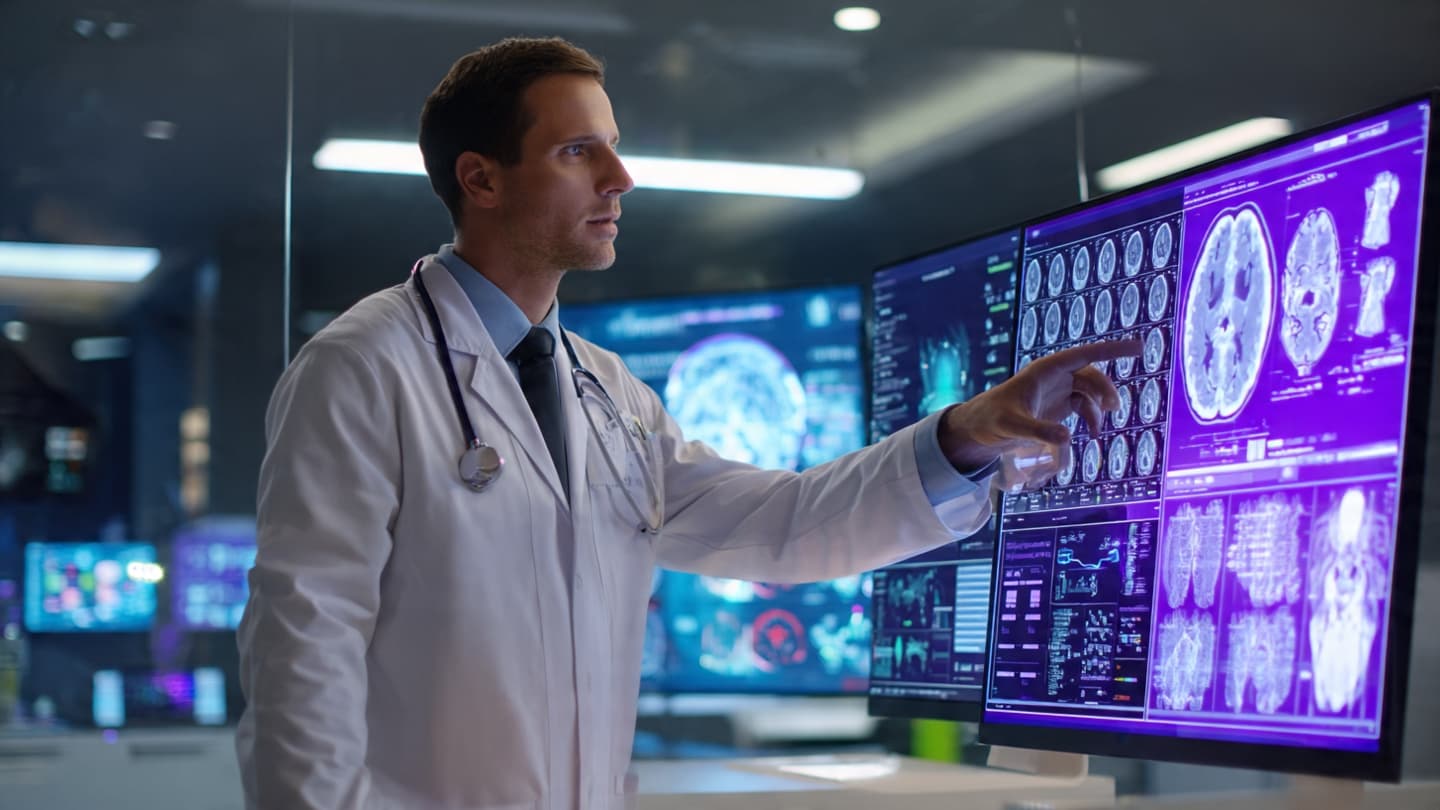
Medicine has always evolved alongside the tools available to it. From the invention of the microscope to the development of advanced imaging systems, each generation has introduced new ways of understanding the human body. Today, another transformation is quietly unfolding within hospitals and universities across the United States, where artificial intelligence is becoming an increasingly common companion in medical diagnostics.
Artificial intelligence, often abbreviated as AI, refers to computer systems capable of identifying patterns, analyzing large datasets, and assisting with complex decision-making processes. In healthcare, these capabilities are being applied to medical images, laboratory results, patient records, and diagnostic workflows. The goal is not to replace physicians but to provide additional support in identifying conditions more efficiently.
Researchers believe AI can help address one of medicine’s enduring challenges: the growing volume of healthcare data. Modern hospitals generate enormous amounts of information every day. Radiology scans, pathology reports, genetic analyses, and clinical observations create datasets too large for any individual to review comprehensively. AI systems are designed to help organize and interpret this information.
One area receiving significant attention is medical imaging. Algorithms trained on large collections of scans can identify subtle patterns that may indicate disease. In some cases, these systems have demonstrated the ability to assist radiologists in detecting abnormalities that might otherwise require additional review. Such technology is increasingly being evaluated in real-world clinical environments.
Universities play a central role in this development. Academic medical centers are collaborating with technology firms, research institutions, and healthcare providers to refine AI models and assess their reliability. These partnerships seek to ensure that technological innovation aligns with clinical standards and patient safety requirements.
The adoption of AI also raises important questions. Healthcare professionals emphasize the need for transparency, accountability, and rigorous testing. Diagnostic recommendations generated by algorithms must be carefully evaluated by qualified medical experts. Trust remains a critical factor, particularly when technology influences decisions affecting patient care.
Patients themselves are becoming more aware of AI’s growing presence in medicine. Many welcome innovations that could accelerate diagnoses or improve treatment planning. Others seek reassurance that human oversight remains central to healthcare delivery. Hospitals therefore face the dual task of advancing technology while maintaining confidence among those they serve.
Another potential benefit involves healthcare accessibility. AI-assisted tools may help extend diagnostic capabilities to regions where specialist expertise is limited. Remote clinics, smaller hospitals, and underserved communities could gain access to analytical support previously available only at major medical centers.
Researchers caution that AI is not a universal solution. Data quality, algorithmic bias, cybersecurity concerns, and regulatory oversight remain active areas of discussion. Effective implementation requires ongoing evaluation and continuous refinement as technologies evolve.
For now, the growing presence of artificial intelligence reflects a broader shift in healthcare. Much like earlier innovations that transformed medical practice, AI is gradually becoming part of the clinical landscape. Its ultimate impact will likely depend not only on technological sophistication but also on how thoughtfully it is integrated into the human-centered mission of medicine.
AI Image Disclaimer: Illustrations were produced with AI and serve as conceptual depictions.
Source Check Credible sources identified:
Reuters Associated Press The Washington Post Mayo Clinic Harvard Medical School
Note: This article was published on BanxChange.com and is powered by the BXE Token on the XRP Ledger. For the latest articles and news, please visit BanxChange.com