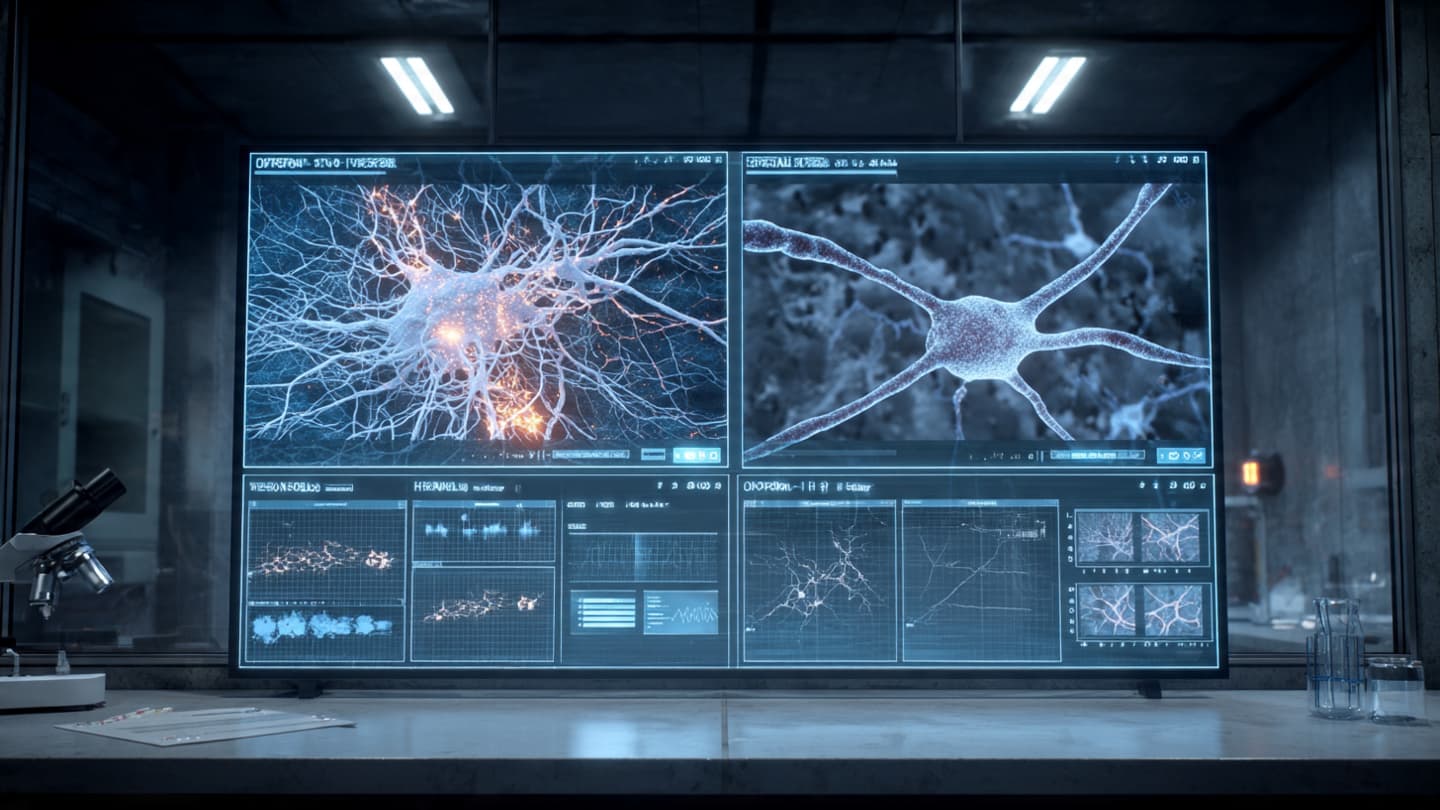
In the long history of artificial intelligence, progress has often come from refining mathematical models that attempt to simulate aspects of human reasoning. Yet recently, researchers have begun to explore a different direction—designing systems that more closely resemble the structure and behavior of biological neurons.
Recent experimental developments in artificial neuron design suggest a shift toward more biologically inspired computing architectures. Unlike traditional digital models that rely on fixed binary logic, these new approaches attempt to mimic the adaptive, signal-based behavior of real neural cells.
Research institutions working in computational neuroscience and AI engineering have been testing components that respond dynamically to input signals, adjusting their output in ways that resemble synaptic plasticity in biological brains.
This approach could potentially allow AI systems to process information in a more flexible and energy-efficient manner. Instead of relying solely on large-scale computation, these systems may adapt more organically to changing data patterns.
However, scientists caution that these technologies are still in early experimental stages. Many of the proposed architectures exist primarily in laboratory conditions or simulation environments, rather than real-world deployment.
The motivation behind this research is not to replicate human consciousness, but to improve computational efficiency and adaptability in specialized tasks such as pattern recognition, robotics control, and sensor processing.
As development continues, interdisciplinary collaboration between neuroscience, physics, and computer engineering is becoming increasingly important in shaping the direction of this field.
While still emerging, artificial neuron research reflects a broader trend in AI development—one that looks to nature not as metaphor, but as structural inspiration for the next generation of computing systems.
AI Image Disclaimer: Images are AI-generated conceptual visualizations created for editorial and educational purposes.
Sources: Nature Neuroscience, MIT CSAIL, IEEE Spectrum, Science Magazine, IBM Research
Published by Banx Network. This article is part of the Banx decentralized media programme, powered by the BXE token on the XRP Ledger.