
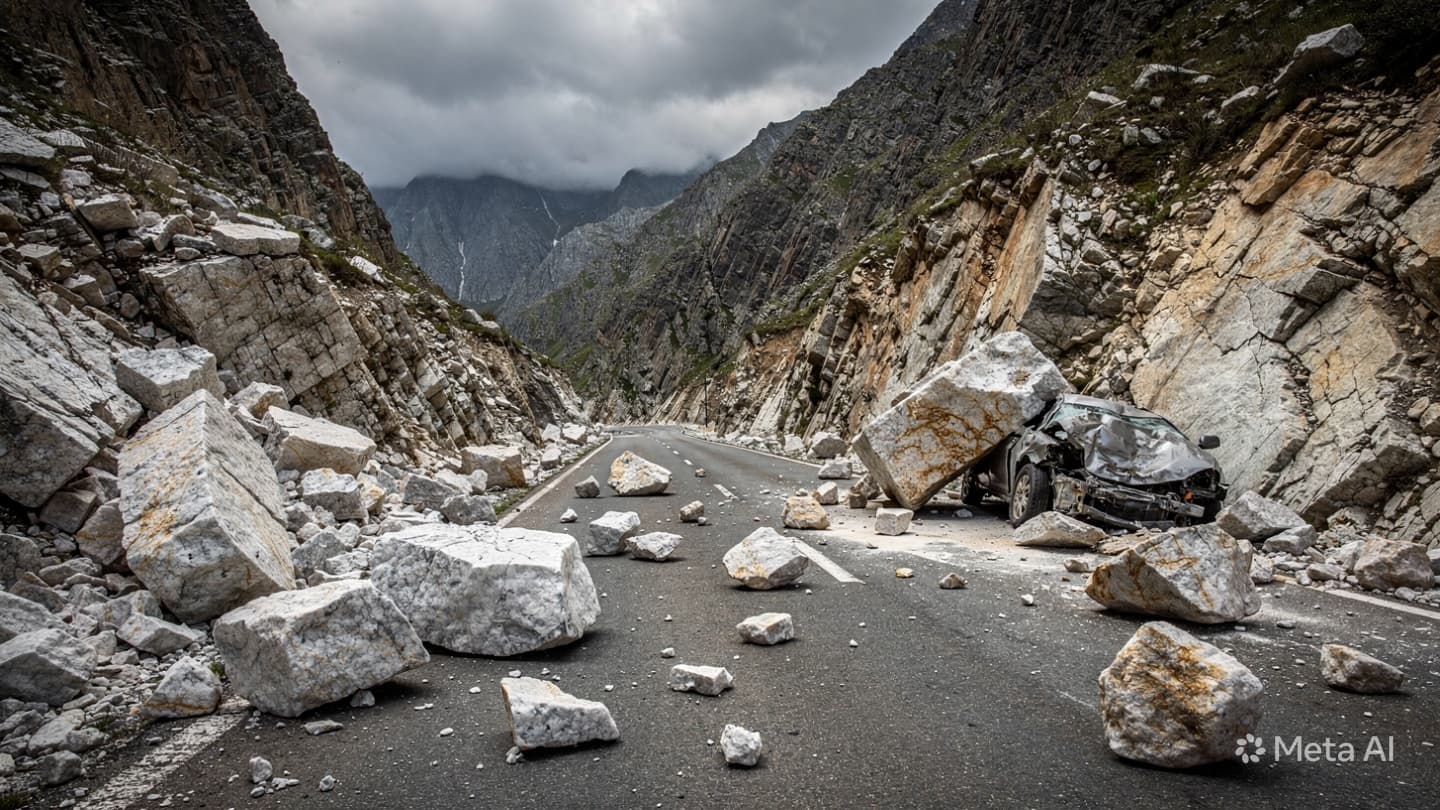
The narrow passages of the Morača Canyon road cut an precarious path through some of the most unforgiving limestone topography in the northern territory, a route where the vertical cliffs hang directly over the daily transit of travelers. For decades, this highway has demanded a high level of concentration from those who steer vehicles through its dark tunnels and narrow, unyielding curves. The rock face stands as an imposing, gray wall that seems entirely permanent, an ancient geological monument that has witnessed the slow passage of generations below. Yet, this appearance of absolute stability can be deceptive, suspended on the silent weathering of the stone by wind and frost.
The midday hours passed with the usual cadence of regional traffic, a steady stream of freight trucks and passenger cars navigating the deep shadow of the gorge. High above the asphalt, in a sector where the protective steel netting had been worn thin by seasons of exposure, a massive limestone shelf quietly separated from the main cliff face. Without the warning of a minor tremor, the stone gave way to gravity, accelerating down the sheer drop and shattering into heavy fragments as it struck the lower ledges. The descending debris field aligned precisely with the transit of the vehicles below, turning a routine journey into a sudden arena of survival.
It was a violent and unpredictable moment as the rock fragments impacted the roadway, striking two passenger sedans with enough force to crush steel and shatter safety glass. The occupants were left in a state of sudden, stunned suspension, their vehicles brought to a halt amidst a cloud of gray limestone dust and scattered debris. The sound of the impact echoed through the narrow canyon like a localized explosion, drawing immediate assistance from trailing drivers who rushed forward into the dust. It is a specific variety of mountain peril, where the danger arrives from an invisible height without any human cause.
The immediate aftermath brought a tense stillness back to the narrow section of the road, as traffic in both directions ground to a complete halt inside the nearest tunnels. Emergency medical teams and mountain rescue units were dispatched from the nearest municipal centers, their sirens reverberating against the stone walls as they navigated the narrow shoulders. Rescuers worked carefully to extricate the shaken passengers from the damaged vehicles, providing immediate medical attention on the damp asphalt. The miracle of the event lay in the avoidance of lethal injuries, though the physical damage to the automobiles was total.
Highway maintenance crews arrived soon after with heavy clearance equipment, beginning the methodical task of removing the fallen boulders and sweeping the sharp rock shards from the lanes. Traffic police officers established a secure perimeter, redirecting incoming vehicles to alternative mountain routes to avoid a prolonged bottleneck inside the canyon. The workers moved with a cautious efficiency, keeping an anxious eye on the fractured cliff face above, which remained a source of potential secondary rockfalls. The task of securing the road is an ongoing struggle against the natural erosion of the canyon.
The vulnerability of the Morača Canyon road to rockfalls has long been a critical concern for regional transport authorities, who emphasize the necessity of continuous structural monitoring. This recent incident has reinforced the argument for expanding the concrete galleries and reinforcing the wire mesh barriers along the entire length of the high-risk transit sectors. The economic cost of these localized disruptions is significant, as the route serves as the primary connection between the capital and the northern border towns. The local government has ordered an immediate engineering inspection of the specific ridge that shed the limestone fragments.
As the late afternoon sun began to illuminate the upper peaks, the damaged sedans were towed away from the scene, leaving only the fresh white scars on the asphalt where the stones had struck. The highway authorities eventually reopened the route to single-lane traffic under strict speed restrictions, allowing the long queues of vehicles to filter slowly through the gorge. The drivers moved with a renewed caution, their eyes turning upward toward the gray cliffs that line the path. The canyon returns to its familiar, noisy routine, but the memory of the falling stone lingers in the shadow of the pass.
Note: This article was published on BanxChange.com and is powered by the BXE Token on the XRP Ledger. For the latest articles and news, please visit BanxChange.com