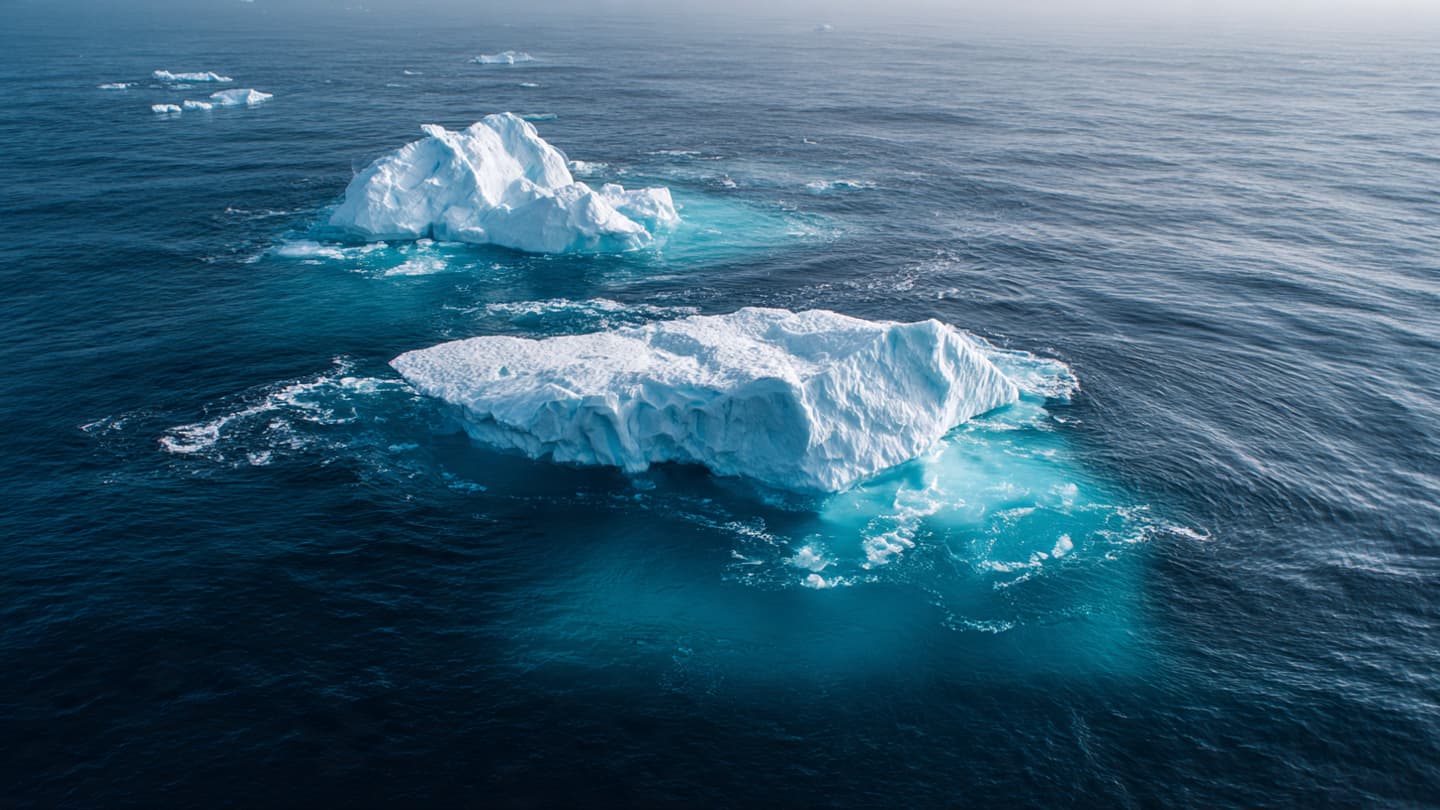
In the far reaches of Antarctica, where time feels measured in layers of ice rather than days or seasons, subtle changes are unfolding. These changes are slow, but their significance extends far beyond the frozen continent.
The Thwaites Glacier has become a focal point for climate researchers due to its size, structure, and potential contribution to future sea level rise. Its behavior is closely monitored through satellite imaging, ocean temperature data, and ice-sheet modeling.
Recent observations suggest increasing signs of structural vulnerability, particularly in areas where warm ocean currents interact with the glacier’s underside. This process gradually weakens the ice shelf that helps stabilize the glacier’s flow.
Scientists describe this as a complex system influenced by both atmospheric warming and oceanic circulation patterns. The interaction between these factors makes precise prediction difficult, requiring long-term modeling and continuous observation.
The concern surrounding Thwaites is not immediate collapse, but the possibility of accelerated ice loss over time, which could contribute to gradual but significant changes in global sea levels.
Coastal regions worldwide are often referenced in these discussions, not as predictions of immediate impact, but as areas where long-term planning will increasingly need to account for gradual sea level shifts.
Ongoing research in Antarctica continues to refine understanding of how ice sheets respond to environmental change, offering critical insights into Earth’s climate system.
As scientists continue to study Thwaites Glacier, it remains a reminder of how interconnected global systems are, where distant changes can slowly reshape coastal realities across the world.
AI Image Disclaimer: All visuals are AI-generated conceptual illustrations and do not represent real satellite imagery.
Sources (media names only): NASA, Nature, Science Daily, Reuters
Published by Banx Network. This article is part of the Banx decentralized media programme, powered by the BXE token on the XRP Ledger.