In the quiet vastness of space, light often becomes the only language that travels across unimaginable distances. Each point of light captured by a telescope is not just a star, but a reminder of time itself stretching backward into history, revealing a universe that is both ancient and ever-changing.
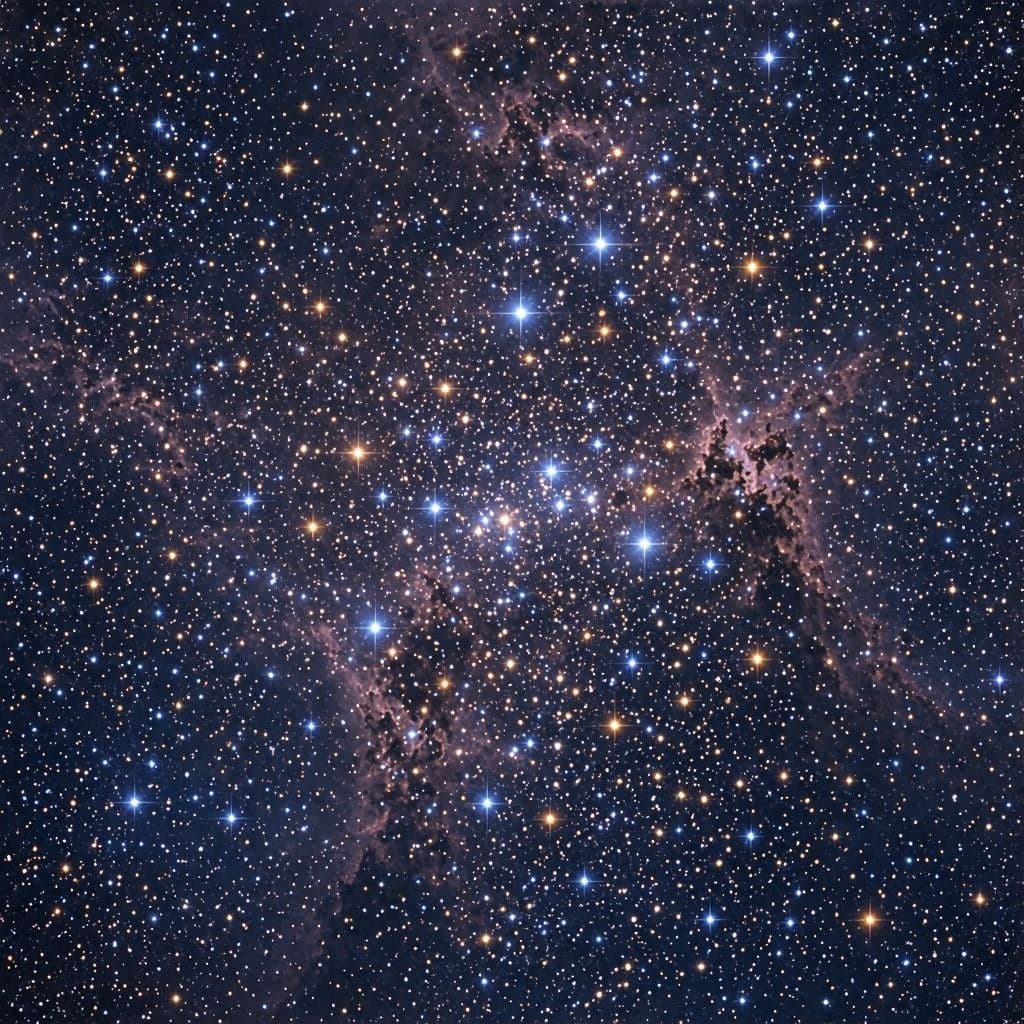
Body NASA’s Hubble Space Telescope has captured a stunning view of a densely populated star field containing an estimated 500,000 stars, offering astronomers a deeper look into one of the most crowded regions observed in space. The image highlights the extraordinary density of stellar systems packed into a relatively small region of the sky.
Astronomers explain that such dense star clusters are often found in globular clusters or near galactic centers, where gravitational forces have gathered stars into tightly bound formations over billions of years. These environments serve as natural laboratories for studying stellar evolution.
Each star in the image represents a different stage of life, from young, hot stars still forming to older, cooler stars nearing the end of their life cycles. By analyzing these populations, scientists can better understand how galaxies evolve over time.
Hubble’s long-term stability in orbit allows it to capture high-resolution images without atmospheric distortion, making it especially valuable for studying crowded cosmic regions where individual stars would otherwise blur together.
Researchers also note that studying such dense regions helps refine models of gravitational interaction, as stars in close proximity influence each other’s movement and long-term stability.
The image contributes to ongoing efforts to map stellar distribution across the universe, helping scientists understand how matter clusters on both small and large scales.
Closing NASA continues to use Hubble and newer telescopes to explore dense star fields, gradually building a more complete picture of the universe’s structure.
AI Image Disclaimer: All visuals are AI-generated illustrations created for editorial representation purposes.
Sources: NASA, ESA, Space Telescope Science Institute, Astronomy Magazine, Nature Astronomy
Published by Banx Network. This article is part of the Banx decentralized media programme, powered by the BXE token on the XRP Ledger.