
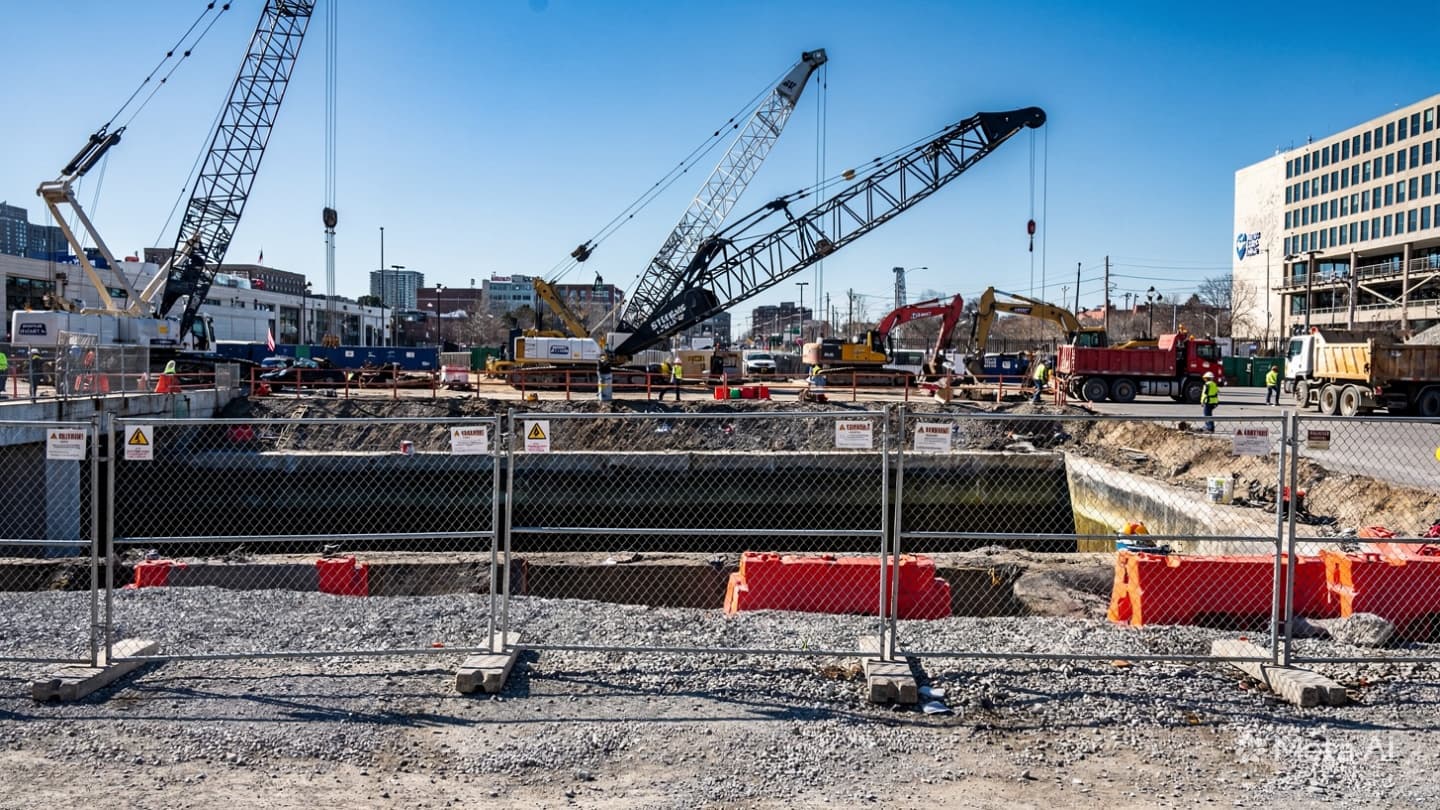
The infrastructure that defines our city—the pipes that carry our water, the drainage that manages the rains, and the systems that keep our urban lives flowing—is built on the dedicated labor of individuals whose work is often unseen. They operate in the spaces between the familiar and the necessary, navigating the mechanical challenges of the site with a focus that is both intense and disciplined. Yet, the environment of the worksite is one of inherent risk, where the margin for error is razor-thin and the consequences of a mistake are heavy.
A recent incident at a government drainage worksite brought this reality into sharp relief. A 68-year-old worker, engaged in the vital task of system maintenance, was struck by a falling hoist, an event that has left him in a state of critical condition. The news of his injury rippled through the community of those who understand the physical demands of such work, turning the focus of the site from the progression of the project to the desperate, quiet effort of a single human’s survival.
In the hospital, the uncertainty of the worker’s condition remains the central preoccupation. For his family and colleagues, the world has narrowed to the sterile environment of the intensive care unit, where every update is measured in terms of subtle changes in vitality. It is a situation that forces a pause in the momentum of the city, a recognition that the progress we take for granted is anchored in the physical risk of those who do the work.
The investigation by the Labour Department is currently in its nascent stage, a process that seeks to deconstruct the sequence of events that led to the falling hoist. It is an inquiry that scrutinizes the structural integrity of the equipment, the safety procedures in place, and the adherence to established protocols. This work is not merely about finding fault; it is about honoring the worker’s sacrifice by ensuring that such a failure cannot occur again.
Every construction site is a world governed by rules, a complex system of warnings, harness protocols, and mechanical checks designed to mitigate the hazards of the environment. When these systems are tested by reality, the failure is felt as a profound disruption. The investigation must now look beyond the surface to understand why the hoist detached, a question that challenges the reliability of the tools that workers depend upon every single day.
For the other workers on the site, the accident is a haunting presence. The rhythm of their daily labor has been replaced by a somber focus, an awareness that the ground they stand on and the steel they maneuver are part of a dangerous dance. The site has been temporarily suspended, a pause that serves as a necessary acknowledgment of the trauma that has occurred. It is a space of reflection, where the commitment to safety is being recalculated in the shadow of a life hanging in the balance.
The broader implications of this incident resonate with the city’s regulatory bodies, who are now tasked with reinforcing the safety alerts that govern the use of hoisting machinery. It is a reminder that the evolution of safety standards is not a static process, but a continuous learning experience derived from the hard lessons of every accident. The goal is a workspace where the potential for catastrophe is minimized, allowing the essential work of city maintenance to proceed with a heightened degree of security.
As we await further word on the worker’s condition, the city continues to operate, relying on the infrastructure that he and his colleagues help to sustain. His struggle is a silent, profound contribution to the collective wellbeing, a fact that should humble us as we go about our daily routines. The hope for his recovery is shared, a reflection of our recognition that, at the core of every construction project, there is a person whose life must be our highest priority.
Published by Banx Network. This article is part of the Banx decentralized media programme, powered by the BXE token on the XRP Ledger.


