
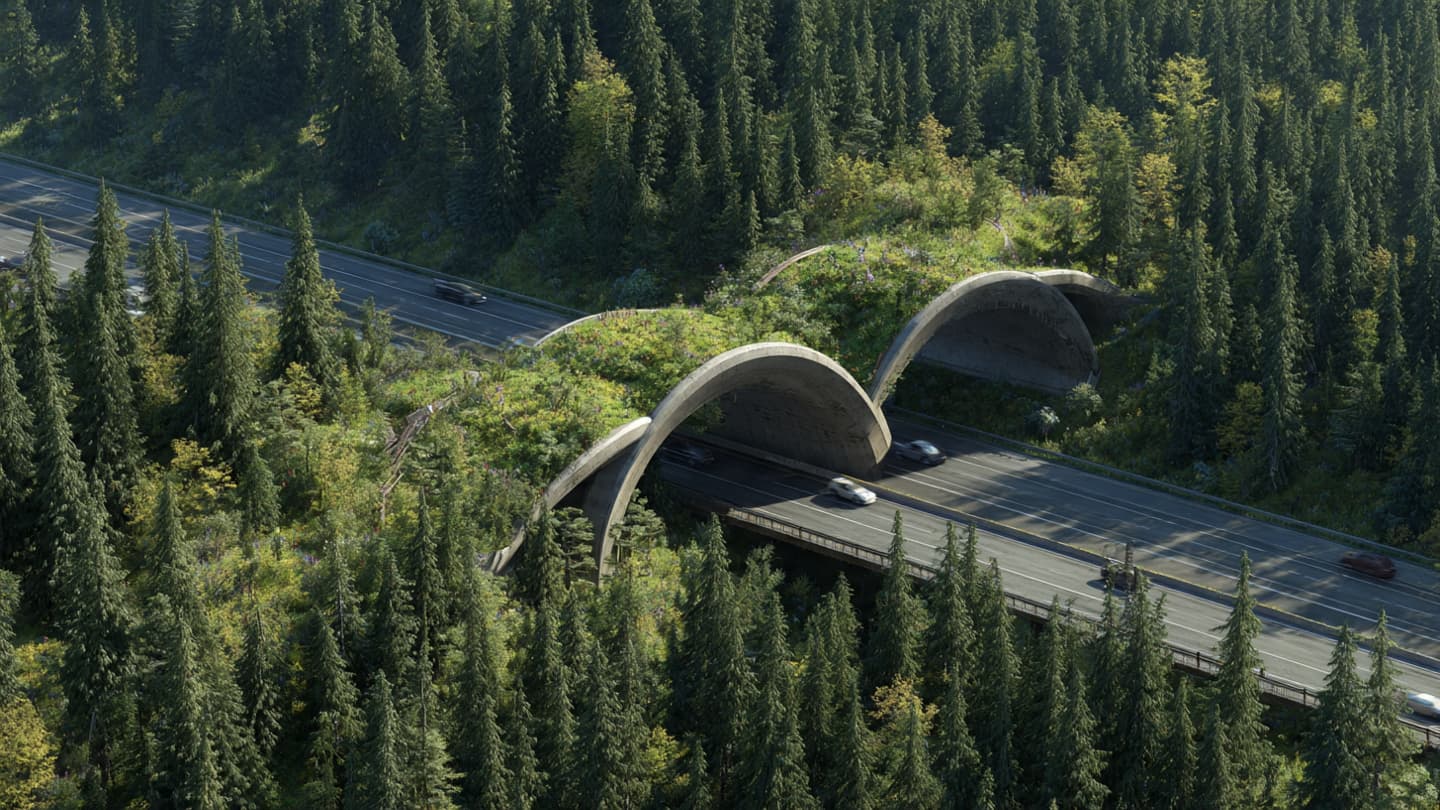
A landscape may appear whole when viewed from above. Forests stretch across horizons, rivers trace familiar routes, and mountains remain fixed against the sky. Yet for wildlife, the picture is often very different. Beneath the appearance of continuity lie roads, railways, and developments that divide habitats into smaller and smaller fragments. In France, a growing conservation effort seeks to reconnect these separated worlds.
Authorities and environmental organizations are expanding wildlife corridors across several regions of the country. These corridors function as safe passageways that allow animals to move between habitats, search for food, find mates, and maintain healthy populations. Though often unnoticed by travelers, they represent a crucial piece of modern conservation planning.
The concept is simple but powerful. When habitats become isolated, species face increasing challenges. Genetic diversity may decline, access to resources becomes limited, and populations can become more vulnerable to environmental pressures. Corridors help reduce these risks by restoring natural movement across the landscape.
France’s efforts come at a time when biodiversity protection is gaining renewed attention throughout Europe. Scientists continue to emphasize that conserving individual species requires preserving the ecological connections that sustain them. A protected forest alone may not be enough if animals cannot safely reach neighboring habitats.
Wildlife crossings built over highways and tunnels constructed beneath busy roads are among the most visible examples of these initiatives. Designed specifically for animal use, such structures help reduce collisions while improving habitat connectivity. Their success has encouraged similar projects in multiple regions.
Species ranging from deer and wild boar to rare predators such as the Eurasian lynx stand to benefit. For endangered animals, even modest improvements in movement can contribute significantly to long-term survival prospects. Every successful crossing represents one less obstacle between fragmented populations.
The effort also reflects a broader understanding of coexistence. Modern infrastructure remains essential for human activity, yet planners increasingly seek ways to minimize unintended ecological consequences. Wildlife corridors demonstrate that development and conservation need not always stand in opposition.
Local communities often play an important role in these projects. Landowners, environmental groups, researchers, and public agencies frequently collaborate to identify priority areas and monitor outcomes. Such cooperation transforms conservation from a specialized field into a shared responsibility.
Challenges remain, including funding requirements and the complexity of integrating ecological considerations into existing landscapes. Nevertheless, momentum continues to grow as evidence highlights the benefits of connectivity for both wildlife and ecosystem resilience.
The new corridors may not attract the attention commanded by dramatic environmental headlines. Their impact unfolds gradually, season after season, as animals reclaim routes once interrupted. Yet within those quiet journeys lies a hopeful vision—one where nature is given space not merely to survive, but to move freely once again.
AI Image Disclaimer Graphics are AI-generated and intended for representation, not reality.
Source Check Credible sources identified before writing:
Le Monde Reuters France 24 European Environment Agency (EEA) IUCN (International Union for Conservation of Nature)
Note: This article was published on BanxChange.com and is powered by the BXE Token on the XRP Ledger. For the latest articles and news, please visit BanxChange.com