
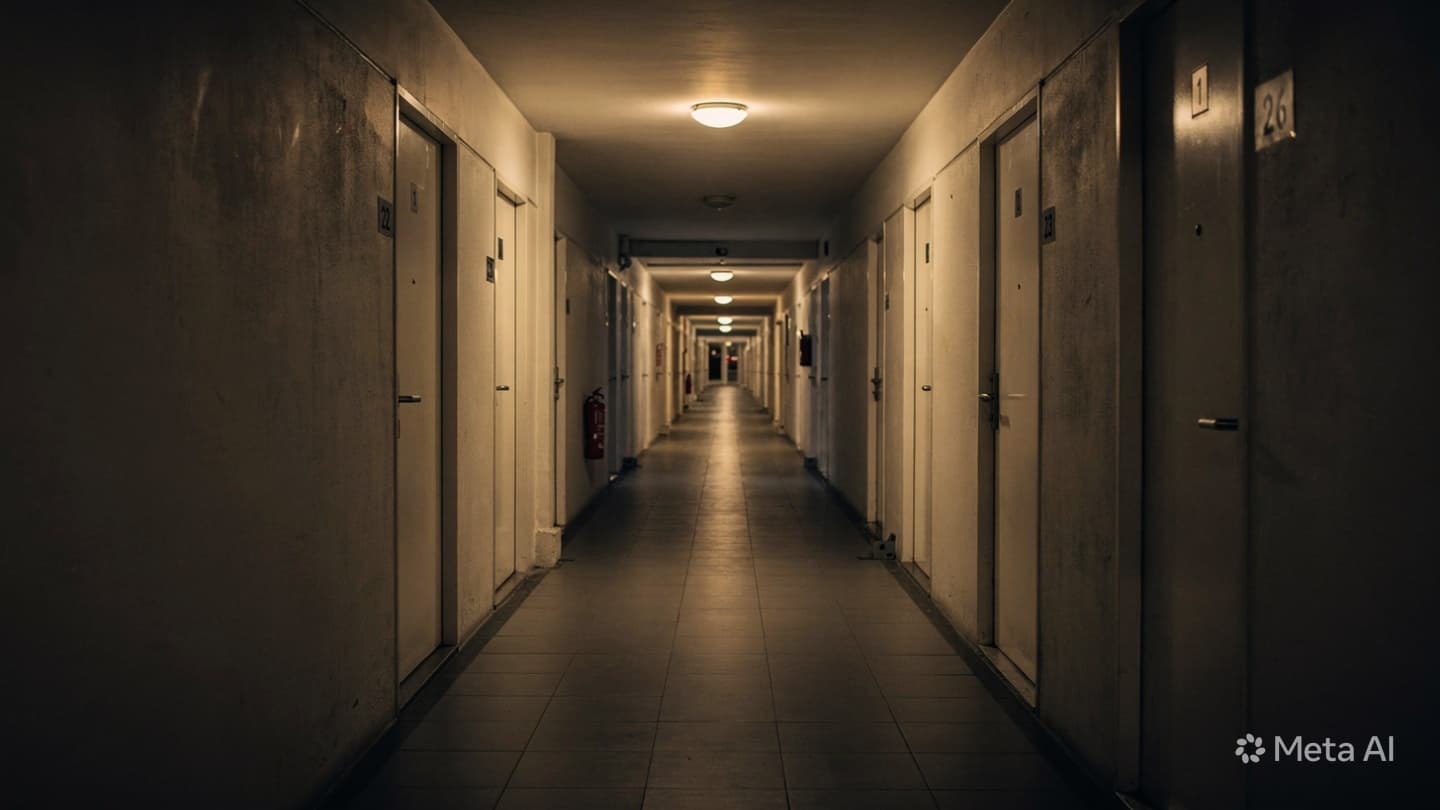
The evening air in Choa Chu Kang often carries the hum of suburban life—a rhythmic pulse of arrivals and departures, the soft closing of lift doors, and the distant murmur of neighbors winding down. It is a space built for continuity, where the predictable geometry of concrete and light usually serves as a backdrop to the mundane. Yet, there are moments when the routine is shattered, when the stillness of a residential floor is pierced by a reality that defies the quiet comfort of the home.
In the wake of an unexpected tragedy, the atmosphere within a block feels altered, as if the very walls hold onto the weight of what occurred. The transition from a place of sanctuary to one of profound investigation is rarely abrupt, even when the event itself is sudden. Residents moving through the common areas find themselves walking through a scene marked by the sterile markers of a police perimeter, where the routine act of stepping into a lift becomes an encounter with the gravity of human fragility.
The narrative of this event began on the twelfth floor, a height that offers a view of the sprawling estate but provides no vantage against the volatility of personal conflict. It was here that a twenty-one-year-old woman was discovered, her life extinguished in a space intended for transition. The arrival of emergency responders, their presence a stark contrast to the ordinary evening, signaled the closure of one chapter and the harrowing beginning of a somber investigation.
Below, the physical reminders of the struggle manifested in the wreckage left behind. A man, twenty-two, was later taken into custody, his own trajectory redirected from the corridors of the living to the clinical environment of a hospital under guard. The proximity of the two individuals, who were known to each other, adds a layer of intricate sorrow to the tragedy, stripping away the anonymity that often surrounds reports of urban violence.
As forensic teams meticulously gathered evidence, the block remained a focal point of public and local attention. The presence of the law—the methodical documentation of a scene—serves as a grim anchor, tethering a neighborhood to the reality of a life lost. Every detail, from the damaged refuse bins to the stillness of the corridor, contributes to a collective memory that will linger long after the police tape is removed.
There is a reflective space between the act and its aftermath, where the community is forced to grapple with the proximity of such darkness. It is not merely the loss of a young individual that resonates, but the realization of how fragile the fabric of our daily interactions truly is. Within the architecture of our lives, we build corridors that are meant to keep us safe, yet these same spaces can become arenas for unimaginable sorrow.
The investigation continues, shifting through the layers of history and motive that led to this intersection of lives. For the residents of Choa Chu Kang, the coming days will be defined by the slow process of reconciling their environment with the trauma that has etched itself into their shared space. The narrative of this event is still being written, obscured by the legal and procedural requirements of the state.
As the sun sets over the estate, the silhouette of the building remains a silent witness to the night of May 26. The cycle of life in the city continues elsewhere, yet for those within the immediate circle of this event, the rhythm has been permanently altered. It is a somber reminder of the human element, often overlooked in the structured design of our modern urban landscape, which remains vulnerable to the unseen pressures of the heart.
Note: This article was published on BanxChange.com and is powered by the BXE Token on the XRP Ledger. For the latest articles and news, please visit BanxChange.com