
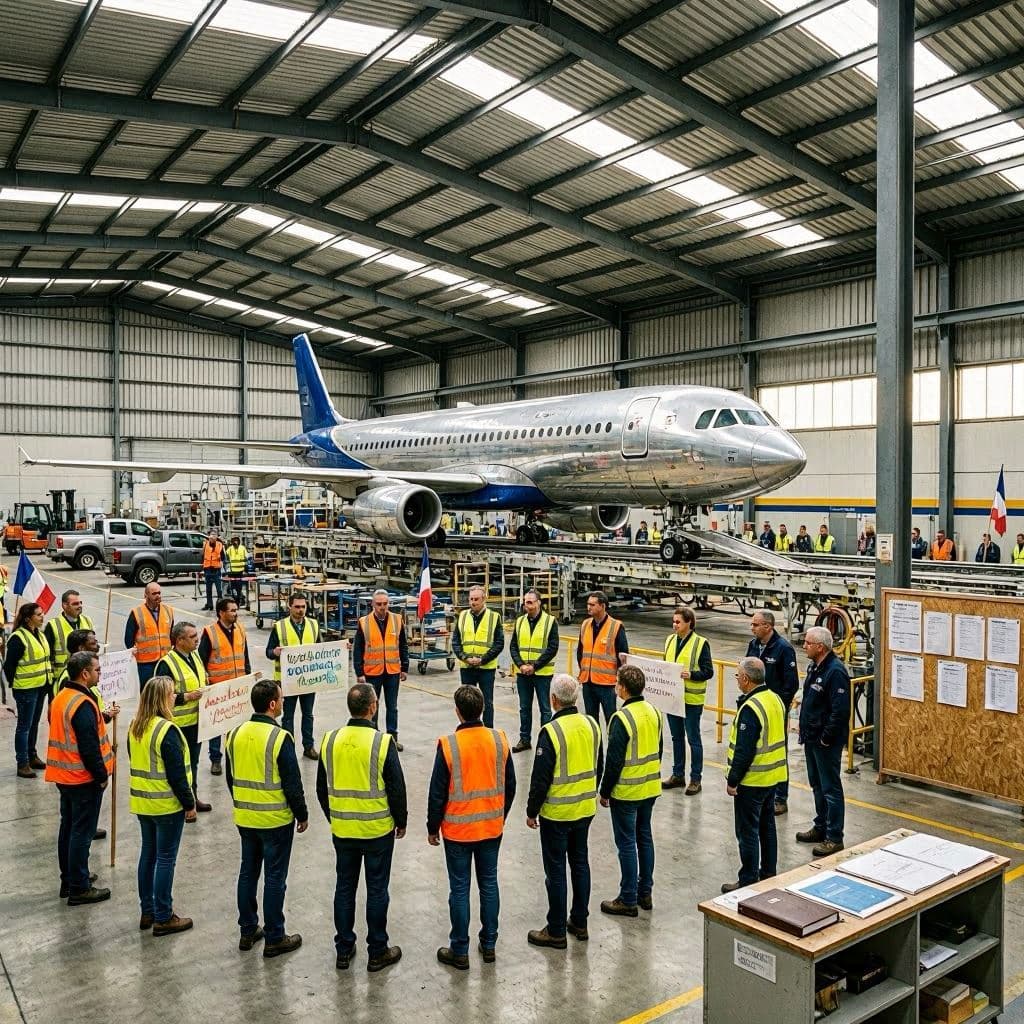
In the vast halls where aircraft take shape piece by piece, the rhythm of industry often resembles a carefully conducted orchestra. Engineers, technicians, and assembly workers move in coordination, each task contributing to machines designed to cross oceans and continents. Yet even in such highly organized environments, moments arise when workers pause the rhythm to make their voices heard.
Airbus has recently faced labor unrest in France as employee unions organized strike actions in response to workplace policy changes. The dispute centers largely on new requirements concerning office attendance and working arrangements, reflecting broader debates taking place across industries worldwide.
Union representatives argue that greater flexibility introduced during recent years had become an important part of employees' professional and personal balance. They contend that changes to attendance policies should involve extensive consultation with staff and labor organizations.
Airbus management, meanwhile, has emphasized the importance of maintaining collaboration, innovation, and operational efficiency within teams. Company officials stated that in-person work remains essential for certain functions, particularly in engineering, manufacturing coordination, and project development.
The strikes have affected some operations at French facilities, although Airbus indicated that contingency measures were implemented to limit disruption. The aerospace manufacturer remains one of Europe's largest industrial employers, with production sites spread across several countries.
Labor relations hold particular significance in the aviation sector, where highly specialized workforces contribute to complex manufacturing processes. Industry analysts note that balancing employee expectations with operational requirements has become an increasingly prominent challenge for multinational companies.
The situation also highlights a wider international conversation about workplace models following the expansion of remote and hybrid work arrangements. Across sectors, employers and employees continue to negotiate how flexibility should evolve in the years ahead.
French labor laws provide strong protections for collective bargaining and industrial action, making dialogue between management and unions an essential component of resolving workplace disputes.
Both Airbus and union representatives have signaled willingness to continue discussions, suggesting that negotiations may play a key role in shaping future workplace policies.
AI Image Disclaimer: This article includes an AI-generated illustration created solely to visualize the reported events.
Source Verification Check: Reuters, AFP, Les Echos, France24, Associated Press
Note: This article was published on BanxChange.com and is powered by the BXE Token on the XRP Ledger. For the latest articles and news, please visit BanxChange.com