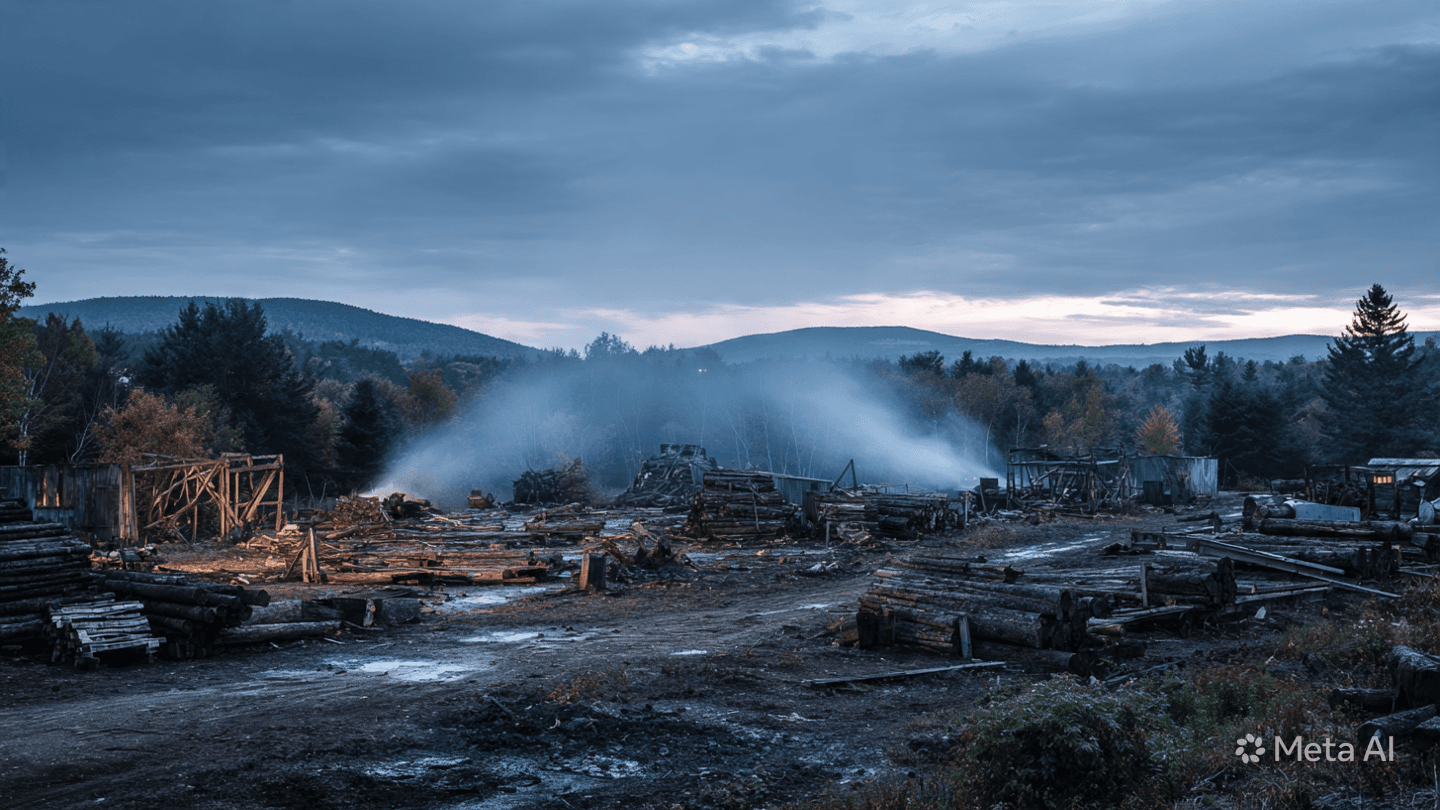
The hum of the sawmill is a sound woven into the very fabric of Maine’s landscape, a rhythmic affirmation of a heritage rooted in the dense, evergreen reaches of the North. It is a world of cedar and spruce, where the labor of the day is measured in the steady movement of blades and the scent of freshly turned wood. On a recent, quiet day, this familiar order was interrupted by the sudden, consuming heat of an accidental fire. The blaze, which rapidly moved through the structure, did more than char the seasoned timber; it fractured the collective sense of safety that those who work the line have long held as an unspoken promise.
Fire, in its most unpredictable form, cares little for the long-standing history of an institution. Within the span of a few hours, the mill—a place that had served as an economic and cultural anchor for the surrounding region—was rendered a collection of cooling embers and blackened rafters. For the workers who stood at the perimeter, watching as the flames climbed toward the treeline, the event was a jarring realization of how quickly the mundane can descend into the catastrophic. The air, once thick with the honest smell of sawdust, grew heavy with the acrid, lingering scent of a structure’s final, involuntary surrender.
The subsequent investigation into the cause was conducted with a somber, methodical pace. Fire marshals, moving through the skeletal remains of the facility, searched for the telltale markers of ignition—a loose wire, a localized surge, or the simple accumulation of fine wood dust that can, under the right conditions, become a volatile catalyst. The conclusion, that the event was purely accidental, brought a strange kind of finality to the tragedy. It removed the weight of human intent from the narrative, leaving only the cold, unyielding reality of a mechanism that failed, or perhaps simply reached its limit, in a way that could not be reversed.
There is a reflective space that opens up after the smoke clears, where the community must reconcile the loss of a workplace with the enduring nature of their town. For those whose livelihoods were tied to the operation of the mill, the loss is not merely economic; it is a disruption of the daily, lived-in patterns that give shape to a life. The silence now present at the site stands in stark contrast to the former bustle, inviting a quiet contemplation on the inherent dangers that exist in the industries we rely upon to sustain our modern existence.
Small-town Maine often finds its strength in proximity, and the response to this loss has been an understated, resilient unfolding of support. Neighbors and local leaders have gathered not to grandstand, but to hold the space left by those who perished in the fire. It is a shared burden, acknowledged in the soft tones of conversation and the steady presence of those who understand the toll that such an event takes on a family. The tragedy serves as a sober reminder of the fragility of the structures we build—both the physical ones that house our work and the social ones that bind us to our neighbors.
As the site remains cordoned off, the focus shifts toward the long, arduous process of cleanup and the eventual decision of whether to reclaim the ground. The fire, while tragic, has prompted a state-wide conversation regarding safety protocols and the maintenance of aging infrastructure in similar facilities. It is a necessary, albeit painful, discourse that seeks to ensure that the risks inherent in the timber industry are understood and managed with the highest degree of vigilance. The goal is to honor the past by fortifying the future, ensuring that the legacy of Maine’s mills is one of endurance rather than sudden, accidental sorrow.
The investigation findings offer clarity but little comfort to those mourning the loss of life at the site. As official reports are processed and the legal obligations of the facility are met, the community of the town continues to navigate the complex emotions of the aftermath. There is a desire for a return to normalcy, yet an acknowledgment that the landscape has been permanently altered by the event. In the quiet transition from the urgency of the response to the steadiness of recovery, the people are finding their own way to move forward, carrying the memory of the day in a way that respects both the loss and the life that continues.
The Maine Department of Public Safety confirmed that the fire at the lumber mill was accidental in nature. Following an extensive investigation by the State Fire Marshal’s Office, officials determined that a mechanical malfunction led to the initial spark. The incident resulted in three confirmed fatalities and significant structural damage to the primary processing facility. Local authorities are continuing to work with the business owners to facilitate a safe cleanup of the site and address the needs of the affected families and displaced workers.
Published by Banx Network. This article is part of the Banx decentralized media programme, powered by the BXE token on the XRP Ledger.