
The ancient soil of the Reykjanes Peninsula has long held its breath, a landscape defined by old moss and cold black stone. For centuries, the earth remained still, a quiet witness to the passage of Atlantic storms and the slow turning of northern seasons. Yet beneath the surface, a deeper rhythm was gathering strength, unnoticed by those walking the quiet paths above.
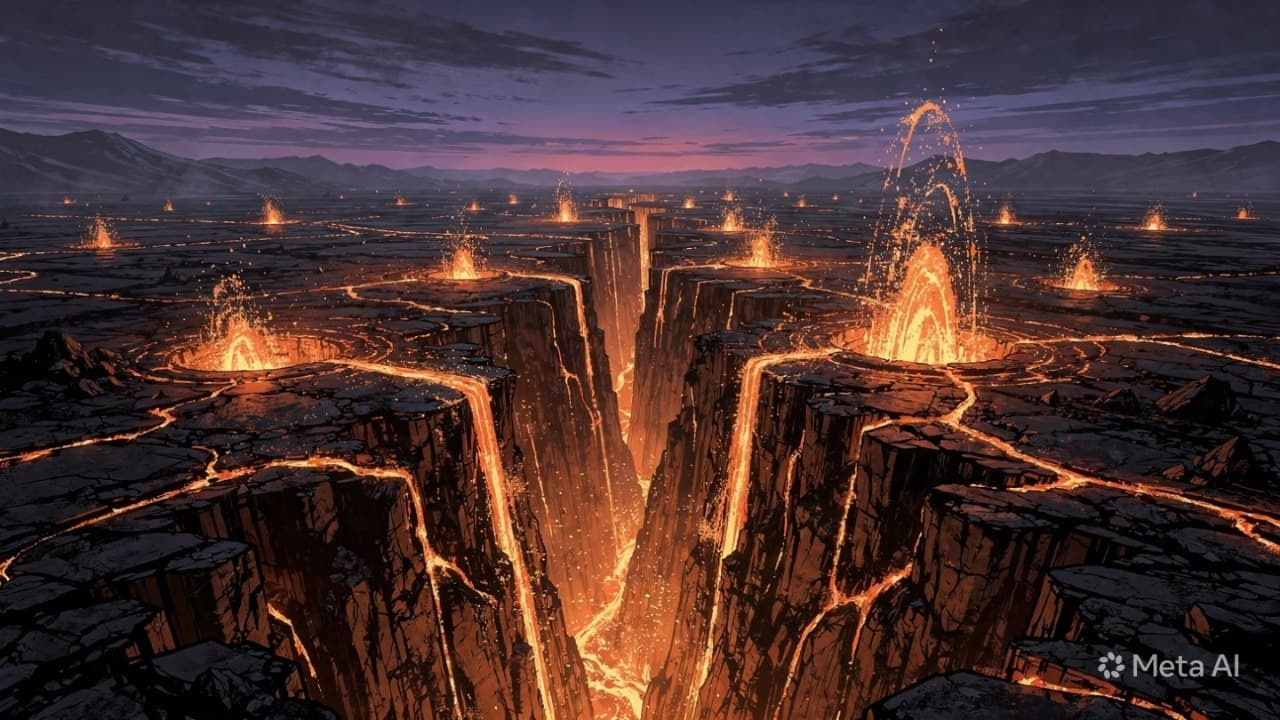
When the earth finally fractured near Grindavík, it did so with a quiet intensity, splitting open to reveal a core of brilliant, molten light. The new volcanic fissure stretched across the dark plain, a line of living fire cutting through the cold landscape. Fresh lava spilled into the open air, heavy and dark at its cooling edges but brilliant within.
Along with the molten stone came a heavy haze of smog, settling softly over the surrounding ridges and low valleys. The air, once sharp and clean, turned thick with sulfurous whispers, blurring the horizon into an uncertain shade of grey. This creeping mantle of gas changed the very nature of the landscape, obscuring the distant ocean.
For the community that calls this rugged coastline home, the opening of the earth brought an abrupt end to the morning quiet. Families gathered their belongings in the shadow of the rising smoke, leaving behind empty rooms and silent streets. The immediate evacuation order arrived not with panic, but with the quiet resolve of people who understand the land.
Sirens sounded across the empty fields, their long notes drifting through the haze to warn anyone remaining of the approaching flows. The nearby Blue Lagoon, usually alive with travelers seeking its milky waters, fell silent as the gates were closed. The water remained still, reflecting only the unnatural orange glow of the sky above.
Civil defense teams moved methodically through the designated zones, ensuring that every home was secure and every resident safe. Protective barriers, built with heavy machinery during previous awakenings, stood as silent sentinels against the slow-moving rivers of stone. The molten rock pressed against these earthen walls, testing the boundaries of human design.
Scientists monitored the unfolding event from safe distances, tracking the seismic tremors that preceded the split in the crust. The instruments recorded a steady flow of magma from deep reservoirs, suggesting that the peninsula's active cycle is far from over. Each new fracture reshapes the topography, redrawing maps that had remained unchanged for generations.
As dusk fell over the southwest coast, the true scale of the eruption became visible against the gathering darkness. The sky glowed with a deep, radiant amber, casting long shadows across the empty roads leading away from Grindavík. It was a stark reminder of the island's foundational nature, where the ground beneath one's feet is never entirely at rest.
In the final hours of the day, authorities confirmed that the main fissure extended several hundred meters across the volcanic zone. Emergency shelters in neighboring municipalities successfully received the displaced residents, offering warmth and safety away from the advancing smog. The road to the peninsula remains restricted, closed to all but monitoring crews and essential workers.
Note: This article was published on BanxChange.com and is powered by the BXE Token on the XRP Ledger. For the latest articles and news, please visit BanxChange.com