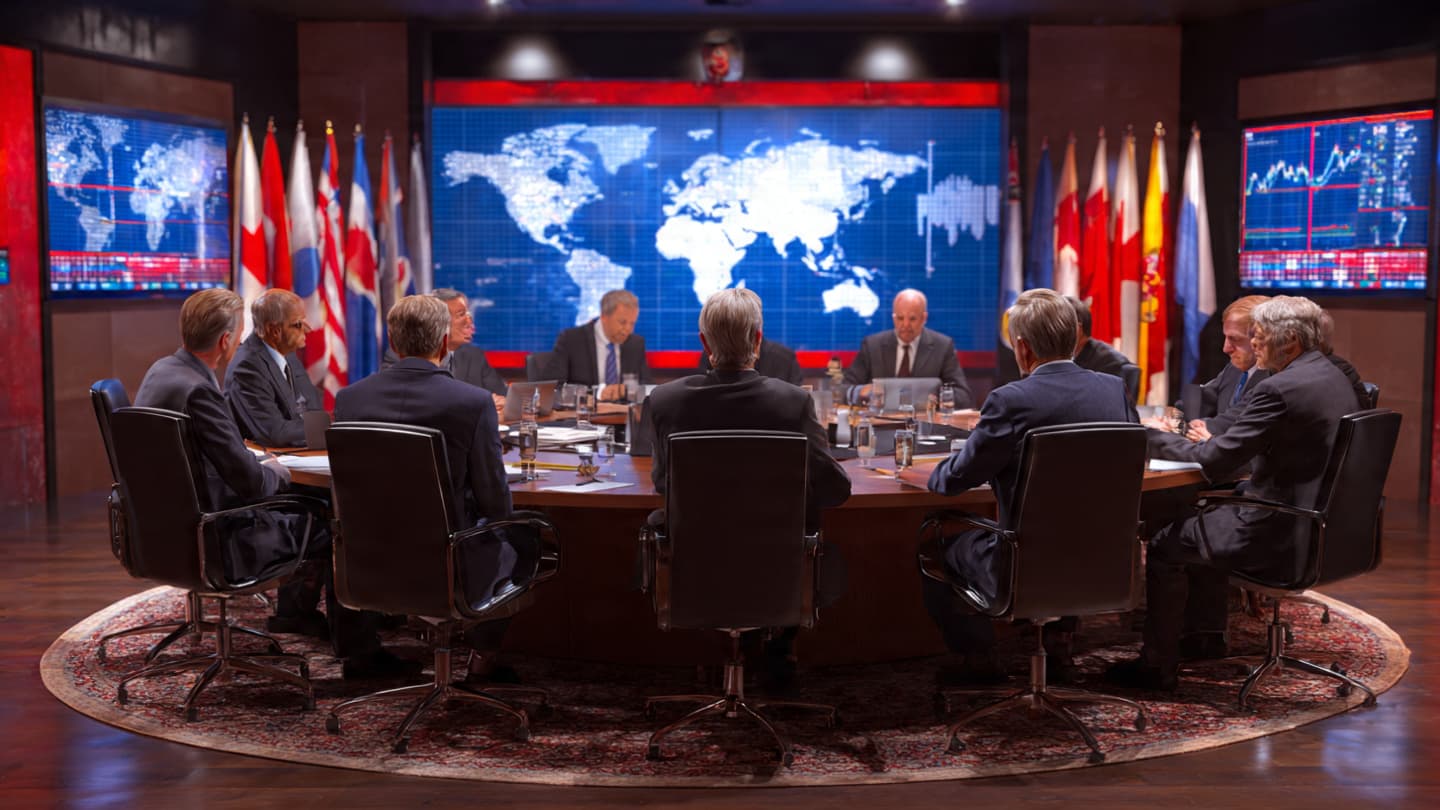
There are moments in history when the world's economy resembles a vast ocean. Most days, its currents move quietly beneath the surface, carrying goods, investments, and opportunities across continents. Yet when tensions emerge in a strategically important region, even distant shores begin to feel the waves. Such was the atmosphere surrounding discussions among G7 leaders gathered in France as concerns over the Iran conflict cast a shadow across global economic forecasts.
The conflict has attracted attention not only because of its geopolitical implications but also because of its potential effects on international trade. Iran sits near some of the world's most important energy routes, making any disruption a matter of concern for governments, businesses, and consumers alike. During the summit, leaders acknowledged that stability in the region remains closely tied to confidence in global markets.
Energy prices naturally became one of the central themes. Economists have long noted that uncertainty surrounding oil supply can quickly influence market expectations. Even before actual shortages occur, concerns about possible disruptions often lead to price volatility, affecting transportation costs, manufacturing expenses, and household budgets across the world.
For European economies, including France, the issue carries particular significance. While many countries have diversified their energy sources over recent years, global oil prices remain interconnected. A sharp increase in energy costs could influence inflation rates, slow consumer spending, and complicate efforts by central banks seeking to maintain economic stability.
Business leaders are also watching developments carefully. International companies rely on predictable supply chains and stable investment environments. Prolonged uncertainty can encourage firms to delay expansion plans, reconsider investment decisions, or increase financial reserves as a precaution against future market turbulence.
The discussions in France highlighted another important reality: today's economic challenges rarely remain confined to one region. Financial markets react quickly to geopolitical developments, often transmitting concerns across borders within hours. What begins as a regional conflict can eventually influence stock markets, currency values, and trade flows on multiple continents.
Despite these concerns, participants at the summit emphasized the importance of cooperation. Economic resilience, many argued, depends not only on national policies but also on international coordination. Shared strategies for energy security, trade continuity, and financial stability may help reduce the risks associated with geopolitical uncertainty.
France's role as host provided an opportunity to encourage dialogue among major economies. Rather than focusing solely on immediate market reactions, leaders explored broader questions regarding long-term economic resilience. Discussions included supply chain diversification, strategic reserves, and mechanisms designed to cushion economies against future shocks.
As the summit concluded, no dramatic announcements emerged, yet the message was clear. The global economy remains deeply interconnected, and events in one region can influence confidence far beyond its borders. While uncertainty persists, international cooperation remains one of the most important tools available to navigate an increasingly complex economic landscape.
AI Image Disclaimer Images in this article are AI-generated illustrations, meant for concept only.
Source Check Credible sources identified:
Reuters Associated Press Bloomberg Financial Times CNBC
Note: This article was published on BanxChange.com and is powered by the BXE Token on the XRP Ledger. For the latest articles and news, please visit BanxChange.com
.jpg&w=3840&q=75 "Siren Blunder Wakes Residents in Eastern Poland During “Silent” Alarm Test")
.jpg&w=3840&q=75 "Foreign Helicopters Join Effort to Fight Deliblato Sands Wildfire Near Belgrade")