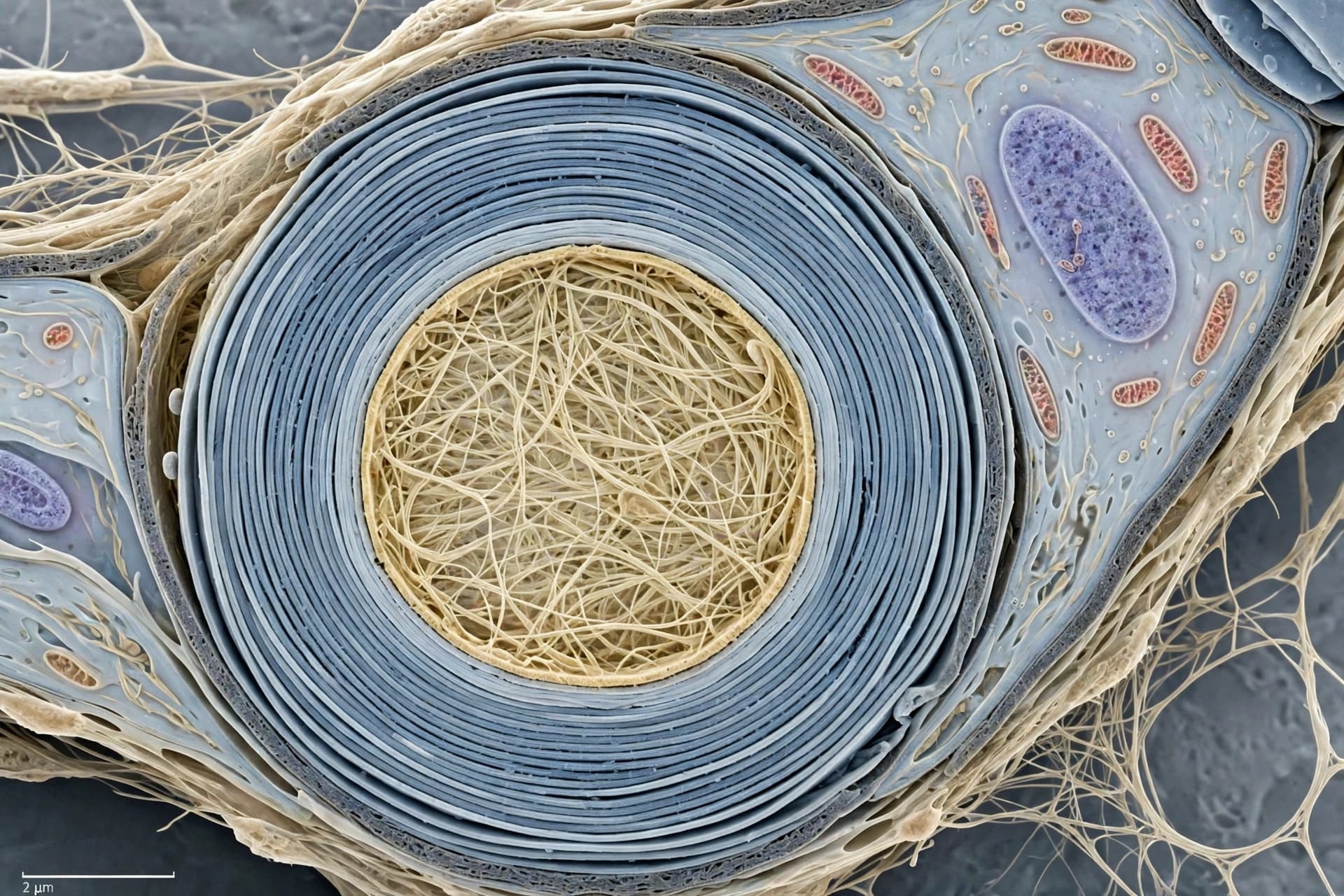
Life, at its most fundamental level, is built from structures too small to see and too complex to fully imagine. For decades, scientists have tried to decode the shapes of proteins—the molecular machines that drive nearly every biological process.
Recent advances reported by scientific platforms such as Nature and computational biology research groups highlight a major milestone: artificial intelligence systems are now capable of predicting and mapping nearly one billion protein structures at scale. This represents an unprecedented expansion in biological data modeling.
These AI systems build upon breakthroughs in protein folding prediction, where algorithms learn to infer 3D shapes from amino acid sequences. What once required years of laboratory experimentation can now be approximated computationally in a fraction of the time.
The significance of this achievement lies not only in scale but also in accessibility. Researchers around the world can use these predicted structures to accelerate studies in medicine, drug development, and molecular biology.
By mapping such an enormous number of proteins, scientists gain a broader understanding of biological diversity across species. This opens pathways for identifying potential treatments for diseases and understanding how organisms adapt at a molecular level.
However, researchers also emphasize that computational predictions are not replacements for experimental validation. Laboratory confirmation remains essential, especially in high-stakes applications such as drug design.
The collaboration between AI and biology continues to deepen, reflecting a broader trend in science where computation and experimentation increasingly work side by side. This synergy is reshaping how biological discovery is conducted.
The expansion of protein mapping through artificial intelligence marks a quiet but profound shift in how humanity explores life at its smallest scales, offering both opportunity and responsibility in equal measure.
AI Image Disclaimer: Images in this article are AI-generated for editorial purposes.
Sources: Nature, DeepMind research updates, ScienceDaily
Published by Banx Network. This article is part of the Banx decentralized media programme, powered by the BXE token on the XRP Ledger.