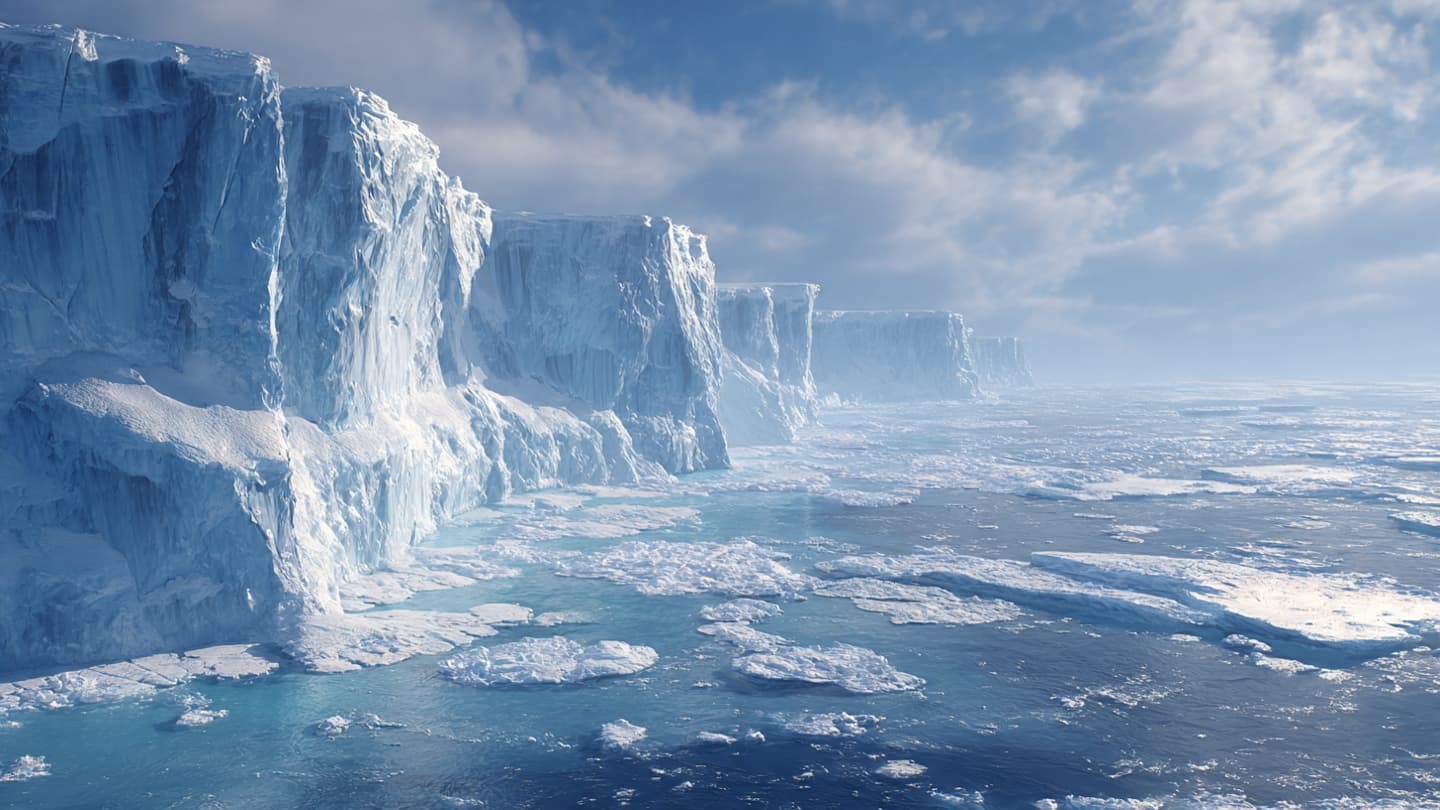
In Antarctica, changes often unfold in silence, shaped by temperatures and ocean currents far removed from everyday observation. The so-called “Doomsday Glacier,” widely known as Thwaites Glacier, has become a focal point in discussions about ice stability and sea-level rise.
Researchers studying the region have observed increasing signs of structural weakening in the ice shelf that helps stabilize the glacier. This floating ice acts as a natural barrier, slowing the flow of land-based ice into the ocean.
As warmer ocean waters interact with the underside of the ice shelf, melting accelerates in areas that are difficult to monitor directly. This process gradually reduces structural integrity, making large-scale breakups more likely over time.
Satellite observations and field measurements have both contributed to a clearer understanding of these changes. While the timeline of major collapse remains uncertain, the direction of change has been consistently noted across multiple studies.
The implications of such changes extend far beyond Antarctica. Even partial increases in ice flow could contribute to measurable sea-level rise, affecting coastal communities worldwide over long periods.
Scientists emphasize that this is not a sudden event but a gradual process influenced by both atmospheric warming and oceanic circulation patterns. The complexity of these interactions makes precise forecasting challenging.
International research collaborations continue to monitor the glacier closely, deploying instruments beneath ice shelves and using satellite imaging to track surface movement and temperature shifts.
The evolving condition of Thwaites Glacier represents one of the many slow-moving changes shaping the planet’s future coastlines. Its story is still unfolding, measured not in days or months, but in decades of observation.
AI Image Disclaimer: All visuals accompanying this article are AI-generated for illustrative editorial use.
Sources (media names only): NASA, British Antarctic Survey, Nature Journal, Science Daily, National Geographic
Published by Banx Network. This article is part of the Banx decentralized media programme, powered by the BXE token on the XRP Ledger.