
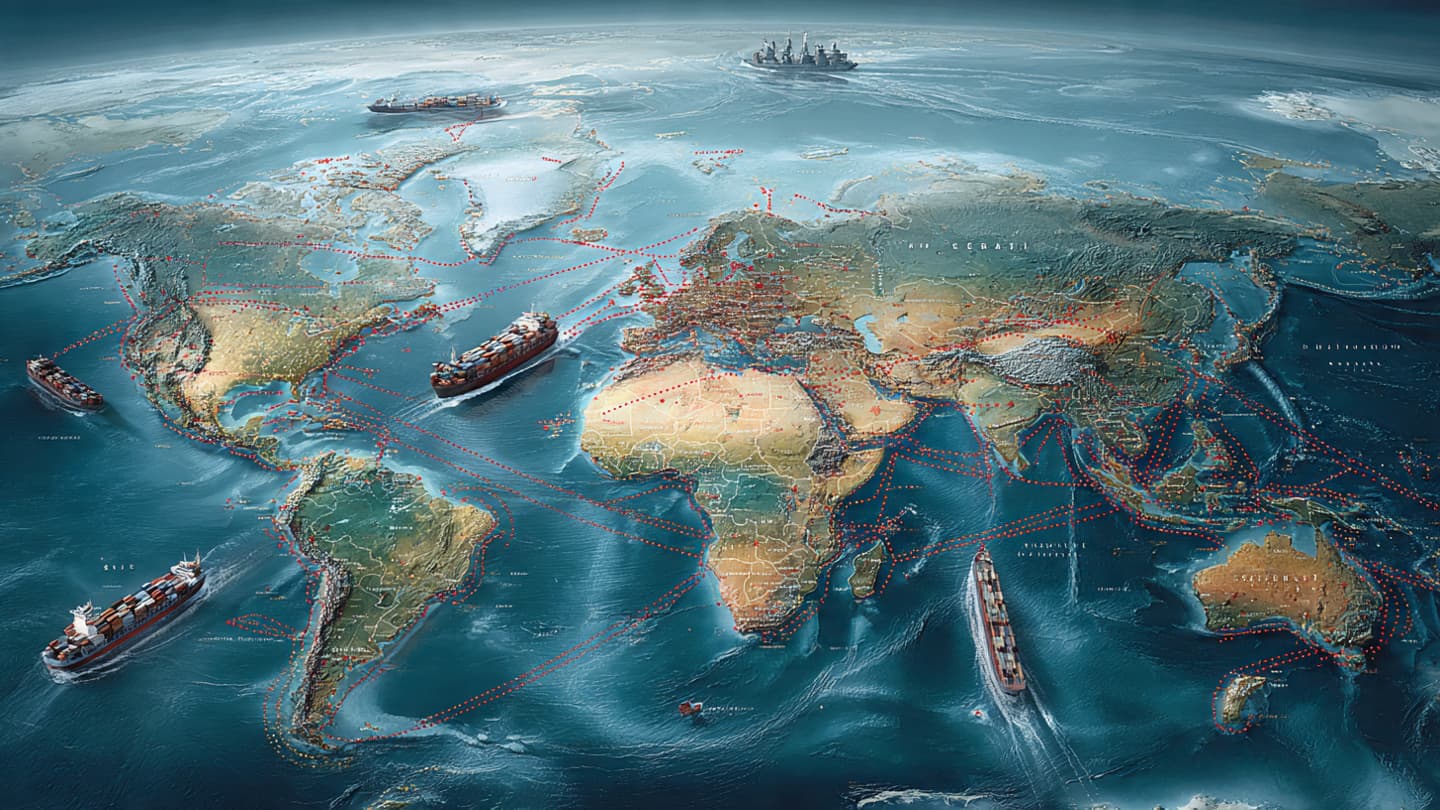
For centuries, certain waterways have served as arteries of global commerce, carrying resources that power economies and connect continents. Among them, the Strait of Hormuz occupies a uniquely important position. The narrow passage handles a significant portion of the world’s energy shipments, making its stability a matter of global economic interest. Recent signs of normalized shipping activity through the route have been welcomed by markets worldwide.
The reopening and stabilization of maritime traffic have eased concerns about potential disruptions to global energy supplies. During periods of uncertainty, traders often build risk premiums into oil prices, reflecting fears that shipments could be delayed or interrupted. As confidence in shipping conditions improved, those premiums began to recede.
Energy markets reacted positively to the development. Stable transportation routes help ensure that oil and natural gas reach international markets efficiently. When logistics operate smoothly, businesses gain greater confidence in supply forecasts, reducing pressure on prices and supporting broader economic stability.
For importing nations, reliable energy flows are essential. Many economies depend heavily on international energy shipments to support manufacturing, transportation, and industrial activity. Improvements in shipping conditions therefore carry significance far beyond the immediate region, influencing economic expectations across multiple continents.
Businesses also stand to benefit from reduced uncertainty. Companies involved in logistics, shipping, and international trade frequently adjust plans based on geopolitical developments. Greater predictability allows firms to manage costs more effectively and make longer-term investment decisions with increased confidence.
The development arrives at a time when many economies continue to navigate complex challenges, including inflation pressures and evolving growth forecasts. Stable energy markets can contribute to a more favorable economic environment by helping moderate costs throughout supply chains.
Financial markets interpreted the reopening as a constructive signal. Investors often respond positively when key trade routes operate without disruption, particularly when those routes are linked to critical resources. The resulting improvement in sentiment extended beyond energy companies to broader market sectors.
Analysts emphasize that maritime security remains an ongoing priority. Global trade depends on the uninterrupted movement of goods through major shipping corridors, and maintaining that stability requires continued international cooperation. Nevertheless, the current situation has provided a measure of reassurance for market participants.
As vessels continue to move through the Strait of Hormuz under more stable conditions, the broader significance becomes increasingly clear. In an interconnected global economy, even a narrow stretch of water can influence prices, investment decisions, and economic confidence. The latest developments serve as a reminder that commerce and stability often travel together.
AI Image Disclaimer Illustrations were produced with AI and serve as conceptual depictions.
Source Check Reuters Bloomberg Financial Times The Guardian Associated Press
Note: This article was published on BanxChange.com and is powered by the BXE Token on the XRP Ledger. For the latest articles and news, please visit BanxChange.com