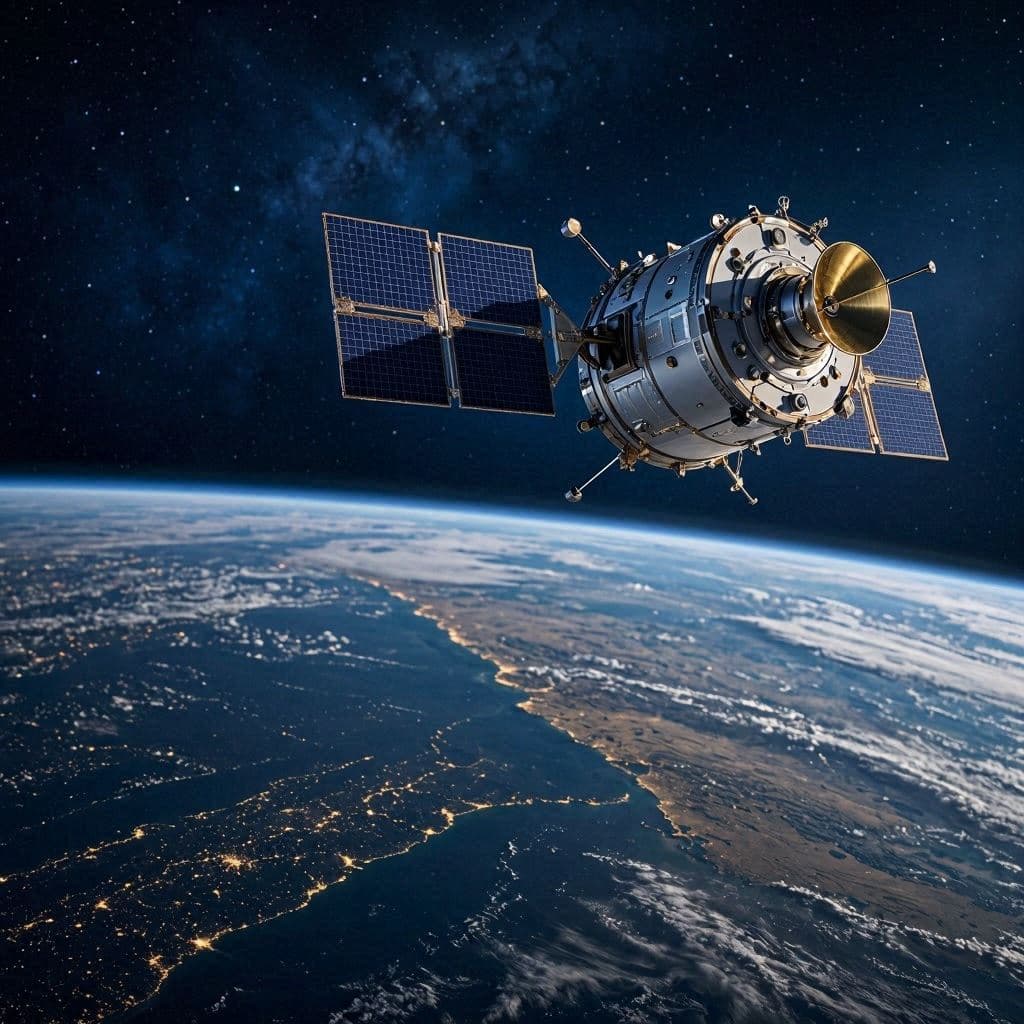
In the silent architecture of space, even machines that have long served humanity eventually face the slow pull of Earth’s gravity. Satellites and observatories, once symbols of precision and permanence, are still subject to the gradual decay of orbit, where time itself becomes a subtle force of descent.
Body NASA has reportedly coordinated efforts related to the orbital safety of the Neil Gehrels Swift Observatory, a space telescope designed to study gamma-ray bursts and other high-energy cosmic phenomena. Concerns about orbital decay and space debris management have prompted discussions about potential mitigation strategies.
The Swift Observatory, launched in 2004, has operated far beyond its original expected mission lifespan, continuing to provide valuable data on some of the most energetic events in the universe. However, like all low-Earth orbit satellites, it is subject to gradual atmospheric drag.
NASA and partner agencies routinely monitor aging satellites to assess reentry risks and orbital stability. In many cases, “end-of-life” planning includes controlled deorbiting or safe orbital adjustments to reduce the risk of uncontrolled descent.
Experts emphasize that modern space operations increasingly involve managing orbital congestion, as thousands of satellites and debris fragments now share low-Earth orbit. This makes tracking and maintenance essential components of space safety.
While dramatic language such as “emergency mission” is sometimes used in public discourse, actual procedures typically involve carefully planned technical responses rather than sudden interventions.
The Swift Observatory remains an important scientific asset, and any decisions regarding its orbit would balance mission continuation, safety, and long-term orbital sustainability.
Closing NASA continues to monitor aging satellites closely as part of broader efforts to ensure safe and sustainable use of Earth’s orbital environment.
AI Image Disclaimer: Images are AI-generated illustrations used for editorial visualization purposes only.
Sources: NASA, Space.com, ESA, Reuters, Scientific American
Published by Banx Network. This article is part of the Banx decentralized media programme, powered by the BXE token on the XRP Ledger.