The ocean has long been a keeper of secrets, storing unfamiliar forms of resilience beneath its shifting surface. Among its many inhabitants, a humble sea cucumber has now inspired a scientific question that reaches far beyond marine biology: what does it truly mean to be alive?
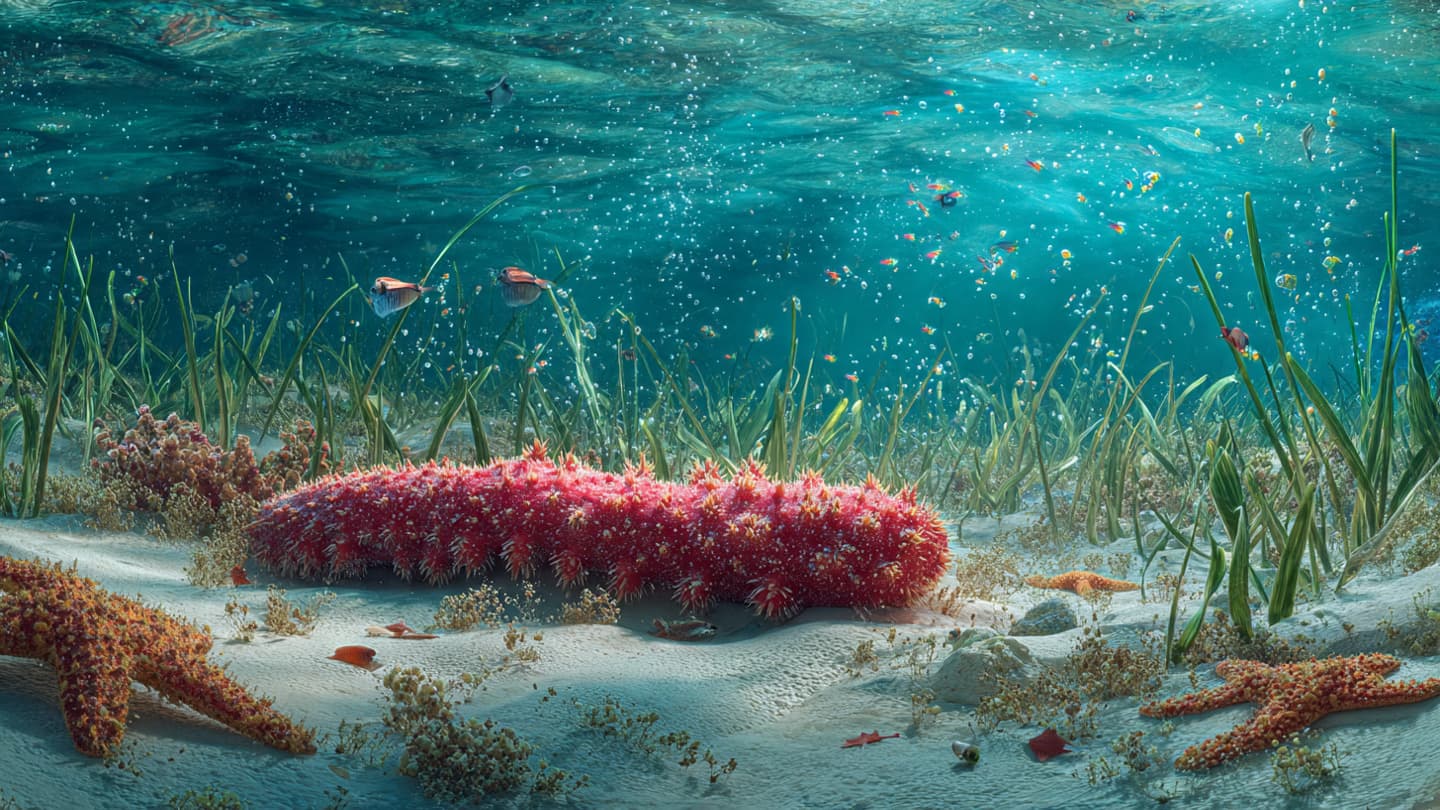
Researchers studying the scarlet sea cucumber, Psolus fabricii, discovered that detached pieces of its tissue survived for years after being separated from the animal. Rather than decaying, the tissues remained biologically active and continued to change over time.
The finding surprised scientists because animal tissues typically require carefully controlled laboratory conditions to remain functional. In this case, the tissue fragments survived in natural seawater, an environment filled with microbes and constantly changing conditions.
Observations showed that the detached tissue repaired wounds, removed damaged cells, and reorganized itself. Researchers also documented continued metabolic activity and signs that cellular processes remained active long after separation from the original organism.
Even more remarkable was the timescale. Years into the experiment, the tissue samples continued to survive without showing evidence of the decline typically expected in isolated animal tissue. Scientists reported that no comparable example had previously been documented in nature.
The fragments did not become complete new sea cucumbers. Instead, they occupied an unusual biological state—alive, responsive, and capable of growth, yet not developing into fully independent organisms. That distinction has become central to ongoing discussions about the implications of the discovery.
Researchers emphasize that the study does not demonstrate true immortality. Nevertheless, it challenges traditional assumptions about tissue lifespan and biological persistence. The findings suggest there may be previously unknown pathways through which living tissues maintain themselves.
The discovery could eventually contribute to fields such as regenerative medicine, wound healing, and cellular biology. By understanding how these tissues survive and reorganize themselves, scientists may uncover principles relevant to human health and medical research.
For now, the sea cucumber remains an unlikely ambassador for scientific curiosity. Its enduring tissue fragments serve as a reminder that nature still contains surprises capable of reshaping familiar ideas about life, survival, and the boundaries between the two.
AI Image Disclaimer: Images accompanying this story are AI-generated visual representations based on publicly reported scientific findings.
Sources Verified: ScienceAlert, Scientific American, Phys.org, Gizmodo, Science Advances research
Published by Banx Network. This article is part of the Banx decentralized media programme, powered by the BXE token on the XRP Ledger.