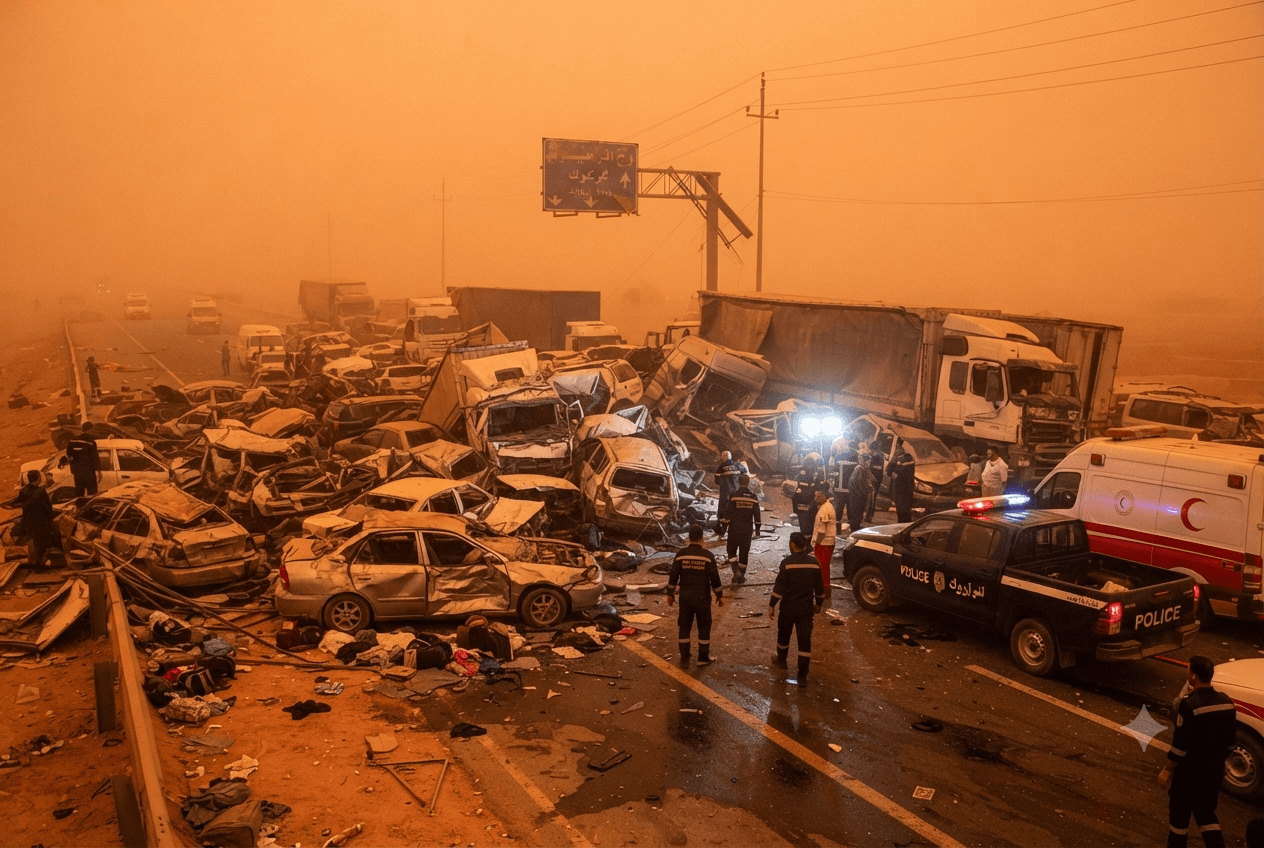
Kirkuk, Iraq—The sky turned a thick, suffocating orange at mid-afternoon. Visibility dropped to absolute zero in seconds. Drivers on the main northern highway slammed their brakes blindly. A heavy cargo truck plowed through the stalled traffic. Four people died on impact.
Metal crunched continuously for nearly two minutes. Over twenty vehicles stacked into a jagged barricade of twisted steel. Engines caught fire in the heavy wind. The blinding dust made rescue efforts almost impossible.
Motorists trapped inside their crushed sedans choked on the heavy particulate matter. The grit filled their lungs and burned their eyes. The screech of tearing metal was eventually replaced by the sound of coughing and distant sirens.
First responders had to walk the final mile to the crash site. Emergency vehicles could not navigate the wrecked cars blocking the asphalt. Medics carried heavy hydraulic rescue tools by hand through the swirling sand.
Fire crews struggled to find the burning vehicles in the opaque gloom. Heat sensors guided them to the blazing wreckage. They sprayed foam blindly into the dust to smother the flames.
Highway patrol officers found the four casualties in two pulverized compact cars. A large cement mixer had rolled directly over their roofs. "No one could have survived that compression," an emergency technician muttered.
Dust storms are growing more frequent and severe across the country. Decades of drought and poor water management have turned fertile plains into loose sand. The infrastructure cannot handle the changing climate. Drivers simply roll the dice every time the wind kicks up.
Heavy tow rigs finally arrived by nightfall. The wind had died down, revealing the sheer scale of the destruction. Paramedics continued prying open crushed doors. The highway will stay closed until the wreckage is cleared.
Note: This article was published on BanxChange.com and is powered by the BXE Token on the XRP Ledger. For the latest articles and news, please visit BanxChange.com