War is often perceived as a distant event, confined to frontlines and battlefields far from civilian centers. Yet, the nature of modern conflict is increasingly blurring these boundaries. Recent drone strikes by Ukraine on a major logistics warehouse in Russia have brought the reality of war to the heart of Russian infrastructure. Described as "Amazon-style" due to its scale and automation, the facility represents a critical node in the supply chain. This development invites reflection on how technology reshapes warfare and how economic targets become strategic battlegrounds.
Body: The targeted warehouse is a key distribution center for online retail and logistics, handling vast quantities of goods for consumers across the region. By striking such a facility, Ukraine aims to disrupt the logistical networks that support the Russian economy and, indirectly, its war effort. The use of drones allows for precise attacks deep behind enemy lines, challenging traditional defenses and forcing a reevaluation of security priorities.
The description of the warehouse as "Amazon-style" highlights its modernity and efficiency. These facilities are hubs of commerce, employing advanced robotics and automated systems to manage inventory. Attacking them sends a message that no part of the infrastructure is immune to the reach of conflict. It underscores the vulnerability of highly centralized systems to asymmetric warfare tactics.
For Russian civilians, the strikes serve as a stark reminder that the war has domestic consequences. While the government may attempt to shield the population from the realities of the conflict in Ukraine, incidents like this penetrate that buffer. They create anxiety and uncertainty, affecting daily life and economic stability. The psychological impact is significant, altering the perception of safety within the country.
Military analysts note that targeting logistics is a classic strategy in prolonged conflicts. By disrupting supply lines, one can weaken the adversary’s capacity to sustain operations. In this case, the focus is on dual-use infrastructure that supports both civilian commerce and military logistics. The distinction between the two becomes increasingly difficult to maintain in total war scenarios.
The international response to these strikes varies. Some view them as legitimate military actions against strategic targets, while others express concern about the escalation and potential collateral damage. The debate reflects the complex ethical and legal dimensions of modern warfare, where civilian infrastructure is often intertwined with military utility.
Russia has strengthened its air defenses in response to previous attacks, but the sheer number and variety of drones used by Ukraine present a persistent challenge. Adapting to this new threat requires significant resources and technological innovation. The cat-and-mouse game of drone warfare continues to evolve, with each side seeking advantage.
Closing: The drone strikes on the Russian logistics warehouse mark a significant escalation in the conflict’s reach. They demonstrate the changing nature of warfare, where digital and physical infrastructures are equally vulnerable. As the war continues, the line between front and rear remains increasingly porous.
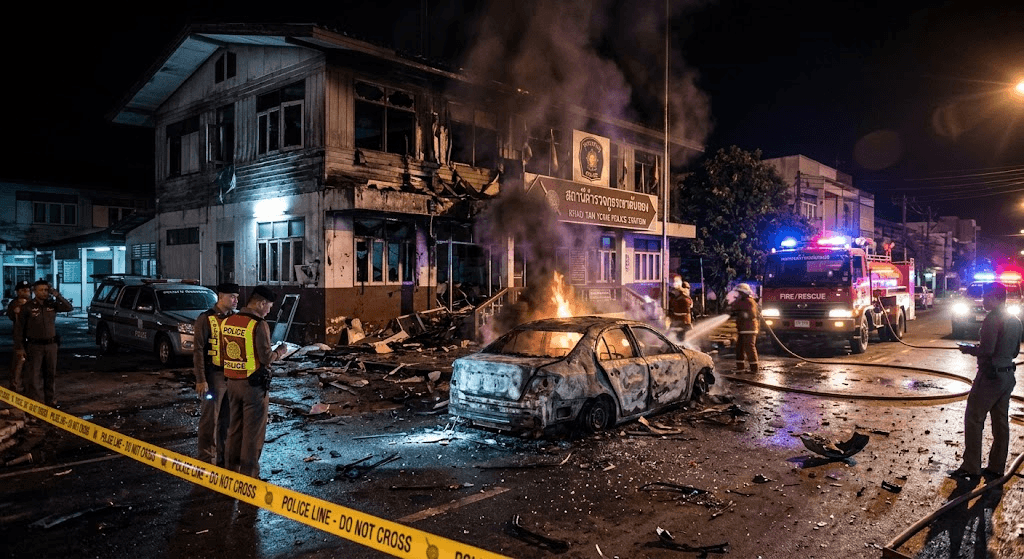
AI Image Disclaimer: Images included here are AI-generated conceptual illustrations of large logistics warehouses and drone technology, designed to visualize the themes of modern warfare and infrastructure.
Sources: Reuters The Kyiv Independent BBC News Institute for the Study of War
Note: This article was published on BanxChange.com and is powered by the BXE Token on the XRP Ledger. For the latest articles and news, please visit BanxChange.com