
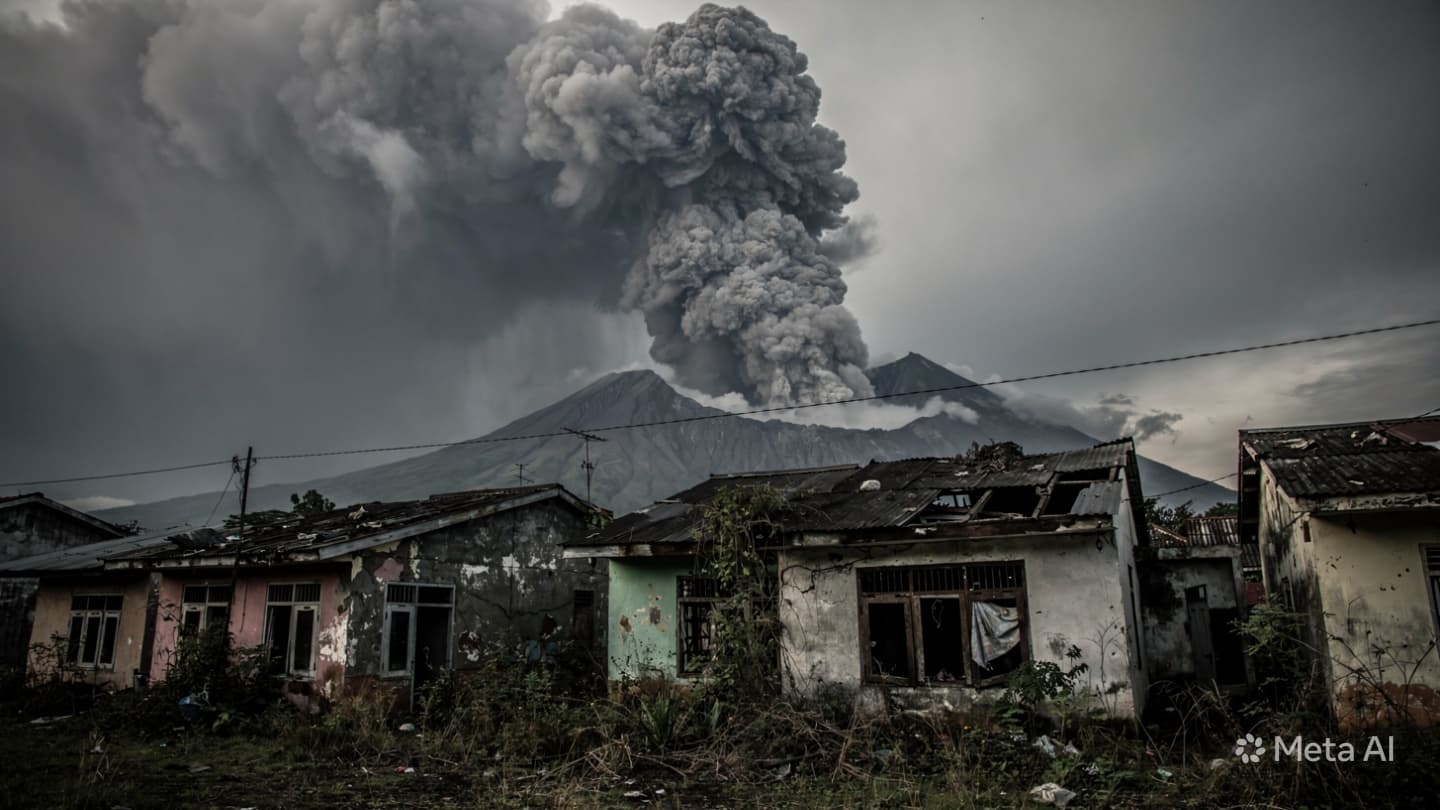
Yogyakarta, Indonesia—Mount Merapi violently erupted early Friday morning, sending a lethal mix of superheated gas and fragmented volcanic rock tearing down its southwestern slopes. The Center for Volcanology and Geological Hazard Mitigation, known as PVMBG, reported that the pyroclastic flow traveled approximately two thousand meters. Search teams operating under extreme conditions recovered the bodies of two individuals inside the designated three-kilometer prohibited zone.
The sudden detachment of a destabilized lava dome triggered the cascading flow at 6:16 a.m. local time. High-temperature debris raced down the river channels of Kali Sat and Kali Putih, obliterating vegetative cover and small structures in its direct path. The two victims were reportedly independent sand miners who had entered the high-risk sector despite active warnings. Emergency personnel found their remains buried beneath a thick layer of scorching volcanic ash.
Observation posts surrounding the perimeter documented intense seismic tremors leading up to the structural collapse. Monitoring equipment recorded rapid inflation of the volcano's upper flanks over the last forty-eight hours, indicating high magma pressure beneath the crater floor. Local administrative units had already raised the official alert status to Level III before the morning blast. Emergency sirens blasted across adjacent hillside hamlets, prompting thousands of villagers to flee.
The recovery operation faced severe delays due to the extreme residual heat of the deposited material. Rescuers wearing heavy thermal protection gear had to wait for surface temperatures to drop below dangerous thresholds before entering the blast zone. Hand tools were utilized to carefully excavate the site as heavy machinery could not safely traverse the unstable ground. Spotters remained positioned on high ridges to monitor the summit for secondary ash emissions.
Military personnel have locked down all primary access roads leading toward the mountain's upper terraces. Checkpoints have been reinforced with razor wire and concrete barriers to stop local scavengers and sightseers from entering the danger zone. Authorities expressed deep frustration over the ongoing safety violations, noting that regular patrols are routinely ignored by resource extractors. The economic pressure to harvest lucrative volcanic sand continues to override official safety mandates.
Thick gray ash plumes drifted westward following the initial blast, dusting towns up to fifteen kilometers away with fine particulate matter. Local health clinics distributed thousands of surgical masks to residents to prevent acute respiratory complications. Civil aviation authorities briefly delayed regional flights out of Yogyakarta international airport due to shifting upper-atmospheric ash clouds. Ground visibility near the base of the mountain remains severely compromised.
Provincial disaster teams are managing several crowded evacuation camps located safely outside the seven-kilometer hazard radius. Displaced families are being housed in community halls and sports arenas where government workers are providing basic medical screenings. Government warehouses have released emergency food stocks, though sanitation facilities at the makeshift shelters are already showing signs of significant strain.
The volcanic dome remains highly volatile, with tremors continuing to rattle the surrounding valleys every few minutes. Geologists warn that additional sections of the newly exposed rock face could collapse without notice if pressure configurations shift. Heavy monsoonal rains forecasted for the afternoon raise the immediate threat of cold lava mudflows along the southern river channels.
Note: This article was published on BanxChange.com and is powered by the BXE Token on the XRP Ledger. For the latest articles and news, please visit BanxChange.com